Why Empathy is Important for Sales Leaders

Empathy

Sales is tough.  Rewarding but tough.  Not every one is cut out for a career in Sales.  It’s the ultimate “what have you done for me lately” profession.  This year’s top performer is next year’s runner-up.  Being a salesperson requires high energy, discipline, tenacity and focus.  Great sales people possess the ability to visualize their success.  They can see themselves on the stage receiving The President’s Award, or cashing that big bonus check.  They’re high achievers, hard workers, and by and large, emotionally charged people.  Great sales leader have many similarities. But the really great leaders have more empathy than your average sales leaders.

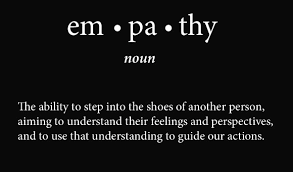
Empathy allows you to connect.  It makes you human.  Empathy allows you to feel, or perhaps more pointedly, allows you to understand how the someone else feels.  Having empathy is different from having sympathy.  Many people feel they are the same.  They’re not.  They’re wildly different.  Sympathy is about compassion, “feeling sorry for”, whereas empathy is being able to relate to another person.

Great sales leaders can relate, or empathize, with how challenging it is to find good prospects.  They can empathize with how exhausting making 100 dials a day can be.  If it were sympathy, I’d be saying “I’m sorry you have to make those 100 calls today…I sympathize for you.”  But that’s not the case.  The goal of a great sales leader is to have their team know, that they know, what it’s like to walk in their shoes.  The team wants to know the leader has “been there, done that.”  Great sales leaders are able to demonstrate empathy without effort because they can simply relate.  They’ve carried the bag, they’ve suffered the rejections, they’ve ended their day emotionally and physically exhausted without a sale in hand.  They’ve lived it.

Great leaders are not scared or intimidated to show empathy.  They don’t see it as a weakness to say “I went an entire week once not selling a thing”.  They’re not excusing low or poor performance by providing sympathy.  In fact, instead, what they are saying is I’ve had some moments like that myself and here’s how I pulled myself up and turned the corner.

We’re emotional beings.  Period.  We want to know we connect.  We’re pack animals.  Knowing we’re understood is critical.  Top performers, no matter what the profession, just want to be understood.  They don’t want sympathy and they don’t want anyone to “cut them slack”.  They want encouragement.  Not cheerleading.  There’s a difference.  Encouragement provides direction, a path.  Cheerleading provides nothing but a temporary high.

If you want to supercharge your leadership focus on developing your own personal level of empathy.  How do you relate to others?  What do you say to people who are struggling?  If you can improve your empathy skills you can improve your results, and the results of those around you.  Now you’ve created two wins.  Now you have momentum that will carry you and your team forward, and that’s what it’s all about.


5 Investments You Should Make in Yourself Today

books

Your mind and body are indeed your most valuable assets.  Most people would say their home.  And while on paper that may be true, without your mind and body nothing else matters.  Here are 5 investments you should make to strengthen both:

  1. Read – Your brain is the most important organ in your body, controlling all bodily functions including your muscles and other organs.  Reading, especially fiction, improves your brain connectivity and function according to a recent Emory University study.  In addition to the health contribution reading has on your brain, it also helps in developing your thinking skills, perspective, and decision making skills by filling your brain with more ideas and insights.
  2. Exercise – Study after study, year after year, we know that exercising each day produces huge benefits for the body, mind, and soul.  According to WebMD, the body’s release of endorphins caused by exercise increases self-esteem, reduces the perception of pain, and creates a positive feeling in your body. Knowing this, how could anyone argue against the value of exercise?  If you’re working out now, great job.  Continue.  If you’re not exercising now, start with just 30 minutes, 3 days a week.  A walk, a jog, push-ups, whatever you chose but start.
  3. Pay it Forward –  Time is your most scarce resource.  Some people horde it.  Others squander it.  I’d suggest you invest it in others.  I spend hours each week with people in my network.  I’ve helped countless friends and associates with resumes, interviewing tips, sales strategies, branding practices, and other areas where my expertise can add value to them.  I am most excited, most engaged, most rewarded when I know I’ve helped someone improve and develop themselves.  For me, paying it forward creates a feeling of pride, improves self-confidence and raises self-esteem.
  4. Clothing – Here’s a tricky one. Remember the saying, “dress for the job you want”?  Whether you like it or not we’re a society of first impressions.  That means that what you wear does matter.  You don’t need to break the bank for a good look.  Guys, you don’t need a dozen suits in your closet.  You can alter the look of one suit with ties.  One black, or blue suit, has endless possibilities by changing your tie.  Ladies, same thing for you with the exception of accessories.  Pins, necklaces, blouses can quickly change the look of a single suit.  If you’re working in a more casual environment dress “crisply”.  Pressed shirts, nice jeans or kakis, etc. Remember, work is still work, not a party, not a social gathering.
  5. Accessories – Everything from glasses, watches, briefcases, portfolios, pens, earrings, jewelry (not too much), pocket squares, cuff links, and shoes.  This is another area where investing in just one or two accessories can make a big difference.

4 Ways to Super-Charge Your Leadership

Headshot11.15.15


If you want to super-charge your leadership skills here are 4 things you should pay close attention to:

  1. Behaviors – What you do, when you do them, how you do them. Do your behaviors change depending on circumstances or do they serve as an unshakeable foundation even in times of crisis? Be cognizant that people are watching. Your colleagues, bosses, clients, partners, are all noticing your behaviors.
  2. Routine – In a recent Harvard Business Review, it was reported that great leaders have routines. They do things in certain ways, at certain times. They are disciplined and methodical in their actions. Leaders who are skilled at identifying their surroundings and circumstances are able to develop the routines that add the greatest value resulting in better results.
  3. Adaptability – Great leaders are capable of modifying their behaviors and their routines based on their circumstances. This requires the leader to be both a teacher and student all at the same time. Recognizing the need to adjust, and as importantly how to adjust, sets great leaders apart from those individuals who manage. Managers watch over a process. Leaders evaluate circumstances, determine a better way, garner resources, provide vision, and secure alignment. To do this, a great leader must be able to adapt.
  4. Seek feedback…genuinely and often – Interesting research from a number of trusted sources indicates that leaders who request regular feedback are more effective. Feedback improves your ability to empathize and connect with others. Unfortunately many people interpret a request for feedback as a weakness or perhaps insecurity. Leaders who ask from a number of sources – not just their boss – gain deeper insight into the organization, its issues, challenges, opportunities, and people. Having the ability to see into your circumstances is critical to your success. Don’t let others perceptions of feedback affect yours or worse prevent you from asking.

Great leaders learn, teach others, learn more, and repeat that process. Take these 4 elements and weave them into your daily leadership actions.


3 Ways to a Strong Sales Finish

JoePic

With 75 days left in the calendar year many salespeople find themselves in a crunch.  Either a crunch to hit that next multiplier level for bonus money, or a crunch to simply get as close to plan as possible.  Regardless of where you fall in that spectrum here are 3 things every sales pro should be doing right now:

  1. 70/30 split.  At least 70% of your time should be spent with your current customers.  You should be focused on understanding their business, providing value by educating them on possible solutions for their needs, and listening for trends, concerns, ideas, etc.
  2. Ask for the business.  The closest thing to a silver bullet in Sales is asking for the business.  Sure, you need to have earned the right to ask, but let’s assume you have.  Too often sales people assume that if the customer had more business they would have already given it to them.  WRONG!  WRONG!  WRONG!  It’s not their job to give you anything.  It’s your job to earn it, ask for it, and then deliver it in a way that makes you both memorable and remarkable.
  3. Be disciplined.  There’s no such thing as a 9 – 5 sales job.  If those are the hours you’re working you’re simply not doing enough.  Oh…you’re already at quota working 9 – 5?  Then I’d ask how much more you could have sold if you kicked it up a few notches?  It’s time to push.  Even if you’re at quota now a new sales year is right around the corner.  Plan your days.  Have your call list ready the night before.  Don’t waste precious selling time getting ready.  When you’re standing at the starting line it’s too late to train for the race.

Be sure you’re confronting reality.  If you’ve missed plan this year take an inventory of where things went wrong.  Be honest.  At the end of the day if you’re over plan it’s because of you and if you’re under plan the reason is the same…you.  You may be more expensive, of lesser quality, or longer to fulfill.  Regardless, you own finding a new path.  Once you accept accountability the path becomes much clearer.

Be calm.  Sell on.

4 Keys To a Better S.A.L.E.

Improve

No matter if you’re new to sales or a seasoned sales executive, brushing up on your selling skills is as important as changing the oil in your car regularly.  Leave the oil too long without changing it and your engine gunks up, gas mileage deteriorates, and in time your engine will fail.  Knowledge is to the sales person what oil is to an engine.  When you stop feeding your mind new knowledge your performance deteriorates and failure is around the corner.  But with so many things to think about, so many calls to make, numbers to hit, you don’t know what to focus on first.  So here’s a tip that will keep it simple…just remember SALE.

The “S” in Sale stands for structure.  Every sales person needs structure.  Some people are naturally disciplined and have strong internal structure while others require help to remain focused and disciplined.  Only you can be honest enough with yourself to know where you fall on the structure spectrum.  Structure includes when you make your calls, how your desk is set up, and whether your car is cleaned.  Structure speaks to your ability to organize.  Stronger organization equals higher efficiency which yields better results.

The “A” in Sale stands for attitude.  John Maxwell, the famous inspirational author, wrote “your attitude determines your altitude.”  Having a positive attitude is essential to success in life and critical to your success in Sales.  Have you ever met a sales person who seemed like they were on their last leg?  No more gas in their tank?  How did that make you feel?  Excited to buy?  Confident in purchasing their product…from them?  No.  No one wants to work with someone with a poor attitude.  No one buys from someone who lacks confidence in themselves, their product, or their company.  If you’re honest enough to recognize you have a confidence gap – read.  Thousands of books and books-on-tape are out their that can help.  Take action.  Don’t let another day go by with a bad attitude.

The “L” in Sale stands for learning.  If you’re not a continuous learning become one…and fast.  Albert Einstein said, “You have to learn the rules of the game.  And then you have to play better than everyone else.”  The rules of the game are always changing in Sales.  Your customer is evolving.  The internet and its ability to provide mountains of information will continue to change the game for years to come.  Better educated customers and prospects force a sales person to constantly up their game.  If you think the sales skills that won you awards 10 years ago, 5 years ago, or even last year will work in 2016 you’re wrong.  News flash!  If your buyer hasn’t already changed, they are in the process of changing.  Read.  As much as you can from as many sources as you can.  Commit to bringing one or two points from what you read that day into your sales conversations, then watch how your customer engagements change before your eyes.

The “E” in Sale stands for energy.  And lots of it.  Sales is physically and mentally demanding.  Some days are more draining that others.  Break up your day.  No matter how good you are you simply can’t sit and make 50 sales calls in a row without stopping.  While that may be physically possible, your energy levels will diminish and your customer will sense it.  Stay hydrated.  Drink 4 – 5 glasses of water throughout the day, or bottles if more convenient.  Stop for lunch.  If you don’t have the time for lunch keep an energy and protein bar handy.  You don’t want low energy levels to come across as poor attitude.  And make sure you get a work-out in daily.  Whether you start, or end, your day running, spinning, swimming or CrossFit, simply make sure to get some exercise in.  It will help keep your mind fresh, your energy up, and your endurance strong.

Happy Selling!

Stop Selling, Start Asking: 3 Questions That Will Improve Your Results

Ask

For many companies January represents the start of a new year.  A new beginning when all numbers are at zero and the uphill climb to reach the new year’s sales quota gets under way.  And whether your company sells cars, computers, insurance, or consumer staples it’s likely its increased its goals in 2015 from the prior year, and to you that means a bigger sales quota.

How do you reach that new number when last year’s number seemed big enough?  Where will you find the time to sell more and still have a chance to see your family, hit the gym, travel a bit, or simply sleep a little?  The fact is, making more calls isn’t the answer.  The more calls you make, prospects you talk to, emails you send, or LinkedIn invites you issue won’t be enough to hit a higher quota.  You’ve got to operate differently.  You’ve got to change your approach.  The most effective way to increasing your sales results is by asking better questions…the right questions.  Start with these 3 questions below when meeting with a prospect for the first time.

  1. In looking back on your results last year did you accomplish what you hoped?  Asking this question provides insight into the prospects priorities and values.  It also offers you a glimpse into how likely they are to provide you with the critical information you’ll need to construct a proposal or recommendation that adds tangible value to their business.
  2. What are your top goals or priorities for this year?  If you don’t understand your prospect’s business you have little chance of doing business with them.  Likewise, how much time, effort, and energy is wise to spend on a prospect who doesn’t know where he or she is headed?  With limited hours in the day, and that big goal in front of you, your best chance of success lies in working with people who all have clear goals…grow revenue, reduce expenses, improve turnover, etc.
  3. How do you currently determine if you’ll buy again from one of your providers?  It’s important to know up front if the prospect makes their decisions based solely on price, service, future product improvements, or ease of use.  Whatever their criteria is in sending you more business, be sure to take note and not only build it into your proposal but more importantly deliver on that expectation.  If innovation is important to the prospect don’t promise product changes if your product hasn’t changed in years or has no planned changes on the horizon.  Once you lose trust and credibility your reputation becomes worthless.

If you’re not comfortable asking these questions there’s likely a good reason which most of the time will be due to the lack of rapport built immediately on the front end of your interaction with the prospect.  Remember, if you approach a prospect like a typical sales person their natural defenses will be up, but if you approach them as a business person who has passion around your product and deep-rooted beliefs and experiences that showcase the value of that product you’ll find your prospect will be more open, more engaging, and inclined to forge a relationship with you.  Authenticity is your key to success and its something that has to be real and heartfelt, it can’t be pretend.

Are You Losing Sales? It’s Probably The Last 3 Feet.

table

Successful outcomes are the result of many different elements including preparation, practice, and skill.  With every action comes a reaction and the intensity of that reaction can be linked to the effectiveness of the originating action.  If you walk at a slow pace for exercise it will take longer to work up a sweat as opposed to a brisk walk or even a jog where you will sweat much quicker.  Action versus reaction.

How often have you left a sales call wondering where things went wrong?  You didn’t get the business.  The prospect seemed on board but decided to go in a different direction.  That reaction, whether we’d like to admit it or not is the direct result of an action we took at some point during the sales process.  In fact, the primary action that results in lost sales is communication.  Clarity of communication, followed by the ability to process that communication, is where many sales people fall flat.

In his book Exceptional Selling, Jeff Thull talks about “the last three feet” as being the distance that separates a prospect from a sales person sitting across a table from one another.   How often have you felt you’ve done everything right and in your final meeting – in that last three feet – with the prospect, you learn they decided against doing business with you?  It’s happened to us all at least once.  If you have been selling for years it’s most likely happened hundreds of times.  But why?

The main reason for this disconnect centers around a miss fire in communication.  You either said something to the prospect that turned them off, or you said the right thing that disqualified them as a prospect but you were too stubborn to see it.  We’ve all been taught to never walk away from a sales opportunity.  Further we  have been told for years that everyone is a prospect.  These ideas are just flat-out false.  Not everyone is a prospect and the quicker you find out who presents a real opportunity the better you’ll become at selling.  Remember your time, money, and energy are only of value to you so protect them.  The faster you can sort the real opportunities from the imaginary the better.

Watch for my next blog when I’ll present a sales strategy I have used with great success that eliminates the risk of the last three feet.


The Most Important Sales Question You Need To Ask

important

Selling is a combination of both art and science.  It requires intelligence, curiosity, study, and practice.  Unfortunately too many books have been written by self-proclaimed gurus who are running around promoting persuasion, influence and manipulation.  As a life-long sales professional I cringe when I hear these tactics being promoted as the Holy Grail of selling.  Learn how to persuade a buyer and you’ll be golden.  Wrong.  Persuasion is only temporary if it’s not grounded in something more significant or substantive to the buyer.  While beating the buyer into submission is one way to approach sales I’d suggest a much different path.  Something that requires a fair amount of mental horsepower, patience and agility.  This approach can be summed up in one question…So What?

Sales people have been trained…brainwashed…into force feeding a prospect through a rigid selling process.  The problem is that most sales processes are inward focused and aligned to what their organization does and is capable of delivering.  They rarely take the customers viewpoint into consideration.  This results in the sales person trying to find a way to wiggle into the prospective buyers wallet, often times not knowing or caring whether there is a real or tangible need for their product.

So how can you avoid falling into the stereotypical sales rep persona?  Ask this one questions before and after your customer interactions – So what?  This product has  a 98% satisfaction rating!  So what?  My company has been around for 100 years.  So what?  We pay the highest commission rates in the industry.  So what?  I’ve helped many business owners like you improve their profits.  So what?

I’m sure many of those statements sound familiar.  You may have even used one or two of them before.  But so what?  What does your satisfaction rating mean to me the buyer?  Why should I care?  Too many times sales reps lob a one-liner out there and let it hang.  They believe that it’s such a powerful statement that the buyer must believe it too, yet we know this isn’t the case.

Once you begin to challenge yourself with the “So What?” question you’ll find yourself having different conversations with your customer and asking different questions.  You’ll begin to interact with your customer on a different level.  Your genuine new-found interest in what’s important to your customer will be seen and felt.  And while this may not guarantee a sale it will guarantee that you’ll be better prepared to separate the true prospects versus those who simply clog our pipelines who are not fits, matches, or beneficiaries of the value we provide.  Having this power will help you close more business that is a true fit while quickly sorting through the business that isn’t, saving you time, money, and energy that you can then direct toward those prospects who can truly benefit from the value you offer.

Happy selling!

Can Really Anyone Succeed?

Doubt

It all begins with setting clear goals.  Knowing what you want along with a rough idea of the time frame in which you want to accomplish those wants is where success begins.  No one stumbles into success.  Without clearly defined goals even winning the lottery will lead to failure as the bankruptcy rates for lottery winners seem to indicate.  We’ve managed to create a society in the United States where success is demonized and those who acquire it are viewed as the bad guys.  Lines continue to form for hand-outs and entitlement programs.  We’ve more than doubled the ranks on government assistance in the past 8 years, and the news is littered with stories on just how little the rich and successful do for those less fortunate.

Those who don’t succeed often whine about the who, the how, and the what.  Who prevented them from succeeding how they were derailed from success, and what’s missing from the system that if there would enable them to succeed.  These folks just don’t seem to get it.  They must have slept through history class…not just ours but civilizations across the globe.  Remember the caveman wasn’t born with fire or a wheel.  It took thought, vision, hard work and persistence.  Our country was founded on the basic principle that anyone willing to work hard while applying their God-given talents could succeed.  We never guaranteed success…only a chance at it.

People who complain about success will never attain it.  I’d propose that the biggest reason they will not achieve success is that they haven’t taken the time to identify what success is.  They simply look at the material things that they associate with success.  They have no idea what is required to obtain those things, they see only the after-results.  Whether it’s a heart surgeon, a mutual fund manager, a business owner, or a school teacher, those who are successful have a clear idea of what success means to them and for most it’s never about the money or stuff.  It is however always about the personal accomplishment, achievement and having the ability to say “I did it.”  That alone defines success.  You know, Frank Sinatra got it right in his song My Way, more people should listen to it.

So if you’re feeling low and not sure where you’re headed remember it’s up to you.  You have to think about what you want.  You have to answer the question how hard you’re willing to work to get it..  You have to be willing to put the time in.  You have to take complete responsibility and accountability for your successes and failures.  Once you do that success will find its way into your life.


A Thank You for Mom and her Leadership Lessons

MothersDay

Happy Mother’s Day.  The one day of the year where we can all stop and recognize our mom’s for all they do and have done for us along the way.  They teach us many of life’s most important lessons.  They do it in a way that creates lasting impressions along with that second voice in our head that asks, “what would mom think?”  And while father’s instill their own brand of leadership lessons (stay tuned for June), here are few that I have learned specifically from my mom that have helped me be a better person and leader:

  1. Empathy.  Until recently empathy in the workplace, especially in a leadership role was viewed as a weakness.  Soft.  Being empathetic meant you weren’t able to make the tough choices.  However, over the past decade a great deal of research has been done that’s revealed the most effective leaders are empathetic.  The ability to feel and understand others emotions.  It’s the piece that allows you to connect on a deeper level with those you work with.  This is something I learned from mom.
  2. Forgiveness.  We all make mistakes.  Some are bigger than others.  Recognizing an honest mistake versus malicious intent is critical.  Honest mistakes happen every day, and will likely occur in all our lives until the end of time.  Understanding the mistake, its intent, its impact, and the lesson learned is where the act of forgiveness comes in.  Mistakes happen in every workplace, on everyday of the year.  Some mistakes are small with no material impact to the business while others can be quite costly.  Focusing on the mistake itself and not the person is something I learned from my mom.
  3. Faith.  The ability to strongly believe in something with conviction is faith.  Be it in ourselves, others, or God, faith represents one of a handful of traits that separates human beings from all other animals on the planet.  When all the strategizing and planning is complete, a leader must have faith in him or herself, and the team they lead, that they will be able to execute their plan to achieve the desired outcome.  The ability to believe in, or hope for, something better is something I learned from my mom.

There are many other lessons I’ve learned from my mom yet these three stand out.  She’s taught me a lot in my first 46 years and I’m sure there’s much more to learn in the next 46!

Have a great Mother’s Day.  (Love you mom!)