
Profoundness Found in the Simplest of Places

NewCastleSeattle


I spent this last week in the great city of Seattle…Bellevue to be specific.  Seattle has always been one of my favorite cities to travel to from my first visit in 2001.  From downtown to the Harbor Steps, Seattle is a down-to-earth city with great people, wonderful food, and some of the best sites in the world.

I was dining one evening this week in downtown Bellevue with our President, and Chief Operating Officer of our company.  No doubt a busy week with many meetings, big initiatives, and key decisions to be made.  Pretty much a normal week.  It had rained on-and-off most of the week with brief reprieves resulting in glimpses of sunlight and blue sky.  Our President selected an Italian restaurant for dinner.  We left the office and walked to a wonderful place called Andiamo.  We were seated immediately with each of us picking up our menus to peruse the entrees.  As we chit-chatted a bit while taking in the selection of delightful dishes, she looked up, and that’s when it happened…profoundness in the simplest of statements.

The rain had passed, the sky had opened, and the combination of the sun with the bluest of backgrounds in the sky was breathtaking.  She sat back, placed the menu on her lap and said, “I just love these breaks of beautiful.”  What an amazing statement.  How simple.  How profound.  How beautiful.

Over the past few months I’ve experienced the death of a good friend and colleague, and a close member of the family.  I’ve gotten calls about family members struck by illness and hospitalized.  My phone has rung with a couple close friends who have lost their jobs looking for guidance and assistance.  Clearly part of life, these situations and others like them tend to change our view of our circumstances.  We focus on them and we begin to move ever closer to skepticism, pessimism, and any other adjective that describes our saddened state of mind.

Our President, most likely without knowing, had just made a comment that struck me like a blow to the chest.  It got me thinking about focusing on all of life’s “breaks of beautiful”.  While she clearly made this comment in the context of the visual beauty she saw in Seattle’s sky, breaks of beauty are all around us.  Since this moment I have found breaks of beauty in the sound of my wife’s voice, the unexpected call from my daughter to say hello, a late night chat with my dad, an email one of my sales reps sent me excited about a great accomplishment, the start of a new friendship, and a corny but funny joke my son texted to me while I was sitting in a meeting.

The point is to stop and take notice of all the breaks of beautiful in your life.  They’re there.  You really don’t have to look hard.  You just have to look a little.

 

10 Things a Leader is NOT

Badleader

Remember that bad boss you had a couple of years ago?  Every interaction caused stress, disappointment, and sometimes regret.  Here are some characteristics NOT found in great leaders.

  1. Selfish.  Great leaders make it all about their teams.  There’s no “I” in team and the leader knows that and embraces it.
  2. Mean-spirited.  Strong leaders lead with dignity.  They understand that even when corrective action is required every employee deserves to be treated with dignity.
  3. Know-it-all.  The best leaders are continuous learners.  They do not claim to have all the answers nor do they believe they themselves are the only ones capable of generating great ideas.
  4. Placating.  Successful leaders understand the need for honest and direct communication.  They do not shy away from conflict or pander in order to win popular opinion.
  5. Narcissistic. Effective leaders have an inner confidence that allows them to operate without ego.  Not so say they don’t have an ego but they are able to keep it in check.  They don’t have a need for others to know who they are, what they have, or how important they believe themselves to be.
  6. Micro-manager.  Accomplished leaders know that they must have the details but cannot micro manage.  They give trust to their teams and provide opportunities to people to take risks and practice their decision-making skills.
  7. Disingenuous.  Thoughtful leaders know the importance of service to others.  They have a strong moral compass knowing that others can see clearly who they are and likewise can feel their authenticity.
  8. Thankless.  Purpose-driven leaders understand the importance of gratitude.  Being gracious for a job well done separates a good leader from a bad leader.  There’s nothing wrong with expressing your gratitude or thanks to an employee who did a good job even though a good job is what’s expected.  It’s often the smallest acts of kindness that embolden a team to its leader.
  9. Ignorant.  Learning leaders recognize all things change including their products, their markets and their customers.  They can’t afford to be caught with the short end of the intellectual stick and are constantly working to educate themselves and their teams.
  10. Indecisive.  Enduring leaders know that making decisions are required for leadership longevity.  Those that shy away from making decisions, difficult or easy, don’t last long as leaders.  Indecisive leaders are some of the most difficult leaders to work for.

And one bonus characteristic that ALL leaders DO possess…ownership.  All great leaders embrace ownership.  Ownership of their teams, their decisions – good or bad – their plans, strategies, ideas, and opinions.  These great leaders never look to place blame, often times to a fault.  They are able to shoulder great weight and responsibilities with a sense of ease and grace.

Are you a good leader?

What it Means to be Authentic

Authentic

You’re nervous, scared.  You’re breathing is shallow and you’re beginning to sweat.  Your mind is racing but you can’t seem to find an answer to your problem that makes you feel good.  In fact all you see in front of you are choices that are not so good and plain bad.  You start weighing the outcomes of each choice in terms of personal perception.  How will I be viewed if I make this decision or that decision?  How popular or unpopular will I be for making such a decision?  Will my boss support me?  How about my wife/husband, my friends, my parents, my kids?  Your emotions reach a crescendo and you feel you’re about to collapse.  What now?

Try this interesting test.  It’s a simple and fast test that requires answering just one question no matter how difficult the decision is you are facing.  It can serve as your decision starter.

What would I do if I didn’t have to worry about any one persons reaction or perception of me based upon the decision I make?  Sure this sounds unfair but if you begin every decision thinking first about what others will think of you then you’re likely to arrive at the wrong place.  Like politicians that look at polls before deciding on their personal stance on an issue, people who worry more about what others think rather than doing the right thing will ultimately experience a short life cycle as a leader.

Authentic leaders don’t worry about what others think.  Not that they set out to offend, hurt, or alienate themselves from others but they instead focus on being true to themselves first.  After all, that’s what makes an authentic leader so appealing to follow.  You always know where they stand on an issue today and tomorrow.  They don’t waiver or pander.  They simply establish their position, communicate it effectively and stick to it.  If they do change their position it is backed up by facts and tangible learnings that justify their change.  Not at all based upon opinion polls, or pressure from stakeholders or markets.

They have a sense of intelligent fearlessness.  They are smart enough to understand where the pitfalls are but effective enough to lead through, around, or over them.  They are mindful of cause and effect and focus on communicating both the why and the implications of their decisions.  They are often times seen as bold, courageous, and confidence.  They use their intelligence to assess the situation and select the best approach.  Their intelligence coupled with their confidence in conviction allow them to lead others fearlessly toward the goal.  This does not mean carelessly.  The difference here is that an authentic leader through their personal intellect and confidence are able to make tough decisions without fear, while leaders whose only strength is to pander to public opinion live in constant fear of being judged.  As such the leader who lives in fear is always looking to make the decision that allows them to place or shift blame elsewhere.  To have cover when the sky begins to fall.  Authentic leaders understand the risks and have no problems being held accountable to their decisions.

Recently Kathleen Sebelius was replaced as the Secretary of Health and Human Services (HHS).  In the interviews that have followed since her removal from office she stated that they had got it (the website http://www.healthcare.gov) readiness wrong.  It should have never been promised to roll out in October 2013.  Yet video clip after clip shows Sebelius saying with conviction it will be ready.  It is ready.  It’s working.  It’s right.  So where was her authenticity as a leader?  Where was her courage?  Unfortunately like so many others in leadership positions she sacrificed her authenticity for popularity.  If only people would realize that popularity is fickle.  Eventually inauthentic decisions and the leaders who made them always show themselves but by that time both have been cast as failures.  If only we could stay true, stay firm, stay authentic from the start.

Taking The Lead Vs. Being a Leader

leader

I’ve built many sales and marketing teams over the years.  I’ve led many to success and some to failure.  Throughout my career I have learned a great deal about leadership and leading people to achieve a desired goal.  One of the important facts I’ve learned over the years is that there is a clear difference between taking the lead and being a leader.  Having a true understanding of this difference helps to effect the best possible outcomes.

The difference between taking the lead and being a leader is quite simple.  When you take the lead you exert control.  You see examples of people taking the lead everyday throughout the world.  Kids take the lead to be the captain of the kickball team at lunch.   Executives maneuver to take the top spot in a company that may be floundering.  Yet these examples and others like them do not demonstrate leadership.  They simply showcase situations that arise where there is a vacuum at the top and any opportunistic person has the chance to step in and take control.  But that’s not leading.

Taking the lead involves control.  It often times results in a new regime rising to the top that is less focused on the team and much more  focused on an individual or small group of individuals.  This is not to say that in times of need that someone with noble intentions can’t rise to the top and become a leader.  Those situations do happen but are less likely when there is a leadership vacuum at the top.

The most significant difference between taking the lead and being a leader boils down to one ability.  The ability to inspire.  Great leaders inspire.  They get people to dream big, to not accept the status quo, to challenge conventional thinking without fear of embarrassment or disappointment.   The best leaders inspire people to own their own destiny.  To not settle for mediocrity.  To live the change we want to become, as Gandhi said long ago.  Leaders who are able to inspire possess a quiet confidence.  A sense of conviction that is both strong but flexible.  Strong leaders are learners and adapters.  They are able to see things as they are while formulating a plan to shape the future they intend to create.  They are driven by the need to be of value, and of service, to others and they inspire the very best from each of us while doing so.

These highly favored leaders are those  individuals that we all like to follow, to watch, to cheer on.  These are the people who make us feel confident in the value of our personal contributions, and are able to rally a diverse group of folks to charge off in a common direction.  They inspire each of us to reach for, and obtain greatness.  They are the real leaders.

Critical Insight When Making Tough Decisions

decision

If you need to make a difficult decision make sure you understand your surroundings as much as you understand the facts and details of what it is you’re trying to decide upon.

I recently had lunch with a colleague to discuss some key decisions that I need to make in our business surrounding strategy.  I presented my facts, beliefs, and experience with great passion.  My plan was both logical and well thought through.  I knew however that some of my decisions, while believed by the team the correct ones to make, would create some discomfort.  Why?  Because while we can all understand logic, and positive correlations, we are after all human beings, and human beings dislike change no matter how sound, logical, positive, or necessary that change is.

My colleague, who has years of experience and incredible wisdom said to me, “be aware of the issues that are not part of the issues.”  This statement perplexed me.  I didn’t understand.  When I asked her to explain she provided this wonderful story that provided the clarity to what she was saying.

For years she had her hair cut by the same stylist.  Through life’s many trials and tribulations, ups and downs, good times and bad, this stylist cut her hair and listened to her stories.  As times changed she wanted a new hair style but the stylist was unable to provide the cut she wanted.  She knew she had to make a change but her feelings and emotions of abandoning this stylist were strong.  She is an intensely loyal person and the thought of ending this long-standing relationship was quite troubling.  Her head told her it was the right thing to do but her heart was most certainly conflicted.  So while the issue at hand was achieving a new hair style, the emotional issue tied to her sense of loyalty came to the forefront of her making the decision to go elsewhere…hence the issue (emotional), not part of the issue (new hair style).

Bottom line:  It’s critical to understand emotions when making a decision. Your emotions as well as those of the key stakeholders involved in that decision are paramount to effective decision-making.  Emotional history, sometimes referred to as baggage, can play a major role in decision-making.  Being aware of these issues, that are not part of the actual issue being decided upon, can help you frame your approach.  Your decision is your decision.  It’s the “how” (the approach) you present your decision that can often times become the difference between effective decision-making and holding the status-quo.


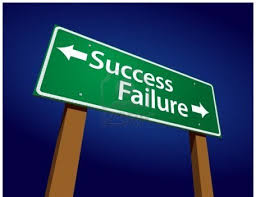
Why Failure is Your Friend

Failure

Years ago I read the book Failing Forward by John Maxwell and it had a profound impact on my life. I grew up in an ultra competitive home where me and my sisters were raised to believe that failure was not an option. As I entered the workforce and began my career I carried this belief with me only to learn, in short order, that failures can happen regardless of the actions taken.

From bad bosses (you know who you were), to poorly run companies (you know who you were as well) to jobs I simply didn’t like, failure began to approach my doorstep uninvited. I worked hard, pressed forward, acted with persistence and determination and still experienced my share of failures.  I’ve missed sales numbers, hired the wrong people, and had sales and marketing campaigns fall flat.  Yup, I’ve seen my share of failures.

Sometime after turning 40 I began to view things differently. For the first time I was able to look back at my failures not as failures but as critical learning events that took place at a moment in time. I’ve been battle tested, failed at times, yet have come out stronger each and every time.

We learn when we fail. In fact I’d argue the quality of education we get from failure is vastly better than the education we get from success. Success is simply the culmination of multiple failures. If at first you don’t succeed, try, try again. The greatest inventions ever were the result of countless failures. Many of the world’s most deadly diseases were cured only after countless failures while looking for a cure. Thomas Edison once said he it took more than 10,000 tries to invent the light bulb.  What if he gave up at 9,000?  I’d hate to think I’d be writing this in the dark.

The point is that we learn from our failures…if we allow ourselves to.  Here are 3 things that failure helps to improve:

  1. Decision making.  Making decisions is a tough business.  It requires speed, thoughtfulness, intuition, and experience.  Experience comes through both failure and success.  The more you have of both the better decisions you will make.
  2. Mental health.  The sooner you embrace failures as your friend and not your enemy the quicker you’ll be able to look at failure for what it is…a teacher.  You fall off your bike and you know it’s not the end of the world so you get back on.  You get laid off from a job and find another so now you know that losing a job isn’t a life sentence.
  3. Leadership.  Personally I want to work for someone who’s failed…at least a few times.  I’m much more willing to march into battle behind a battle-tested leader than someone who is entering their first rodeo.  Leaders who have lived the highs and lows are typically more stable offering a steady hand in times of stress as they’ve seen it before and know they can navigate through it.  While it may sound odd to say, failure is one of the biggest ingredients to building confidence.  The more you know you’re capable of handling the more confident you will be in yourself.

So rethink your opinion of failure.  It really is your friend if you let it be.

5 Ways To Make Your Meetings More Effective

Improve

Another meeting?  Most days start with meetings and end with meetings.  We spend our days running from one to another, whether in person or via the infamous conference call.  Some companies can’t operate without having a meeting to discuss even the smallest of decisions or topics, while others work hard to minimize the number of meetings they schedule. It’s not that meetings are bad, it’s just that most of them are an ineffective use of time. Little is accomplished during these meetings other than wasting the time spent being in the meeting itself, as well as the time spent preparing for that meeting.

So how can you increase your level of meeting effectiveness?

Here are 5 things you should do before scheduling a meeting:

1. Create and include a clear meeting objective. Provide a brief summary of the purpose of the meeting. Be sure to state whether this meeting is meant to inform, solicit feedback, or make a decision.
2. Invite the right people. The key word here is “right”. Don’t get caught up inviting the entire company to make sure you’ve CYA’d yourself. Have the right people there. The type of meeting you have set will determine who you should invite.
3. Be clear on your time. If you need an hour then schedule an hour. If you believe that your topic may go over an hour then plan accordingly. People hate to attend meetings that consistently run over. You don’t want to create the perception that you’re a poor planner.
4. Provide materials in advance. Many people feel that meetings should be somewhat of a surprise. I can’t stand that approach. Time is valuable for everyone. Why wait until the meeting to drop a 20 page deck on people. Give them time to read through it and absorb it. Having the ability to formulate questions, thoughts, and opinions prior to the meeting is key to running an effective meeting.
5. Schedule critical meetings during the day before 4 pm. The fact is that human nature is such that most people find getting invited to a meeting that starts at 4 pm to be annoying. Hey I know you have to be in the office until 6 pm anyway but still in all, people look to the end of their day to wrap up items that were opened during the day. Many 4 pm meetings become nothing more than place holders to reschedule another meeting when people are prepared, ready, and engaged.

Try taking these 5 actions before scheduling your next meeting and see how much smoother your meeting runs.

Stop Trying to Fit In and Start Being Remarkable

remarkable

Everyone wants to fit in. To be a part of the crowd. Some people go to extremes to remain invisible whether at school, the office, the gym, or anywhere else in pubic. Blending in is part of our culture. Why do you think brand names like Nike, Levi’s, Coke, Asics, Hollister, and Target are so valuable? They represent the main stream. Sure they offer quality and value but they also offer a strong emotional connection to safety. I’m safe if someone sees me wearing Nike, shopping at Target, or buying a Diet Coke.

But success doesn’t come to those who play it safe. Success isn’t for the faint of heart, or those who want to be part of the crowd. No. Success usually comes to those willing to take chances, to challenge the norms of society, to stand out and be remarkable.

Are you remarkable? Do you stand out at work or are you one of the crowd? Do your co-workers look at you as a thought leader? A progressive thinker? Or are you one of the many doers that get things done but not the one “cutting the edge?” Do you invest in building your personal brand? Are you working to create awareness around your ideas and opinions or are you silent, laying back, waiting for the next set of directions to come your way?

History is a great teacher of the correlation between remarkable and success. Thomas Jefferson, Steve Jobs, Donald Trump, and The Beatles all were remarkable for their time. Dimon, Reagan, Lincoln, and Gates made bold decisions, often unpopular, but remarkable in ways that led to great discoveries, financial stability, and peace through power.

We all have the ability to be remarkable. We may not all be Thomas Edison’s or Michael Dell’s but we each possess unique characteristics that if amplified make us remarkable. A great sense of humor, the ability to provide calm during turbulent times, or being able to rally people together for a common cause can be remarkable characteristics. What makes you remarkable?

Income Inequality. A Difficult Subject.

Equal

During the President’s State of the Union address he spoke to the country about income inequality. The difference between what one person makes versus another, for the same work, based upon gender, race, etc. Taken at face value I believe most people are in support of income equality. If two human beings are doing the same work, regardless of gender or race, they should be paid equal…of course that also requires all other things beyond those two criteria also being equal. And that’s where the challenge comes in.

Most successful people make significant sacrifices on their career journey to success. Long hours, missed events with their children, wedding anniversaries when they were out-of-town, an occasional birthday missed, or worse yet a birth of a child missed because of work. Many families make a very conscious and deliberate decision to focus on career advancement. This does not mean that they’ve chosen to throw everything to the wind. Perhaps their goal is to be able to send their child to Harvard, or vacation to destinations that provide both educational and personal awareness for their children to actually see what they have relative to others. And what about those that have made big sacrifices only to give back in a big way to their community with their time, skills, or money?

Every human being has free will. Of course ones ability to exercise their free will, or choice, depends in large part on where they live. American’s have the ultimate ability to choose. We can do what we want, when we want, without any interference from the government. Now to be clear, of course there are laws we need to abide by but even those are broken by people who have chosen to break them. The fact is that America was born around the concept of equal opportunity. We are the country (land) of opportunity. The land where hopes and dreams have a real possibility of becoming a reality. But even at our founding there were those that sacrificed much while others did not. That’s just human nature.

So the challenge is not in the concept of equal pay for equal work. The challenge sits with how to assess two different workers’ desires, passions, and commitments. No place is this executed better than in the world of professional sports.

Peyton Manning possesses many of the skills other quarterbacks have. Strong arm, deep understanding of defensive schemes, and the ability to change plays based upon what presents itself during the game. But Peyton Manning is different. His drive, his desire, his intense focus on watching game film over and over again. His personality presents additional leadership skills that make him even more valuable. Anyone remember Ryan Leaf? The point is that it is quite difficult to make things equal when most times the facts prove they are not equal. No two quarterbacks are the same, no two snowflakes are the same, no two CEOs are the same.

It’s a difficult if not emotional topic. It demands thought, conversation, debate, and action. We just need to be sure we’ve explored it as best we can before making things equal based solely on an altruistic perspective.  Being an American means  you have the right to explore, find, and secure opportunities.  It does not guarantee any specific outcome.  Just as we’re warned when we enter the Stock Market, no investment is guaranteed, it is simply an opportunity to invest and the possibility of your investment growing.  Think of each of us as investments.  We all have the opportunity to grow, and we all have the opportunity to fall.  Between luck, chance, skill, desire, commitment and ability the outcome – like a true investment – is never guaranteed.

Supercharge Your Results With 3 Easy Steps

supercharge

A new year is around the corner and there’s no better time than now to start thinking about how to juice your performance in 2014. Whether this past year has been an incredible success, terrible failure, or plain old mediocre, in a matter of days you’ll receive a wonderful gift…the chance to do it all over again! And herein lies a choice you must make. Do things the same and most likely get the same results or mix things up and push for a different outcome. Hey, even if this past year was outstanding, and what you accomplished impressed even you, why let up? You can do more, accomplish greater results, and push yourself to new limits. Here’s how you can supercharge your results in 2014:

1. Pick 1 area or topic and go deep. If you’re in the B2B space brush up on healthcare reform, the unemployment numbers, or interest rates. If you’re in B2C think about what trends the Consumer Confidence Index suggests. The skies the limit.  Your competition is fierce and getting tougher by the day. They’re looking for ways to differentiate themselves from you, and your company, by adding value. If you simply focus on being the best salesperson, marketer, service manager, etc for your company, and not open your eyes to the world around you, soon you will be chasing the pack. Those that excel and reach the top will look different by acting differently.
2. Make 1 more call a day. Tap into your network and use it. Call one person from your network everyday. It doesn’t need to be an hour phone call. A short 15 minute check-in can provide insights, perspectives, and ideas. You should build your network to include a wide range of people within your industry, outside of your industry, blue-collar, white-collar, etc.  Just like your investment portfolio requires diversity, so does your network.  Make it one of your top priorities to meet people and develop relationships.
3. Spend 15 minutes of alone time each day. We all need time to think. Time to recharge, time to reflect, time to create. Taking a few minutes every day is critical to your success. The human brain is the fastest processor of information on the planet, however, unlike a computer that can run for an unlimited amount of time, human beings need to shut down to rest their brain. Just like an athlete requires “recovery” time for their muscles, we all need recovery time for our brains. Take the time, block it out, put it on your calendar and think…just think. Think about your goals, where you are relative to each of them, and the actions you’ve taken to get you this far. Think about where you want to go to next and some of the steps you may need to take to get there.

Try doing each of these activities and see how quickly your results improve. And when they do let me know!