Sales Enablement: A Sales Leaders Secret Weapon.

SalesEnablement

Every sales leader looks for an edge. They may have a dozen different levers they can pull in their attempt to improve results.  Some may provide a quick result, while others take time to build momentum.  The key is finding the right mix of short and long term actions that enable their team to sell more, in a shorter period of time. Introducing sales enablement can become the sales leaders secret weapon to achieve their goals today, tomorrow, and the next day.

The simple objective of sales enablement in any business is to maximize each interaction a sales person has with every prospect with the goal of winning the business. Said differently, it’s all about improving my team’s win ratios.  The major components of sales enablement include:

  1. Recruiting and On-Boarding
  2. Sales Training
  3. Team Development
  4. Conduit between Sales and Marketing

As a sales leader who has championed the introduction of sales enablement in a number of different companies I have experienced the following results:

  1. Improvements in selecting the right candidates – up to a 90% success rate in the first year.
  2. Significant decrease in ramp time – from 9 – 12 month ramp, down to 90 – 120 days fully producing sales representatives.
  3. More effective sales presentations leading to better outcomes – introducing sales training that focuses on providing a balance between knowledge and the application of that knowledge has created a 15 – 30% increase in close rates.
  4. A strong brand ambassador for the company – a better trained sales representative is more likely to project a sense of strength and confidence that likewise fosters confidence with the buyer.
  5. Great collaboration within the Sales team.  Sharing best practices that can be collected and put into a sales playbook creates energy, excitement, confidence and momentum for any sales team.
  6. Great collaboration between the Sales and Marketing teams. When Sales knows what Marketing is doing, and Marketing understands the outcomes of those efforts from a Sales viewpoint, alignment is created between the two.  Collaboration tears down walls and fosters a culture of learning, or testing.  When Marketing and Sales work together the business wins more than the revenue they created collectively.

I would love any stories you have on your sales enablement successes.  I’d also be interested to hear from the skeptics as well. There is a growing body of work on sales enablement that I’d be happy to share with those who are interested.

Are You a Helper, or a Server? An Important Question for Your Brand.


ChickfilA

Have you ever thought about what your company does?  I mean really does?  What is it you do? Why do you exist? What’s your purpose?  Are you a helper or a server?  Is there a difference?  Does it matter?  I’d suggest it does matter…greatly. Are you still wondering why the picture of the chicken sandwich?  Keep reading.

Pay attention the next time you’re in a buying situation.  You walk in a store, a restaurant, or car dealership, and in just about every possible example you’ll hear these four words – “can I help you?”  To help, as opposed to serving, boils down to a mindset.  We are taught as children to “help one another” in school, or to “help out” around the house.  As we get older the concept of helping others is seared into our brains as the right thing to do. Consequently in business, we bring those same thoughts with us, setting out to help someone or some business. But let me propose a different viewpoint; one that supports the benefits of serving others rather than helping.  An unexpected encounter at a quick-service restaurant brought this concept to my attention.

While on a recent road trip, my wife and I decided to stop for something quick to eat. We didn’t want to spend time in a full service restaurant.  We wanted something fast, and as close to healthy as possible given our travel schedule.  We pulled into a drive-thru and placed our order. From behind the audio box came a voice that was filled with energy (genuine) and asked, “How may I serve you today?”  What did she say? How could I be sitting in a drive-thru of a fast food restaurant and be this impressed?  This didn’t make sense.  We placed our order, pulled up to the window where we were greeted by a crisply dressed, smiling cashier who completed our transaction, and said, “thank you for your business and I look forward to serving you again.”  WOW!  That restaurant was Chick-fil-A. 

This experience got me thinking.  Who says “how may I serve you?”  Everyone says they want to help, but do they really?  “How may I help you” is regular, predictable, watered down. And how often have you heard those words knowing full well the person asking couldn’t care less about really helping you? But the question “how may I serve you?”, is a purple cow.  Something so simple, yet so remarkably different relative to today’s buying norms that you notice, and notice in a big way.

I wondered if this was a fluke or if there was something more to this one experience.  I conducted a bit of research and visited 3 other Chick-fil-As in different areas.  Shockingly, all provided the exact same experience as the first location. How can a company whose brand is represented by independent operators deliver such a consistent experience?  I just had to ask…

This remarkable service is the result of many things, but two things in particular: training and modeling.  Training content, material, philosophy, and methods are provided by corporate for consistency.  Modeling is provided by the independent operators.  The owners walk the same talk as all store employees.  One such owner that I had the privilege of meeting, walked around the store refilling customers drinks and asking if there was anything else she could do to serve the customers.  Remarkable.

When being served, you may feel special, perhaps honored.  When serving others you might feel fulfilled, satisfied, humbled.  As a result of this experience I have challenged myself and others in my network to give thought to shifting their paradigm from one of helping to one of serving.  I personally, have found this subtle shift in thinking to be empowering.  It fosters a bond between the one being served and the one doing the serving.  Try it and see what a positive change it can make to your customers’ experience.  Are you brave enough to serve or will you stay in your comfort zone and help?  You decide.


Reasons To Believe: A Key Part of Your Brand Promise

RTB

Buyers make purchasing decisions based on a number of factors.  Sellers must understand these factors in order to create reasons-to-believe (RTB) in their brand.  RTB statements are short, concise, to-the-point statements that serve as a sound bite to the buyer.  Trident gum’s “4 out of 5 dentists” is a simple example of an effective RTB. The use of reasons-to-believe can apply to any person, product, service, or business.  Whether your are building your personal brand or your company’s, it’s your job to develop an RTB that resonates with your buyer.

How do you know what’s important to your buyer?  Do you understand the process your buyer goes through on their journey to the cash register? By mapping your buyer’s journey, you will uncover these critical insights, that are necessary in creating your brand messaging which should include some RTBs. Current pain level, budget, ability to solve the problem,  reputation of the seller, and the buyers emotional state are all key inputs into the buying decision.

The most effective RTBs are those created to align with a specific point on the buyers journey.  As the buyer travels thought the 4 emotional phases of buying including, awareness, familiarity, confidence, and conviction, she will require different messaging to continue her buying journey.  RTBs are most impactful when used in the confidence phase of buying.  During the first two emotional phases, Marketing is working to establish conscious and subconscious brand recognition.  Once awareness and familiarity are developed, a strategically positioned RTB can help establish confidence.  Some examples of RTBs include:

  1. Ford F 150 – highest EPA-estimated fuel economy ratings of any full-size gasoline powered pick-up on the market
  2. Chevy Colorado – MotorTrend’s 2016 Truck of the Year
  3. QuickBooks – 4 million business run on QuickBooks
  4. Perdue – No-Antibiotics-Ever, and an all-vegetarian diet
  5. St. Jude Children’s Research Hospital– families never receive a bill for treatment, travel, housing or food

While some of these RTBs sound like nothing more than a simple statement, they in fact have been strategically developed to connect to a buying emotion.  All were created to instill confidence and provide an emotional satisfier…a feel-good reaction.  These companies are just a handful that have taken the time to study and understand what’s important to their buyer’s.  They understand that we live in an information society where cutting through the noise is paramount to capturing the buyers attention.  These direct, relevant soundbites provide buyers with an added reason-to-believe in a brand.  Do you know what your brand’s RTBs are?


10 Phrases to Eliminate from Business Conversations

Slide1

As a curious, and active, participant and observer in business, I have developed a list of 10 phrases we should all strike from our business conversations. They add no value, and in many cases subtract from it.  While some of these may seem far fetched, I’d challenge you to zone into your conversations and listen for them.  They are in fact present in many business conversations each and every day.  Here they are, and what the person you’re talking to actually is hearing:

  1. Trust me – If I have to say these words, apparently I haven’t earned it.
  2. Believe me – Whatever I’ve told you must seem a bit far fetched so I’m left with this long shot request.
  3. To be honest – Up to this point I’ve been lying. But this next statement…is the complete and utter truth.
  4. I’ll tell you what – I’m annoyed with you.  You’re not trusting or believing me, so now I’ve just got to tell you how it is.
  5. Look – The ultimate smack-down.  Let me help translate this so a 5 year old can understand.
  6. It is what it is – I can’t tell if you believe me, or anything I’ve said.  I’m close to surrendering.
  7. Dude – I’m failing fast and scrambling to connect any way I can.  By the way, this is only used between guys…at least in my experience.
  8. I can’t say – Why not?  Well, this information is on a need to know basis and you don’t need to know…so I can’t say.
  9. We’ll figure it out – I’m not exactly sure what your concern is and why you’re worried about it.  I’m not about to try to understand it right now but “trust me” we’ll figure it out later.
  10. There’s no way – This one I find intellectually thought provoking as I have heard this used so many times in business. To be so “negatively definitive” about anything I find quite interesting. Imagine if any of the following people heard “there’s no way”…in fact you already know how they’d respond: Steve Jobs, Michael Jordan, Walt Disney, Jack Welch, John Chambers, Marc Benioff, Ronald Reagan, John Adams, George Washington,  JP Morgan, Thomas Edison…shall I keep going?  There’s always a way.  The question is NOT if there is a way, but instead, am I willing to do what’s necessary to find a way?

What are your favorites?  And what phrases get under your skin that I didn’t capture?  Looking forward to hearing!

Becoming a Brand Master: Lessons Learned From Taylor Swift & Jony Ive

Taylor Swift

Taylor Swift gets branding. In fact, I’d put her up against most of today’s “branding experts” as being a true master brand manager.  Swift is an artist but also a great businesswoman.  She has a clear vision of what the Taylor Swift brand delivers.

Jonathan (Jony) Ive, the world renowned industrial designer at Apple who is largely credited with the iPod’s sleek design and UI is also a master brander.  He has a deep understanding of what buyers need, and want, and focuses his efforts, and those of his team, to deliver products that meet those needs.

JonyIve

While Swift and Ive may have taken different paths to be becoming brand experts, both share some common characteristics that all marketers can learn from if they desire to become master branders.

  1.  Establish clear goals for your brand.  Is your goal to appeal to the mass market or to a niche? No brand can be everything to every one.  Taylor Swift may be a great musician and artist but there’s still those who prefer heavy metal to her country-pop. Ive’s iPhone may have an awesome design but there are millions of buyers who prefer the Android operating system over iOS. Pick your lane and nail it.
  2. Focused intensity.  Once you’ve identified your goals and they are in clear sight, go after them with focused intensity.  Having focus is wonderful, but having intensity with focus will drive you to reach your goal quicker.
  3. Always be kind, even when acting otherwise would be completely acceptable.  Every brand is susceptible to negative comments.  Can anyone say Kanye? Buyers are always watching your behavior. Be honest, be transparent, and take the high road. It doesn’t mean rolling over or not defending untruths, but do it with a smile.
  4. Be a perfectionist.  Branding is an art, and we all know art is not perfect, otherwise it wouldn’t be art. But being a perfectionist relative to executing your branding strategy is something that sets brand masters apart from those that tinker in branding.
  5. Stay above the fray, operate with a touch of paranoia.  Looking over your shoulder isn’t always a bad thing.  Two things I learned growing up that that help with this concept are; nothing good happens after dark, and what would your grandparents think?  Your brand is your own and you can do with it as you please.  Just make sure you’ve thought through the implications of acting or speaking a certain way and then accept the outcomes. If someone in your company does something that has a negative impact on the brand it’s up to you, the brand master, to take action and deliver consequences.

These may appear to be small things.  Maybe even trivial things.  And while much of what we experience in life would suggest we NOT sweat the small stuff, when it comes to our brand, nothing is too small an item to not sweat.


Winning the Sale Requires Marketing

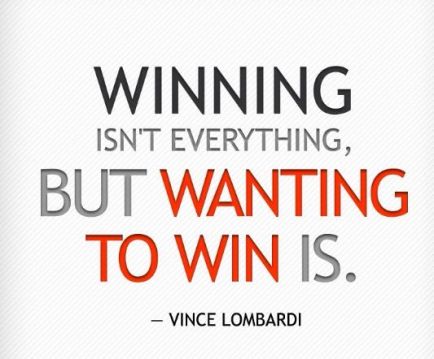
winning

To win a sale requires a number of factors all aligning properly at the right moment.  The buyer’s need, a good story, the right product, and of course, an easy fulfillment (sales) process.

I’ve led marketing and sales teams for more than 20 years.  Neither could win without the other, yet each feel confident they reign supreme when it comes to closing the business.  However, there is an increasing body of work that suggests the role of the sales person, relative to closing the business, is decreasing.  Buyers are self-educating themselves all the way through fulfilling their own purchase.  Think Amazon.  You sign in, check out the product your interested in, perhaps read some reviews, and into your cart it goes straight through to check out.  If you’re Amazon Prime, 3 days later it’s in your hands and ready for use.  As the buyers journey continues to change, it’s up to the sales leader to adjust and learn new strategies that will increase their effectiveness; adding the right ingredients, at the right time, to achieve the desired outcome – a sale.

Nothing gets sold without a product, price, place or promotion.  I’ll add process in there as well as the 5th “P” of Marketing.  Combining these 5 P’s into a single offer that results in a sale is where the true beauty, art, and science all come together with marketing and sales.

Marketing is the lead function in any organization that is charged with providing an end-to-end view of the buying process.  Beginning with product development and ending with the sale, Marketing’s role is one focused entirely on creating a remarkable experience for the buyer on his journey to the cash register.  Much like a cardiologist confers with an anesthesiologist prior to surgery, a sales person should consult with Marketing.  No matter how great a heart surgeon is, she would never go into the operating room without the help of a strong and competent anesthesiologist.  If she did it would be disastrous.  If a sales person meets with a prospect without understanding the marketing behind the product the outcome can be quite disappointing.  And while I’m certain egos exist in the OR, I’m equally aware of the egos that exist within Marketing and Sales.

So here’s my challenge to Sales leaders interested in improving their team’s results…

Partner with Marketing to truly understand the offer.  I’m sure some heads are shaking right now and perhaps worse tempers are flaring.  Sales leaders by nature are confident with Texas-sized egos.  But the great sales leaders know it’s all about being a continuous learner.  Without learning you can’t be strategic, and without strong strategy skills

you’ll never improve your results.  You’ll simply go about doing things as you’ve always done, getting what you’ve always got.

Instead, I’d suggest sales leaders meet with their marketing peers.  Ask them questions surrounding the 5 P’s.

  1. What are the 3 most important features of this product and why?
  2. How did we arrive at those features?
  3. Tell me what went into our pricing for this product?
  4. What’s the impact to our brand if we discount the product?
  5. Are there any unintended needs that our product addresses? (think Post-It notes)
  6. Where in the process would my help and involvement, from a sales standpoint, yield the greatest end result?
  7. Where in the buying process do you feel there is room for improvement and can I help?

Questions like these will accomplish several things including: establishing trust between these two functions, educating each other by expanding insights and perspectives, fostering collaboration, and most importantly, if done right, this interaction will keep the conversation, efforts, and resources focused on the customer.

So to all the sales leaders out there, open your minds, focus on the customer, and be excited about the possibility of learning something new and connect with Marketing today.

Dunkin…One Hot Brand

Dunkin

Some time when I was around 5 or 6 years old my grandmother let me try my first sip of coffee.  She brewed it in a small tin percolator on the stove and I remember how the aroma of the coffee filled the house.  She put a touch of cream in a small cup, slid it across the table, and wa-la…a coffee enthusiast was born!

Dunkin has been my go-to brand for as long as I can remember.  It’s where I go to think, sometimes to work, sometimes to write, and other times to hang out.  It’s a special place I go to with my dad when we’re together, to chat and spend time with one another.  Dunkin has become a comfortable part of my life.  How did they do it?

The Marketing team at Dunkin works overtime to stay connected with their customer.  From determining new menu items, to the appropriate temperature at which they serve their coffee, Dunkin stays close to their customers thoughts.

By delivering on their brand promise every day, Dunkin has created a trusted brand that represents consistency, dependability, and commitment.  “YOUR COFFEE JUST RIGHT, EVERY TIME.” That’s a commitment.

The Dunkin I frequent in Jamison, PA is staffed by an incredibly friendly team of service professionals.  While some would argue that qwik-serve establishments are far from employing service professionals I’d argue against that position every day of the week when it comes to Dunkin.  Traveling more than 100,000 domestic miles every year since 1997, I can confidently say I’ve been in hundreds of Dunkin locations across the country.  My coffee, and the experience by which it was delivered, keeps me coming back.

Typical elements that are included in measuring a customers experience with a brand seem to have been mastered by Dunkin.  Clean stores, hot coffee, comfortable gathering spaces, WiFi, quick and friendly service, a killer app that rewards you for your business, well lit stores at any hour of the day, and great presentation of their baked goods are all things that have helped create a dominant Dunkin brand.

When you look at your brand, do you know what your customers judge you on?  What are the elements surrounding their experience with your company that you need to pay attention to?  Do you know?  If not, it is probably time you engage in some deep buyer journey work to better understand what your buyer goes through in order to arrive at their buying decision.  Rest assured Dunkin has.

Operating nearly half the number of stores as Starbucks, its largest competitor, Dunkin still controls 24% of the coffee market compared to Starbucks 36%. Dunkin reports selling nearly 2 billion cups of coffee each year.  Starbucks has elected to not disclose their number.

Dunkin’s growth will no doubt continue providing they keep their eye on their brand promise.  Assuming they do, I can guarantee them I’ll be returning every day for my medium hot coffee with cream.  Keep on runnin Dunkin!

DunkinJoe

Presentation Matters!

Jewelry

Recently I was killing time in one of the country’s largest department stores as my wife did some shopping.  As a passionate, yet at times geeky marketer, I enjoy going to the mall to look at how merchandise is marketed and how consumers interact with that merchandise as they consider their purchase.

I’m often baffled by how some stores seem to be quite comfortable with messy racks and shelves.  You know the ones where all the sweaters are thrown all over the place, sizes mixed together, shirts are on the floor, and forget about the socks section.

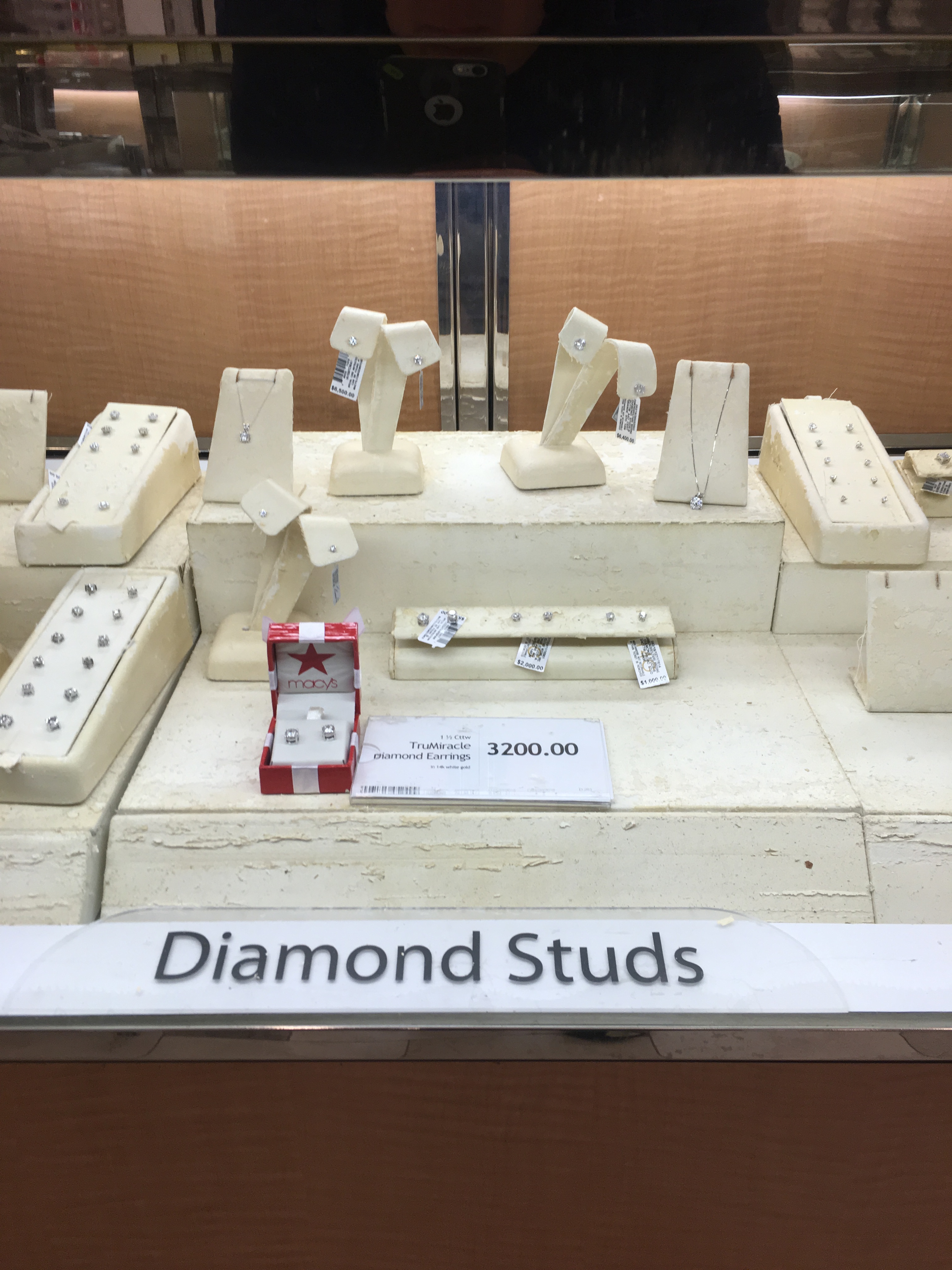
As I wandered through this major, national, department store I stumbled into the jewelry section.  In fact, I quite literally stumbled as I noticed the sign for a pair of diamond earrings for $3,200.  It wasn’t the price that caught me off guard.  It was the horrible presentation.  The jewelry case looked like a disaster.  I actually snapped the photo above as my brain tried to reconcile the price of $3,200 with a case that looked like it had been through the war and back.

How could a retailer that is one of the most iconic in the country allow one of their stores to present merchandise like this?  Could their executive team even be aware that they are trying to sell jewelry for thousands of dollars in this manner?  I could never imagine a mall jewelers case to looking like this.  You’d never see a presentation like this in Nordstrom or Bloomingdales.  So my question is simple…

If this is the only way you’re able to present merchandise should you do it?  Is it worth jeopardizing your brand’s image? Is it worth the risk of destroying its value?  Further is this the image you expect of your brand? Crusty, cracked, faded, and dirty? Would any of this company’s executives spend that kind of money anywhere else where the merchandise was presented this way?  I’d bet not.

This got me thinking.  I wondered just how expensive jewelry displays actually cost.  Maybe, just maybe they were really expensive. So I went to http://www.nilecorp.com which sells jewelry displays.  I inventoried the displays in the case and priced out replacements.  NEWSFLASH: To replace the faux suede displays in this picture would cost a WHOPPING $50.00! Seriously?  Kind of makes you wonder just how far out this capital expenditure has to be budgeted for. Sense the sarcasm?

The morale of this story (blog) is that a multi-million dollar brand can be tarnished for under $50.00.  And whether your company is a local small business, a national retailer, or a luxury automobile manufacturer your brand is open for business 24/7. So if you’re not paying attention to these kinds of details guess who is?  Your lost customers.

And remember this…while diamonds may last forever, their display cases don’t.  Pay attention to the details.

Consistency: The not-so-secret ingredient to building a strong brand

consistency-is-key

If I were to ask you to name your favorite brand what would you say?  What metric or definitions would you use to acknowledge those companies whose brands rise to the top?

Brand building is big work.  Heavy work.  Time consuming work.  It takes patience, curiosity, interest, a willingness to listen, a willingness to act, a conscious effort to deliver what you promise day in and day out.  Yes, a brand is simply that…a promise.

Chances are your favorite brands may do many things well, but there’s one thing I bet they do better than all the others.  I’ll bet your favorite brands deliver what they promise consistently.  Not 70% of the time, or 80% of the time, but 10 out of 10 times you get exactly the experience you’ve come to expect.  It’s exactly the reason you keep going back.  It’s THE reason it’s your favorite brand .

Consistency is the little, but not so secret, ingredient of successful brandsDunkin Donuts, Starbucks, and Wawa deliver great coffee all the time.  Apple delivers quality products for home, work, or on the go, that are easy to use and deliver what’s promised.  The gym I go to is always so clean you could eat off the floors which says a lot for a gym!  I drive 23 miles to take my car to a Cadillac dealership when there is a Caddy dealer 4 miles from my home.  Why?  They always recognize me by name, their waiting area is ultra-comfortable with TV, work stations and high-speed internet, not to mention their  “Nordstrom-like” restrooms.  Speaking of Nordstrom, their service is remarkable each and every time.  Whether you’re buying a brand name shirt, or one that carries John Nordstrom’s name, you can rest assured you’ve purchased something of quality.

We all have examples of our favorite brands.  What’s funny is how many companies I’ve experienced where paying attention to those little things is viewed as more of a luxury than a requirement.  Dunkin didn’t get the reputation for great coffee by accident.  They didn’t say “it doesn’t matter where we get our beans from or what type of equipment we use to brew it”.  They are all about those coffee details.  Nordstrom’s didn’t develop its reputation as service workhorse by giving customers a hard time when an item didn’t fit, work, or hold up as expected.  And for those of you privileged enough to live in a city where Wegmans operates you know how consistent their delivery of remarkable service is.  Wegmans has been known to take back, refund, and provide other goodwill gestures for food purchased that the customer didn’t like.  Consistently consistent.

If you’re selling fast and easy, it better be fast and easy all the time.  Not just most of the time. If you’re selling fresh, it needs to be fresh at 6 am or 6 pm.  If you’re selling durable, it better last under the harshest uses or conditions.

Regardless of what you sell, think about how consistent your brand delivers on its promise.  If it’s anything shy of 100%, or Six Sigma, I suggest you reevaluate and understand not just why, but what you’ll do to correct it.  Nobody wants to buy “sometimes”.  In fact most people buy with their emotions, and as human beings our emotions are wired for a “forever” experience.  People don’t like change and if your brand is inconsistent you’re indirectly creating a situation that will bring a change to your customer.  Not a good thing.  Consistently consistent.  That’s the key.


Pay Attention. You’re Missing So Much.

untitled

Pay attention.  Did you see that?  Did you notice her roll her eyes?  Did you see how he looked at his watch?  Did you hear the receptionist’s tone when she told you to hold?  Are you watching?  Are you paying attention?

Life’s all about nuances.  The little things that make all the difference.  The quick but genuine smile.  The empathetic reply you receive when you ask if Mr. Smith is in.  The notes your customer takes as you’re talking.  Or even something as simple as your 9 am appointment coming to get you promptly at 9 am.  Not 9:05 am.  Not 9:15 am.  But 9 am sharp.

In some ways we’ve become numb to life’s little nuances.  Maybe it’s our phones, social media, the internet, or maybe its Darwinism as our ability to compete, survive and reproduce evolves.  Regardless, we’re slowly losing our ability to spot things.  To recognize signs.  To pick up on the “subtle clues” a prospect gave, or in some cases the very visible and obvious clues a dissatisfied customer gives.

The next time you’re in the grocery store, department store, car dealership, or just about anyplace where there are things for sale take a moment and observe.  Look around you.  Did anyone acknowledge you?  If they did, what did they say?  Did you feel comfortable?  Did you feel confident they were asking because they had your best interest at heart?  Or did they say hello and roll right into a sales pitch?

Whether you’re a professional sales person or a marketer, your job more than any other in the company is to be in tune with these signs.  Your job is to notice things and to challenge or acknowledge them.  Only through observation can you effectively sell.  Only through observation can you begin to create a compelling story that people find interest in.  Only through observation can you begin to align your business with your customers interests.  Until then you’ll continue to slam the round peg in the square hole not because you want to, but because you don’t know any other way.  You haven’t been watching.  You haven’t been observing.

Pay attention.  Look around you.  Watch… really watch… your customer.  How they react to you and others in the office.  What did they say?  How did they say it?  What was they’re body language?  How are they observing you?

Engagement comes in all shapes and sizes.  But when we’re truly engaged, others know it.  While engagement for me may have a different physical appearance than your engagement, the fact is that true engagement creates a visible and tangible level of energy.  It can be seen and felt.  Pay attention.  Watch for it.  Recognize what it looks like.

“Nothing has the power to broaden the mind as the ability to investigate systematically and truly all that comes under they observation in life” ~ Marcus Aurelius