Leadership Lessons From 3 Influential Men

lesson

Much has been written on the subject of leadership over the years. There are more than 103,000 books pertaining to “Leadership” at Amazon.com, and a huge multiple of that if you include books about specific leaders. I have read hundreds of these books over the years written by, or about, corporate leaders, world leaders, philosophical leaders, and celebrities representing all areas of fame. Great thoughts, ideas and perspectives can be gained from reading books across a broad swath of leaders. But for me, 3 individuals specifically have taught me some of the most important lessons in leadership. Here they are:

  1. Ronald Reagan. In her book, When Character Was King by Peggy Noonan, she describes Ronald Reagan as a deep thinker. Someone who wrote his own speeches, delivered his own messages and negotiated his own deals. He spent little time worrying about what others thought of him…other than Nancy his wife. Reagan became known as the Great Communicator and for good reason. He said what he meant, didn’t mince words, and had an unshakable conviction when he spoke. Being an effective communicator is important in all areas of life whether personal or professional. From President Reagan I learned the importance of having a clear, strong message of my own, that must be delivered with confidence and conviction.
  2. Bill George. The former CEO of Medtronic, has made the concept of authenticity the focus of two great books: Authentic Leadership: Rediscovering the Secrets to Creating Lasting Value, and True North. He stresses the importance of being authentic, taking action in a way that conveys complete alignment with your values and your beliefs. When people begin to operate outside of their area of “authenticity”, those around them see and feel this disconnect, thus resulting in the creation of distrust. When your actions are not in alignment with your inner values an internal conflict begins to emerge and ultimately leads to failure personally and professionally.
  3. Joseph A. DeRosa – my dad. I understand that you don’t know my father. No books have been written about him, nor has he been profiled in any business publications or newspapers. Yet the lessons he continues to teach me as a man are consistent with those he instilled in me as a boy. From my father I learned the importance of integrity and character – knowing what the right thing is to do and doing it…no matter what. I learned that accountability is something to seek and cherish, not something to hide from. His teaching style is by example. He worked several jobs to raise his family and taught me the importance of working hard and being the best at what you do. Finally, the most important lesson I learned from my dad is to place family first, for at the end of the day, when the work is done or dissolved, your family will always be there to provide comfort, support, and love.

When I look at the leadership lessons I treasure most, I realize just how intertwined they are. Without strong character and self-awareness, it’s impossible to operate in an authentic way. And if you don’t emulate authenticity, no matter what your message is, it will not be believed or trusted. As the late Stephen Covey said, “Seek first to understand before being understood.” To place the needs and concerns of others, in front of your own, will demonstrate your desire to first understand.  Once people can FEEL your authenticity and trust develops, they will follow you even if only to catch a glimpse of where you’re going.

In the  coming weeks I will be posting a blog on Leadership Lessons from 3 Influential Women.  There is so much to be learned from all people, men and women, that I wanted to be sure I shared both sides.  Great leaders have a combination of many different traits, talents, and attributes, all of which have been developed over the years with multiple influences.

A Lesson in EQ – Move To Improve

EQ

Most people evolve into a leadership role.  Sure, we’ve all heard people talk about a specific person as a “natural born leader”, but few are. Often times, someone rises to the position of leader as a result of their accomplishments as an individual contributor.  Think about it.  What was the reason for your first promotion?  Or your second?  Most likely you were promoted because you exceeded a specific sales number, or made an improvement that saved the company a great deal of money.  Early in your career, those are the reasons you achieve recognition and promotions.

Many companies invest heavily in leadership development.  They use tests to identify potential leaders, teach classes in leadership lessons and ideals, and even rank employees in the ever popular “Org & Talent Review”.  And while each of these components serves a very specific purpose in building the leadership ranks within a company, it’s the time and development spent in the areas of EQ that tend to be overlooked.

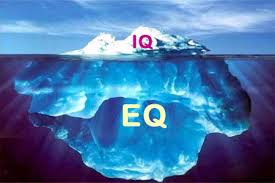
EQ, or emotional quotient, is the measure of a persons ability to deal with others in a sensitive and empathetic way.  People with high EQ have a great sense of self-awareness and know the importance of treating people with respect and dignity regardless of position, title, etc. A report published by Glowan Consulting Group, looked at the correlation between leaders with high EQ versus IQ, or cognitive intelligence.  The report found that those leaders with a high level of EQ generated results ranging from 10 – 24% better than those with low EQ.

John Mackey, CEO of Whole Foods said, “For leadership positions, emotional intelligence is more important than cognitive intelligence.”  Having the ability to respond to one’s own emotions, and those of others, is the key differentiator between those that manage people versus great leaders of people.

Leaders that have a difficult time connecting with others in high stress environments should look to improve their EQ.  As the pace of change rages on, and companies are faced with changing strategies, workforces, and philosophies, it is critical that its leaders understand how to connect with people in order to affect positive change.

Daniel Goleman brought EQ to the forefront in his 1995 book, Emotional Intelligence.  I highly recommend this book for any leader looking to gain a better understanding, as well as, improvement of their own EQ level.  Your ability to connect with those around you in an authentic and genuine way will create the trust and bond required to help you – the leader – provide direction and guidance both in good and bad times.  An improvement in your EQ level will drive increases in your individual performance, as well as, producing better results across the team you lead.  The reason?  People don’t care how much you know until they know how much you care.

Your Leadership Style + Your Company Culture – Is There a Disconnect?

perception

Carrot and stick.  And so goes the age-old debate of how to achieve great business results.  Do you shower your employees with accolades and pats on the back?  Or do you focus on the consequences for under performance?  Is your tone one of optimism and assumed-success?  Or is your temperament such that you lead with a, “if we fail” mentality?

There are as many different leadership styles as there are leaders.  Our styles are born from our life experiences from childhood, up to and including, the role we currently occupy.  How you were raised is as important as how you were managed in the first several years of your career.  Most experts agree that the “formative years” for a child occur in their first 12 years of life.  Likewise, the formative years of someones career is their first 5 years in the workforce.

Human beings are natural-born observers.  We watch.  We absorb.  We learn.  We take what we learn and begin to construct potential outcomes for the scenarios we encounter later in life.  Like, cause-and-effect, we begin to build a mental inventory of outcomes based upon actions and reactions.  We learn how to alter outcomes by changing our actions or behaviors.  Yet we all learn in different ways.  Two people can experience the exact same event and have completely different views or perceptions of that event.  And herein lies the formula for how our leadership styles evolve.

Are you a positive motivator or negative?  How do you know?  Ask yourself the following questions:

  1. Do you work in your office all day with the door closed?
  2. When was the last time you sent a communication to recognize a team member?
  3. How often do you walk around the office making eye contact, saying hello, and simply engaging people?
  4. How many people on your team do you rate as a top performer, and if so, when was the last time you told them how much you appreciated them?
  5. Are you losing more than 20% of your employees each year?
  6. Do you hold regular team meetings or even informal get-togethers?
  7. Do you consistently meet, or miss, your numbers?

How you answered these questions may be an indication of your style of leadership.  On the other hand it may also be a reflection of the culture within your workplace.  Either way it’s worth your time to evaluate.  Why?  Because there are several reasons to have a true understanding of your personal style and that of the culture in which you work.  If you genuinely want to build lasting value – for your company or your client – the first step has to be the development of relationships.  In the absence of trusting relationships a company will not be able to experience sustained growth, and nor will you.

According to an article published earlier this year by Forbes, the number one reason people left their job was for stability reasons.  People leave when they don’t feel secure.  Insecurity is often the result of a bad manager.  In fact a subsequent article in the Huffington Post Small Business, it cites the number one reason employees quit is “Their boss sucks”.  Micromanagers and poor communicators topped the list of horrible bosses.  The negativity that flowed from these bosses infected the workplace so much so that people run for the doors.

According to the American Institute of Stress, the top 2 causes of stress in the workplace are work overload and people.  The AIS estimates that stress causes American businesses more than $300 billion each year in lost productivity with a major contributor being a negative workplace.  So how can you change it?  First change your behaviors.  Try doing these three things each day:

  1. Walk around the office at least twice a day and say hello to folks.
  2. Work with your door open (if you have an office) when you can.
  3. Look for the good things that are happening and recognize them.

These are all within your control.  If you’re working for a company that has a negative-tone culture you may need to reevaluate what’s most important to you.  Remember, jobs come and go, but your reputation stays with you no matter where you are employed.  Don’t let the dynamics of an organization define who you are and how you act.  If your belief system is in direct conflict with the office culture, you may need to make a change.  Great teams are built by great leaders, and to be a great leader you’ve got to recognize and acknowledge that your people are in fact your biggest asset.   Only by growing your workplace relationships, developing trust, and displaying respect will you be able to develop a high performing team.

No Promotion, Now What? Ask Yourself These 4 Questions.

no-self-promotion

It’s been a grind for months.  You’ve been working 12 – 13 hour days and weekends to prove you can do it and do it well.  All eyes are on you.  The project you’re in charge of is critical to your company’s future success.  It’s a big deal.  You complete the project and sit back ready to be showered with accolades and compliments by your boss and your peers.  Deep down you know this will be your defining moment…your own personal Mozart Concerto.  You wait…wait a bit longer…still longer…and nothing.

Wow!  What happened.  Your finished work was unbelievable.  You peers and other industry partners even commented on your end result.  Your boss seemed pleased along the way but hasn’t shown any real celebratory emotion.  Of course after all, aren’t you expected to deliver high-quality, near-perfect work?  This scenario is not atypical, but in actuality very common.

So what do you do when you hit this wall?  What actions should you take when the work you thought would seal a promotion turns out to do little more than generate a brief passing smile in a hallway at the office?  Do you quit?  Leave?  Complain?  Ask these 4 questions to help you determine your next course of action.

  1. Why did I expect to be promoted in the first place?  Perhaps you assumed that by delivering an amazing performance you’d somehow get that big title or bigger paycheck.  You may have even believed that your boss would just create a brand new position for you with the big title.  Maybe in a prior conversation your boss alluded to “big things” for those who step up and deliver a solid performance.  If the reason you expected your work to result in a promotion doesn’t contain a “this for that” in your explanation then you yourself have set yourself up for disappointment.  Learning:  If you take on a project, job, initiative that you expect will lead to advancement, be clear with your boss up front about this and get their reaction and their commitment before starting.
  2. What can I do to improve my performance?  This is a tough question to ask.  Most of us believe we’re already doing all the right things.  We sometimes confuse hard work with smart work.  High performers are constantly learning, constantly seeking knowledge, new ideas, perspectives, etc.  Focus always, on improving yourself first.  Personal development should never be weighed against a promotion.  Learning:  Adopt the attitude that you will be the best at your craft regardless of what happens in your work environment.  Even if you don’t get that promotion you can still have confidence in your ability to produce great results. And ultimately those results will be recognized even if by another employer.
  3. Is my boss my advocate?  Does your boss share success or does he take all the glory?  What happens when things go bad?  Are you hung out to dry or is your boss there to absorb a “team loss”?  Does she create situations that allow you to shine and be recognized?  Has he taken the time to introduce you to his boss to create an opportunity for interaction?  Learning:  A boss that lacks confidence or self-esteem will always be a barrier to your progress.  If you find yourself working for a boss that fits this profile…and progression is important to you…you may need to move on.
  4. What do my peers think of me?  This is perhaps the most overlooked area when dealing with promotions or lack of.  Many organizations have implemented performance programs that gather feedback from your peers to include in your annual performance review.  The ever-popular “360” became all the rage in the early 2000’s and still exists today with some variations.  A poor relationship, rapport, or perception of you with your co-workers can kill your career aspirations as quickly as those of a bad boss.  Learning:  Put yourself out there.  Build relationships with your peers as well as those above and below in the organization.  Most companies today place great value on workers who are proficient in influencing, bridge building and negotiating.

Especially in times when the outcome did not match your expectations, self-reflection is critical.  Taking an honest look inside will always help bring perspective to each and every experience you encounter.  Thomas Paine said, “The real man smiles in trouble, gathers strength from distress, and grows brave by reflection.”  Basically know…it’s okay to talk to yourself.

3 Characteristics of Great Leadership

download (2)

John Quincy Adams said, “If your actions inspire others to dream more, learn more, do more and become more, you are a leader.”  That one statement sure packs a punch.

Effective leaders all possess similar strengths.  Discipline, focus, enthusiasm, commitment, and limitless energy are all characteristics displayed with strong leadership.  Leaders are hard chargers who operate with a clear sense of direction and are generally successful in getting people to follow.  After all you can’t be a leader without followers.

And then there are great leaders.  Those individuals who not only are able to get people to follow, but who inspire them to go beyond what they ever dreamed possible.    The great leaders understand the human condition.  They thrive on people engagement and behavioral observations.   They realize that all people are unique and therefore respond differently even when faced with the exact same circumstances.  It is the great leaders’ ability to shape their message in a way that reaches and resonates across a large group of people.  But it’s more than their message.  A great leader is able to not just create a compelling message (vision) but make it believable by the actions and characteristics they demonstrate daily.

Great leaders play at a higher level than regular leaders.  They’re the All-Stars.  The one-of-a-kinds.  The most sought after individuals that people want to meet with, get to know, or work for.  What separates the good from the great are 3 capabilities the leader must demonstrate daily:

  1. Clarity of vision.  Great leaders know where they are headed and how to get there.  It’s crystal clear to them on the inside which makes it easier to communicate outside.  They have a superior sense of direction and know where their own True North setting is which can be felt by those following.  This clarity of vision demonstrates their confidence and conviction in the actions they take and ask others to take.
  2. Teaching.  Great leaders are teachers.  They get energy from meeting with people and sharing their knowledge, perspective and beliefs.  They realize that to be great teachers they must commit themselves to being a life-long learner.  Constantly reading, asking questions, listening, and engaging in the exchange of ideas allows great leaders to capture the hearts and minds of their followers.
  3. Motivation.  Great leaders provide reasons to act.  Through their vision and teaching, they inspire people to take action and begin the journey.  Great leaders know how to motivate those around them by recognizing the differences in people and what drives individual behavior.  Even the great leader him/her-self requires motivation whether it’s spiritual, family, personal or professional they have their own reasons for taking action.

So who are you?  A leader, or a great leader?  Where do you fall relative to the 3 must-have capabilities of a great leader?  You’ve already taken steps to improve your Teaching skills by reading this blog…and I assume others.  Remember, if you can dream more, do more and become more, others will follow.