Taking The Lead Vs. Being a Leader

leader

I’ve built many sales and marketing teams over the years.  I’ve led many to success and some to failure.  Throughout my career I have learned a great deal about leadership and leading people to achieve a desired goal.  One of the important facts I’ve learned over the years is that there is a clear difference between taking the lead and being a leader.  Having a true understanding of this difference helps to effect the best possible outcomes.

The difference between taking the lead and being a leader is quite simple.  When you take the lead you exert control.  You see examples of people taking the lead everyday throughout the world.  Kids take the lead to be the captain of the kickball team at lunch.   Executives maneuver to take the top spot in a company that may be floundering.  Yet these examples and others like them do not demonstrate leadership.  They simply showcase situations that arise where there is a vacuum at the top and any opportunistic person has the chance to step in and take control.  But that’s not leading.

Taking the lead involves control.  It often times results in a new regime rising to the top that is less focused on the team and much more  focused on an individual or small group of individuals.  This is not to say that in times of need that someone with noble intentions can’t rise to the top and become a leader.  Those situations do happen but are less likely when there is a leadership vacuum at the top.

The most significant difference between taking the lead and being a leader boils down to one ability.  The ability to inspire.  Great leaders inspire.  They get people to dream big, to not accept the status quo, to challenge conventional thinking without fear of embarrassment or disappointment.   The best leaders inspire people to own their own destiny.  To not settle for mediocrity.  To live the change we want to become, as Gandhi said long ago.  Leaders who are able to inspire possess a quiet confidence.  A sense of conviction that is both strong but flexible.  Strong leaders are learners and adapters.  They are able to see things as they are while formulating a plan to shape the future they intend to create.  They are driven by the need to be of value, and of service, to others and they inspire the very best from each of us while doing so.

These highly favored leaders are those  individuals that we all like to follow, to watch, to cheer on.  These are the people who make us feel confident in the value of our personal contributions, and are able to rally a diverse group of folks to charge off in a common direction.  They inspire each of us to reach for, and obtain greatness.  They are the real leaders.

Critical Insight When Making Tough Decisions

decision

If you need to make a difficult decision make sure you understand your surroundings as much as you understand the facts and details of what it is you’re trying to decide upon.

I recently had lunch with a colleague to discuss some key decisions that I need to make in our business surrounding strategy.  I presented my facts, beliefs, and experience with great passion.  My plan was both logical and well thought through.  I knew however that some of my decisions, while believed by the team the correct ones to make, would create some discomfort.  Why?  Because while we can all understand logic, and positive correlations, we are after all human beings, and human beings dislike change no matter how sound, logical, positive, or necessary that change is.

My colleague, who has years of experience and incredible wisdom said to me, “be aware of the issues that are not part of the issues.”  This statement perplexed me.  I didn’t understand.  When I asked her to explain she provided this wonderful story that provided the clarity to what she was saying.

For years she had her hair cut by the same stylist.  Through life’s many trials and tribulations, ups and downs, good times and bad, this stylist cut her hair and listened to her stories.  As times changed she wanted a new hair style but the stylist was unable to provide the cut she wanted.  She knew she had to make a change but her feelings and emotions of abandoning this stylist were strong.  She is an intensely loyal person and the thought of ending this long-standing relationship was quite troubling.  Her head told her it was the right thing to do but her heart was most certainly conflicted.  So while the issue at hand was achieving a new hair style, the emotional issue tied to her sense of loyalty came to the forefront of her making the decision to go elsewhere…hence the issue (emotional), not part of the issue (new hair style).

Bottom line:  It’s critical to understand emotions when making a decision. Your emotions as well as those of the key stakeholders involved in that decision are paramount to effective decision-making.  Emotional history, sometimes referred to as baggage, can play a major role in decision-making.  Being aware of these issues, that are not part of the actual issue being decided upon, can help you frame your approach.  Your decision is your decision.  It’s the “how” (the approach) you present your decision that can often times become the difference between effective decision-making and holding the status-quo.


How Your Sales Team Really Feels About Social Media

socialmedia

Sales people are some of the brightest, most adaptive, and persistent personalities on the planet.  They thrive on ego and strive to be recognized from the highest levels of their organizations.  The best sales people focus on establishing strong relationships and broad networks of contacts.  But what most sales people dislike more than anything else is change, and social media represents one of the most sweeping changes to sales people since the invention of the fax machine.

To get your sales team on board and using social media to improve their results requires you to have a thorough understanding of what’s preventing them from getting involved to begin with.  Here are 3 things your sales team believes about social media but isn’t telling you.

  1. Social media isn’t up to me, it’s the company’s responsibility.   Reps believe that social media is an extension of advertising and thus is the sole responsibility of the company.  Communication, narratives, or messaging whether via social or traditional media outlets are the responsibility of the corporate marketing team.
  2. I don’t have time.  Reps see things as either-ors.  If I must do Thing A, than Thing B must be sidelined.  Something must come off the plate before something new is added.  Given most sales people feel they already work to their fullest capability and capacity, few see a way to add more to their daily routine.
  3. I’m afraid.  Ever hear the story of the sales rep over-promising what their product or service can do?  What about the rep who exaggerates, manipulates or misleads a prospect?  Reps fear putting things in writing which provides them little to no wiggle room if they need to dial-back a previously issued statement or comment.  Putting something on LinkedIn or Twitter creates a feeling of unease and discomfort for a sales rep.

How to overcome these 3 false-beliefs?

  1. Here’s just one reason social media is a joint endeavor between a company and its sales people:  branding.  There are 2 parts to every sale – the company’s brand reputation and the sales person’s brand reputation.  A buyer will not buy if they don’t believe in the company’s brand.  If its product is perceived to be irrelevant, or low quality the buyer will know and look for an alternative.  Likewise if the sales person’s reputation is in question no matter how good the company’s product is the sale will not be made…at least by that sales person.  Social media is a great way for sales people to build and expand their personal brand reputation and thought leadership.
  2. Social media can help a sales person become more productive by improving their efficiency.  Utilizing free apps like Zite, Hootsuite, USAToday, and Google Alerts can help keep a sales pro up-to-date and add value to their sales conversations with prospects and current customers.
  3. Show them.  As their leader you must be able and willing to demonstrate your involvement with social media.  How do you embrace social media?  How does it play into your day?  Is it a passing thing, or do you participate daily with social media?  How do you use it?  Can you provide examples?  Being able to walk the talk is critical to implementing any new initiative or change.  The sales team must see you doing it before they even consider it for themselves.

Try these approaches and let me know how it works.


The Positive Power of Regret

Regret

We’ve all done it.  Looked back and said, “Gosh I wish I hadn’t done that.”  Decisions we made, things we did or didn’t do that led to an unfortunate, uncomfortable, or disappointing experience.  Many times our failures can be tracked back to a decision we made, failed to make, or even made too hastily.  Likewise, success can be viewed in the same way.  But if you stop to look at the critical moments of your life, or your crucible moments as they’re often called, you may find a new tool in your bag worth using.  Regret.

Oddly enough “woulda, coulda, shoulda” could play a key role in helping to improve your decision-making.  How so?

Let’s imagine I have an important decision to make.  Could be personal, could be professional, it really doesn’t matter which.  I start by looking at the information I have in hand.  What do I know, what don’t I know?  What feelings or emotions strike me as I think through the different paths I could take in making this decision?  Perhaps I take the step to do a typical Pros and Cons sheet.  I write down all the positive things that could happen if I make Decision “A” along with the negative.  I do the same for Decision “B”.  I tally up all the pros from each chart and the one with the most is typically the path I take.  These are all fairly standard techniques in decision-making.  Now let’s add Regret.

Imagine 6 months have passed and you’re not in the place you had hoped you’d be.  Something went wrong along the way and things just didn’t turn out as you expected.  You’re unhappy, miserable, and regretting things.  Now come back to the present and ask yourself, what would I have done different to change that regretful outcome?  Maybe 6 months from now that diet didn’t work and I actually gained weight.  I may have regretted not working out 6 days a week, or eating that bag of potato chips every night.  Six months from now I may have failed my Chemistry class.  I may have regretted not studying enough, or asking for extra help from my professor.  Or maybe 6 months from now I’ve missed my sales goal again.  I may regret not making those extra calls each day when I quit at 5 pm.  I might regret not going to a networking event because it dug into my personal time.

Regardless of whether you have a personal or professional regret, using the positive power of regret may just help you make a different decision in the present that results in a better outcome in the future.  Regret can be a powerful tool when combined with visualization.  Visualize yourself in that unhappy moment, the failure you may feel, the disappointment that weighs on you.  Now take those feelings and ask what would I have done differently?  Regret often times gives you a second chance if you embrace it properly.

As Henry David Thoreau said, “Make the most of your regrets; never smother your sorrow, but tend and cherish it till it comes to have a separate and integral interest. To regret deeply is to live afresh.”

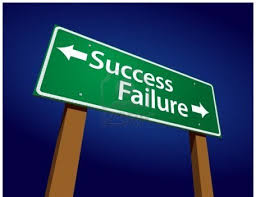
Why Failure is Your Friend

Failure

Years ago I read the book Failing Forward by John Maxwell and it had a profound impact on my life. I grew up in an ultra competitive home where me and my sisters were raised to believe that failure was not an option. As I entered the workforce and began my career I carried this belief with me only to learn, in short order, that failures can happen regardless of the actions taken.

From bad bosses (you know who you were), to poorly run companies (you know who you were as well) to jobs I simply didn’t like, failure began to approach my doorstep uninvited. I worked hard, pressed forward, acted with persistence and determination and still experienced my share of failures.  I’ve missed sales numbers, hired the wrong people, and had sales and marketing campaigns fall flat.  Yup, I’ve seen my share of failures.

Sometime after turning 40 I began to view things differently. For the first time I was able to look back at my failures not as failures but as critical learning events that took place at a moment in time. I’ve been battle tested, failed at times, yet have come out stronger each and every time.

We learn when we fail. In fact I’d argue the quality of education we get from failure is vastly better than the education we get from success. Success is simply the culmination of multiple failures. If at first you don’t succeed, try, try again. The greatest inventions ever were the result of countless failures. Many of the world’s most deadly diseases were cured only after countless failures while looking for a cure. Thomas Edison once said he it took more than 10,000 tries to invent the light bulb.  What if he gave up at 9,000?  I’d hate to think I’d be writing this in the dark.

The point is that we learn from our failures…if we allow ourselves to.  Here are 3 things that failure helps to improve:

  1. Decision making.  Making decisions is a tough business.  It requires speed, thoughtfulness, intuition, and experience.  Experience comes through both failure and success.  The more you have of both the better decisions you will make.
  2. Mental health.  The sooner you embrace failures as your friend and not your enemy the quicker you’ll be able to look at failure for what it is…a teacher.  You fall off your bike and you know it’s not the end of the world so you get back on.  You get laid off from a job and find another so now you know that losing a job isn’t a life sentence.
  3. Leadership.  Personally I want to work for someone who’s failed…at least a few times.  I’m much more willing to march into battle behind a battle-tested leader than someone who is entering their first rodeo.  Leaders who have lived the highs and lows are typically more stable offering a steady hand in times of stress as they’ve seen it before and know they can navigate through it.  While it may sound odd to say, failure is one of the biggest ingredients to building confidence.  The more you know you’re capable of handling the more confident you will be in yourself.

So rethink your opinion of failure.  It really is your friend if you let it be.

The Secret to Leading a National Sales Team to Success? Communication.

Win

Vince Lombardi said, “Coaches who can outline a play on a blackboard are a dime a dozen.  The ones who win get inside their player and motivate.”  This insight from Coach Lombardi speaks to the necessity for all leaders to understand their players and instill confidence while inspiring a desire for to achieve greatness.

Running a national sales organization is difficult. There are numerous challenges that come into play that every leader must deal with on a regular basis.  Cultural differences, time zones, and competition are just a few of the most pressing items that every sales leader encounters.

While there are many critical characteristics that make up a great national sales leader one stands above the rest…communication.  Communication is both art and science.  At its most effective level communication is a two-way street.  A give and take.  A back and forth.  It requires research, listening, understanding and patience.  Good communicators know what to say.  Great communicators know how to say it and when.  The right message delivered at the wrong time, in the wrong venue, or with the wrong tone can be just as disastrous as delivering the wrong message.  Great leaders know their people.  They understand what drives them.  What makes them tick.  Because of their deep insight into their people they are able to communicate at a higher level than those leaders who don’t take the time to get to know their people.

To be a great communicator you must do these 6 things:

  1. Educate yourself in your area of expertise.  It always amazes me how some folks believe that because they’ve been “in the business” for 10, 15, or 20 plus years they just know it all.  Their arrogance has misled them providing a false sense of security.
  2. Get to know your team.  Really get to know them.  Spend one-on-one time with them to understand who they are, what’s important to them, where they want to go, and when they’d like to get there.  Listen to them and be sure to focus all your attention on them.  We’ve all had those meetings where the person we’re talking to has “wandering eyes” and you just know they’re not hearing you.
  3. Practice.  Use a mirror.  Even after more than 25 years of building and leading large teams I still practice my message in front of a mirror.  Facial expressions are just as important as your message.  If the two appear disconnected your credibility goes out the window.
  4. Show empathy.  As the saying goes, “people don’t care how much you know until they know how much you care.” Empathy can only be developed when you take a genuine interest in helping others.
  5. Do it often.  The more you communicate with the right message the more transparent you become.  After all that’s what people want…transparency.  The ability to know what to expect without surprises is what builds credibility.
  6. Be clear.  Say what you mean.  Minimize the buzz words, big words, and impressive phrases.  No one cares how smart you sound.  They’re only interested in whether what you do can help them meet their needs.

Give it a shot and let me know how it works!

5 Ways To Make Your Meetings More Effective

Improve

Another meeting?  Most days start with meetings and end with meetings.  We spend our days running from one to another, whether in person or via the infamous conference call.  Some companies can’t operate without having a meeting to discuss even the smallest of decisions or topics, while others work hard to minimize the number of meetings they schedule. It’s not that meetings are bad, it’s just that most of them are an ineffective use of time. Little is accomplished during these meetings other than wasting the time spent being in the meeting itself, as well as the time spent preparing for that meeting.

So how can you increase your level of meeting effectiveness?

Here are 5 things you should do before scheduling a meeting:

1. Create and include a clear meeting objective. Provide a brief summary of the purpose of the meeting. Be sure to state whether this meeting is meant to inform, solicit feedback, or make a decision.
2. Invite the right people. The key word here is “right”. Don’t get caught up inviting the entire company to make sure you’ve CYA’d yourself. Have the right people there. The type of meeting you have set will determine who you should invite.
3. Be clear on your time. If you need an hour then schedule an hour. If you believe that your topic may go over an hour then plan accordingly. People hate to attend meetings that consistently run over. You don’t want to create the perception that you’re a poor planner.
4. Provide materials in advance. Many people feel that meetings should be somewhat of a surprise. I can’t stand that approach. Time is valuable for everyone. Why wait until the meeting to drop a 20 page deck on people. Give them time to read through it and absorb it. Having the ability to formulate questions, thoughts, and opinions prior to the meeting is key to running an effective meeting.
5. Schedule critical meetings during the day before 4 pm. The fact is that human nature is such that most people find getting invited to a meeting that starts at 4 pm to be annoying. Hey I know you have to be in the office until 6 pm anyway but still in all, people look to the end of their day to wrap up items that were opened during the day. Many 4 pm meetings become nothing more than place holders to reschedule another meeting when people are prepared, ready, and engaged.

Try taking these 5 actions before scheduling your next meeting and see how much smoother your meeting runs.

Stop Trying to Fit In and Start Being Remarkable

remarkable

Everyone wants to fit in. To be a part of the crowd. Some people go to extremes to remain invisible whether at school, the office, the gym, or anywhere else in pubic. Blending in is part of our culture. Why do you think brand names like Nike, Levi’s, Coke, Asics, Hollister, and Target are so valuable? They represent the main stream. Sure they offer quality and value but they also offer a strong emotional connection to safety. I’m safe if someone sees me wearing Nike, shopping at Target, or buying a Diet Coke.

But success doesn’t come to those who play it safe. Success isn’t for the faint of heart, or those who want to be part of the crowd. No. Success usually comes to those willing to take chances, to challenge the norms of society, to stand out and be remarkable.

Are you remarkable? Do you stand out at work or are you one of the crowd? Do your co-workers look at you as a thought leader? A progressive thinker? Or are you one of the many doers that get things done but not the one “cutting the edge?” Do you invest in building your personal brand? Are you working to create awareness around your ideas and opinions or are you silent, laying back, waiting for the next set of directions to come your way?

History is a great teacher of the correlation between remarkable and success. Thomas Jefferson, Steve Jobs, Donald Trump, and The Beatles all were remarkable for their time. Dimon, Reagan, Lincoln, and Gates made bold decisions, often unpopular, but remarkable in ways that led to great discoveries, financial stability, and peace through power.

We all have the ability to be remarkable. We may not all be Thomas Edison’s or Michael Dell’s but we each possess unique characteristics that if amplified make us remarkable. A great sense of humor, the ability to provide calm during turbulent times, or being able to rally people together for a common cause can be remarkable characteristics. What makes you remarkable?

Income Inequality. A Difficult Subject.

Equal

During the President’s State of the Union address he spoke to the country about income inequality. The difference between what one person makes versus another, for the same work, based upon gender, race, etc. Taken at face value I believe most people are in support of income equality. If two human beings are doing the same work, regardless of gender or race, they should be paid equal…of course that also requires all other things beyond those two criteria also being equal. And that’s where the challenge comes in.

Most successful people make significant sacrifices on their career journey to success. Long hours, missed events with their children, wedding anniversaries when they were out-of-town, an occasional birthday missed, or worse yet a birth of a child missed because of work. Many families make a very conscious and deliberate decision to focus on career advancement. This does not mean that they’ve chosen to throw everything to the wind. Perhaps their goal is to be able to send their child to Harvard, or vacation to destinations that provide both educational and personal awareness for their children to actually see what they have relative to others. And what about those that have made big sacrifices only to give back in a big way to their community with their time, skills, or money?

Every human being has free will. Of course ones ability to exercise their free will, or choice, depends in large part on where they live. American’s have the ultimate ability to choose. We can do what we want, when we want, without any interference from the government. Now to be clear, of course there are laws we need to abide by but even those are broken by people who have chosen to break them. The fact is that America was born around the concept of equal opportunity. We are the country (land) of opportunity. The land where hopes and dreams have a real possibility of becoming a reality. But even at our founding there were those that sacrificed much while others did not. That’s just human nature.

So the challenge is not in the concept of equal pay for equal work. The challenge sits with how to assess two different workers’ desires, passions, and commitments. No place is this executed better than in the world of professional sports.

Peyton Manning possesses many of the skills other quarterbacks have. Strong arm, deep understanding of defensive schemes, and the ability to change plays based upon what presents itself during the game. But Peyton Manning is different. His drive, his desire, his intense focus on watching game film over and over again. His personality presents additional leadership skills that make him even more valuable. Anyone remember Ryan Leaf? The point is that it is quite difficult to make things equal when most times the facts prove they are not equal. No two quarterbacks are the same, no two snowflakes are the same, no two CEOs are the same.

It’s a difficult if not emotional topic. It demands thought, conversation, debate, and action. We just need to be sure we’ve explored it as best we can before making things equal based solely on an altruistic perspective.  Being an American means  you have the right to explore, find, and secure opportunities.  It does not guarantee any specific outcome.  Just as we’re warned when we enter the Stock Market, no investment is guaranteed, it is simply an opportunity to invest and the possibility of your investment growing.  Think of each of us as investments.  We all have the opportunity to grow, and we all have the opportunity to fall.  Between luck, chance, skill, desire, commitment and ability the outcome – like a true investment – is never guaranteed.

Losing Key Employees? Stop Making Excuses and Face the Facts.

wake up

I can’t believe he left! What was she thinking, it’s not gonna be any better there. You know the grass isn’t always greener on the other side.

These are some of the most popular reactions from companies who continue to lose key employees. And I stress the word “key” because mediocre employees never leave. Key employees, those defined as progressive thinkers, customer advocates, or challengers to the status quo will always have opportunities to go elsewhere. It’s the employers responsibility to create an environment that is so loved and appreciated that these folks never entertain leaving.

Okay, some reading this may say, “wait a minute, it’s not my job to make people love their job, after all I’m already paying them and that’s where my responsibility ends.” To you I say think again. Leave your “you’re lucky to be employed” feelings at the door. Look around you. Today’s top employers are winning by providing employees with work that is meaningful, purposeful and an environment that is respectful and fun. No it’s not just about having fun, but that’s a necessary ingredient that can’t be ignored. Like leaving brown sugar out of your chocolate chip cookies, fun left out of the work environment will lead to work that’s bland, boring, and even bogus.

In a recent Forbes article on the things make a company great to work for, the number one ingredient for a great place to work was a strong culture. People spend more time and energy working to improve and succeed in a place where they are challenged, supported, and trusted. When you work for a company that micro manages, does not promote professional development, and reserves decision-making just for the company gods, you’re likely to end up with a workforce that’s numb, unengaged, and just looking to get through another day. Meaningful work simply cannot be done in this type of environment.

So to the managers and business owners running your companies as if you’re the only one(s) with ideas, it’s time to open your eyes. Stop running and start leading. Stop micromanaging and start providing opportunities for people to make decisions. And perhaps most importantly, especially for those entrepreneurs that started their business, stop thinking everyone is out to get you. While some people subscribe to the belief that paranoia is something every business person should have, I believe that paranoia should be reserved for your competitors. Be paranoid that your competitors are out to get you because they are. But don’t be paranoid that your employees are plotting to take you down. Trust them. Trust is one of the most powerful gifts a leader can give his or her people. Trust empowers, and empowered employees make for remarkable results.