Why Empathy Is the Secret to Leading Through Tough Decisions

Leadership isn’t for the faint of heart. It’s difficult by design. At its core, leadership is about making decisions—many of them difficult, and some of them unpopular. A leader must often choose a path that not everyone agrees with, weighing what’s best for the organization against how it might impact individuals. And that’s part of the job: to make the tough calls even when others might not fully understand or support them.

But here’s where great leaders distinguish themselves. While decisions must be made, and action must be taken, how those decisions are made—and how people are treated along the way—defines the legacy of a leader. This is where empathy comes in, not as a soft skill, but as a strategic advantage.

The Case for Empathy in Leadership

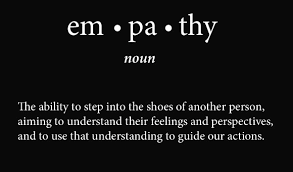
Empathy is the ability to see the world through someone else’s eyes. In leadership, it means taking the time to understand what your people are experiencing—even when you can’t change the outcome. It doesn’t mean avoiding hard decisions. It means making them with humanity.

Empathy builds trust, and trust builds alignment. And alignment is what allows an organization to move forward, even when times are uncertain.

When I think about leaders I admire, either through reading about them, and in many cases having had the privilege of working for many great leaders I’ve observed the following commonalities:

  • Average leaders make decisions and get results.
  • Great leaders do the same—but in a way that brings people along with them.

An average leader explains the “what.” A great leader also explains the “why.”
An average leader gets compliance. A great leader inspires commitment.
An average leader operates with authority. A great leader operates with authenticity.

Few would argue the impact of Abraham Lincoln’s leadership during the Civil War. He made some of the most difficult, divisive decisions in American history. But he led with deep empathy—even toward those who opposed him. Lincoln’s famous quote, “Do I not destroy my enemies when I make them my friends?” reflects his belief in finding common ground in the face of division. That demonstrates incredible empathy capabilities which in turn became the mark of his greatness.

The Leader’s Critical Obligations

Whether you lead a handful of people or thousands, leadership brings obligations—not just to your business, but to your people. Each day I do my best to:

  1. See People, Not Just Roles
    Behind every title is a human being with dreams, fears, and stories. A leader’s job is to understand what makes people tick, and to help them thrive—not just produce.
  2. Create Psychological Safety
    Innovation, honesty, and growth all begin with safety. People must feel safe to speak up, take risks, and be vulnerable without fear of blame or retribution. When teammates act fearlessly and with vulnerability, not afraid to make a mistake, you know you’ve done this well. Fail fast, fail forward.
  3. Champion Common Ground
    When opinions differ—and they will—a leader must become the bridge. Finding shared values and uniting people around a common mission is a leader’s superpower.

Empathy Is Not Weakness—It’s Strength

Empathy doesn’t mean avoiding hard truths. It doesn’t mean being a push-over, or weak. It means being able to deliver difficult decisions with care. It doesn’t mean pleasing everyone. It means respecting everyone—especially when decisions don’t go their way.

We’ve all heard it—people might forget what you said, but they’ll remember how you made them feel, especially when things get tough. I’m definitely not perfect at this, but I try to keep it front of mind every time I make a decision. It’s what I strive for every day—even when I don’t get it perfectly right.
Business – it’s all personal

Business exists to serve peoples needs. It doesn’t matter if you work for a B2B, or B2C company. Somewhere downstream in the process, is a consumer who is making a decision to buy a product or service you make, or contribute to making.

Business is very personal. Only people can care, a business cannot. A business may be a culmination of caring people but by itself, a business is nothing more than an idea. People bring ideas to life. People bring passion to their work and workplace. People bring thoughtfulness and caring for one another and a community. That all happens with people. A business can only serve as a conduit to deliver what the collection of these people express.

When I hear “it’s not personal, it’s just business”, I would say, it’s all personal. People give their most valuable asset they have to a business…their time. With that time they could invest it elsewhere to generate different returns. With their families, with other businesses, other ideas, other objectives. It is a trade-off. Yet once that trade-off is made, an individual is committing themselves – their person – to the business. This is how business gets done, and it becomes very personal.

Empathy is a key emotion to bridge the gap between business and personal. Why? Because time is the only thing that binds us all together. We all have a set amount of sand in our hourglass. When it’s gone it’s gone. Take some of your sand, and use it with others at work to demonstrate that you hear them, you understand their challenges, and you have ideas to share that can help them. By doing this you add value. And while no one can put more sand into anyone’s hourglass, we can all put a little value into each other’s lives…in, and outside, of business.

5 Things Social Sellers Do Differently: SCOPE

socialselling

Social sellers are today’s modern day sales people.  They know how to connect, where to connect, and when to connect.  Establishing a personal brand is the cornerstone of today’s social seller.  It’s no longer enough to sell a well-known, or respected product, from a great company.  Today’s buyers want more…they want to buy from someone who delivers an equally great experience…on a personal level…beyond the company brand.

Here are 5 things social sellers do differently than sales people of yesteryear:

  1. Share.  Social sellers are reading, absorbing, processing, and sharing large amounts of information on a daily basis across their network.  They are both sources, and producers, of content, insights, and information.
  2. Connect. Social sellers recognize birthdays, anniversaries, key milestones, accomplishments, as well as, the periodic “hello”. They are following – not stalking – key influencers and thought leaders and connecting via Twitter, InMail, or directly through email.
  3. Observe.  Social sellers are constantly observing. They are looking at who’s who, what she’s sharing, who she’s following, her ideas, insights, actions. These sellers are constantly balancing the importance of context and content. Content without the right context has as much value as a snow shovel provides to a resident of Jackson, WY, with a hundred foot driveway, where 60 inches of snow each year is the average. Not a lot you’re going to do with a shovel.
  4. Participate. Social sellers are active in LinkedIn groups, tweets, Likes, and Shares.  They raise discussions, respond to conversations.  They have a voice for their ideas and viewpoints and are active participants, not armchair quarterbacks.
  5. Empathize. Social sellers understand.  They relate. They feel.  They empathize.  This ability to connect with others, to “walk a mile in my shoes”, to make others feel valued and relevant are key attributes of today’s social seller. Empathy is what ties the previous 4 items together.  For without it, sharing, connecting, observing and participating would lack relevance, and irrelevance is a manifestation of inauthenticity. Genuine empathy equals authenticity.

Why Empathy is Important for Sales Leaders

Empathy

Sales is tough.  Rewarding but tough.  Not every one is cut out for a career in Sales.  It’s the ultimate “what have you done for me lately” profession.  This year’s top performer is next year’s runner-up.  Being a salesperson requires high energy, discipline, tenacity and focus.  Great sales people possess the ability to visualize their success.  They can see themselves on the stage receiving The President’s Award, or cashing that big bonus check.  They’re high achievers, hard workers, and by and large, emotionally charged people.  Great sales leader have many similarities. But the really great leaders have more empathy than your average sales leaders.

Empathy allows you to connect.  It makes you human.  Empathy allows you to feel, or perhaps more pointedly, allows you to understand how the someone else feels.  Having empathy is different from having sympathy.  Many people feel they are the same.  They’re not.  They’re wildly different.  Sympathy is about compassion, “feeling sorry for”, whereas empathy is being able to relate to another person.

Great sales leaders can relate, or empathize, with how challenging it is to find good prospects.  They can empathize with how exhausting making 100 dials a day can be.  If it were sympathy, I’d be saying “I’m sorry you have to make those 100 calls today…I sympathize for you.”  But that’s not the case.  The goal of a great sales leader is to have their team know, that they know, what it’s like to walk in their shoes.  The team wants to know the leader has “been there, done that.”  Great sales leaders are able to demonstrate empathy without effort because they can simply relate.  They’ve carried the bag, they’ve suffered the rejections, they’ve ended their day emotionally and physically exhausted without a sale in hand.  They’ve lived it.

Great leaders are not scared or intimidated to show empathy.  They don’t see it as a weakness to say “I went an entire week once not selling a thing”.  They’re not excusing low or poor performance by providing sympathy.  In fact, instead, what they are saying is I’ve had some moments like that myself and here’s how I pulled myself up and turned the corner.

We’re emotional beings.  Period.  We want to know we connect.  We’re pack animals.  Knowing we’re understood is critical.  Top performers, no matter what the profession, just want to be understood.  They don’t want sympathy and they don’t want anyone to “cut them slack”.  They want encouragement.  Not cheerleading.  There’s a difference.  Encouragement provides direction, a path.  Cheerleading provides nothing but a temporary high.

If you want to supercharge your leadership focus on developing your own personal level of empathy.  How do you relate to others?  What do you say to people who are struggling?  If you can improve your empathy skills you can improve your results, and the results of those around you.  Now you’ve created two wins.  Now you have momentum that will carry you and your team forward, and that’s what it’s all about.


A Thank You for Mom and her Leadership Lessons

MothersDay

Happy Mother’s Day.  The one day of the year where we can all stop and recognize our mom’s for all they do and have done for us along the way.  They teach us many of life’s most important lessons.  They do it in a way that creates lasting impressions along with that second voice in our head that asks, “what would mom think?”  And while father’s instill their own brand of leadership lessons (stay tuned for June), here are few that I have learned specifically from my mom that have helped me be a better person and leader:

  1. Empathy.  Until recently empathy in the workplace, especially in a leadership role was viewed as a weakness.  Soft.  Being empathetic meant you weren’t able to make the tough choices.  However, over the past decade a great deal of research has been done that’s revealed the most effective leaders are empathetic.  The ability to feel and understand others emotions.  It’s the piece that allows you to connect on a deeper level with those you work with.  This is something I learned from mom.
  2. Forgiveness.  We all make mistakes.  Some are bigger than others.  Recognizing an honest mistake versus malicious intent is critical.  Honest mistakes happen every day, and will likely occur in all our lives until the end of time.  Understanding the mistake, its intent, its impact, and the lesson learned is where the act of forgiveness comes in.  Mistakes happen in every workplace, on everyday of the year.  Some mistakes are small with no material impact to the business while others can be quite costly.  Focusing on the mistake itself and not the person is something I learned from my mom.
  3. Faith.  The ability to strongly believe in something with conviction is faith.  Be it in ourselves, others, or God, faith represents one of a handful of traits that separates human beings from all other animals on the planet.  When all the strategizing and planning is complete, a leader must have faith in him or herself, and the team they lead, that they will be able to execute their plan to achieve the desired outcome.  The ability to believe in, or hope for, something better is something I learned from my mom.

There are many other lessons I’ve learned from my mom yet these three stand out.  She’s taught me a lot in my first 46 years and I’m sure there’s much more to learn in the next 46!

Have a great Mother’s Day.  (Love you mom!)