
Type A Personalities – 3 ways to confront anxiety

Worker thinks solution of his problems

Hard charging, Type A personalities, often struggle with taming their fear of failure.  Most would agree that fear, when kept in check and under control, is an emotion that can both protect and propel us.  Understanding the cause of the fear you’re experiencing is the first step to developing a plan to calm it, contain it, control it.

Anxiety is the result, or symptom, of fear. If I fear I won’t be able to hit the ball, anxiety causes me to dread my up-at-bat.  If I fear I will fail my statistics class, then anxiety will kick in and cause me to block any learning that will ultimately help me pass the class. If I fear I will miss my monthly sales number, my anxiety will cause me to go into rapid-fire mode doing as many things as I can simply to create the appearance that I’m working hard.

Anxiety perpetuates fear, creates the stress, and force, strong enough to shut you down.  Dealing with anxiety is critical to successfully navigating change, taking risk, and managing failure.  Here are 3 ways to keep your anxiety in check:

  1. Ask the question “why not me?” When we think we will fail it is because we don’t feel competent, smart enough, savvy enough, or insightful enough to win.  Why not? Rather than thinking about the failure, replace that thought with the question why not me.  I’m smart, why not me?  I’m intelligent, why not me?  I’ve accomplished a number of great things, why not me?
  2. Turn anxiety into excitement. Replace, what if I fail, with what will I learn? Replace what if this doesn’t last, with how much better will I be no matter how long this lasts?  What will I have experienced that will make me more valuable, more fulfilled?
  3. Breath. The power of 10 minutes of just breathing is quite powerful.  Call it meditation, self-reflection, self-empowerment, or self-love, whatever you call it the purpose of this 10 minutes is to rebalance your inner self.  To bring calm to any internal bubbling that’s taking place.  There are thousands of books on this subject, apps for your smartphone, and calming music for your ears.  Get one, or some, but act now to calm the storm from building.

12 Things Great Leaders Do Daily

McChrystal

By definition a leader is a person who leads or commands a group – at least that’s what Professor Google says.  My definition is a bit different.  Who wants to be commanded?  Sure there are times, situations, and circumstances when being in command is required.  Directing, ordering, and controlling are verbs that often come to mind when we think of leaders.

Just about anyone can be taught to do these things.  Just about anyone can dish orders, direct others, and attempt to control.  Many “leaders” regardless of training can do this for some period of time before being discovered as ineffective.  Great leaders however, take a different approach.  These leaders must do all the directing, ordering, and controlling as previously mentioned but it’s how they accomplish these things that set them apart.

Great leaders are great because they:

  1. Understand how to empathize
  2. Effectively communicate their vision
  3. Ask great questions, deep questions that provide insight
  4. Act in their own authentic way, not trying to be someone else
  5. Adopt a beginners attitude
  6. Surround themselves with people smarter than they are
  7. Spend time on self-reflection, how they operate and the result produced
  8. Network and connect with others to learn
  9. Ask for, and accept help when needed
  10. Lean on mentor(s) for coaching and perspective
  11. Roll up their sleeves, never asking others to do something they haven’t or wouldn’t do themselves
  12. Inspire others through their words, actions, and behaviors

So start today with some self-reflection.  What are you doing?  What do you spend most of your time on?  How do you interact with those around you?  What’s the reaction of others when you walk in a room, speak during a meeting, engage with others in a break-room?  Consider this list and strive to embrace each one in a genuine way and you’ll find your results improve in a timely manner.

Why Your Role as Sales Leader Isn’t to Motivate

MOTIVATION word cloud, business concept

Many people think “cheerleader” when they envision an effective sales leader.  Someone who gets the team fired up, screams and shouts, and sets everyone on a rah-rah march into the field to meet prospects.

The sales leader is expected to be a high-powered extrovert, charismatic, outspoken, aggressive, and perhaps even a bit shocking.  We have all worked for sales leaders that possess these characteristics and shall I dare say, some other, more wild ones to say the least.

Early in my career I worked for such a sales leader.  He’d stand on a chair or a table during sales meetings screaming at the top of his lungs, face beet red.  The hair on the back of your neck would stand on end.  You were pumped.  There was nothing you couldn’t do.  But when he finished his super-charged motivational speech, the result felt more like a tirade than an inspiration.  There’s an enormous distance between rallying a group with fear versus inspiration.

So what is the sales leaders responsibility as it relates to motivating a sales team?

Are you ready for the answer?  None.  You have no responsibility to motivate your team.  Each sales person on your team is responsible for motivating him, or herself.  So what is your job as the sales leader?  Provide vision and inspiration.

People want to follow a leader who demonstrates the confidence that he knows where he’s going, how he’s going to get there, and why getting there is so important and beneficial.  I’ve built a number of sales teams over the years.  I have worked hard to be an inspiration – doing this provides your team members with the “why” should they do what you’re asking them to do.  Inspiration transcends motivation.  You can motivate for an hour or a day but motivation is time constrained.  It lasts only as long as the instigator – you – are on duty.  But to inspire, creates a fire, that burns deep into desire.  The greater the fire you build the more insatiable the desire is to achieve the goals you’ve set – whether you’re around or not.

Your job is to find out what drives your team.  Is it money?  Is it recognition?  Is it invention or innovation?  Is it client engagement scores?  Once you know what drives each person on the team you will be able to create your inspiration roadmap.  That roadmap will provide a clear picture to:

  1. Where are we going?
  2. Why are we going there?
  3. What’s in it for us?
  4. What will we feel once we’ve arrived there?

Most organizations fail due to a lack of clarity around the vision. You’ve got to assemble a team that WANTS to a be a part of your vision.  Trying to convince someone they will be happy going to Buffalo in the winter probably won’t sell.  You can expend all your energy convincing or you can set out to find those who are interested or intrigued with going to Buffalo.  It’s the Good to Great philosophy of getting the right people on the bus and the right butts in the right seat.

Lead by example.  Walk the talk.  Model the behaviors.  Do these things and you’ll increase your ability to inspire your followers to achieve remarkable results.

The Customer Mindset

MyBook

Developing strategies to grow revenues really excites me.  It’s what gets me jazzed.  Ideating, innovating, and brainstorming, mixed with good old fashion common sense usually always provides the best path forward.  The key is listening.  Listening to the business, the market, the employees, and most importantly listening to your buyer.

I’ve spent the last decade studying, observing, learning, testing, and monitoring results that are achieved with various go-to-market strategies.  Many companies spend too little time developing the strategy and plan to take their product or service to market.  They make or produce something, price it, and give it to Sales to sell.  Make it, and they will come.  Not really.

The Age of the Customer has arrived.  No longer does the sales person control the sale.  If you believe your sales team is in control think again.  The buyer has all the control.  Many well-respected sources indicate up to 70% of the buying process being complete before a buyer meets with a sales person.  Your buyers have looked you up, researched you, watched you, and asked about you before you even knew they existed.  Do you know where they found you?  Do you know who they talked to along the way to ask for advice or opinions?  Do you know what they read to educate themselves on this purchase?  This is all very important work.

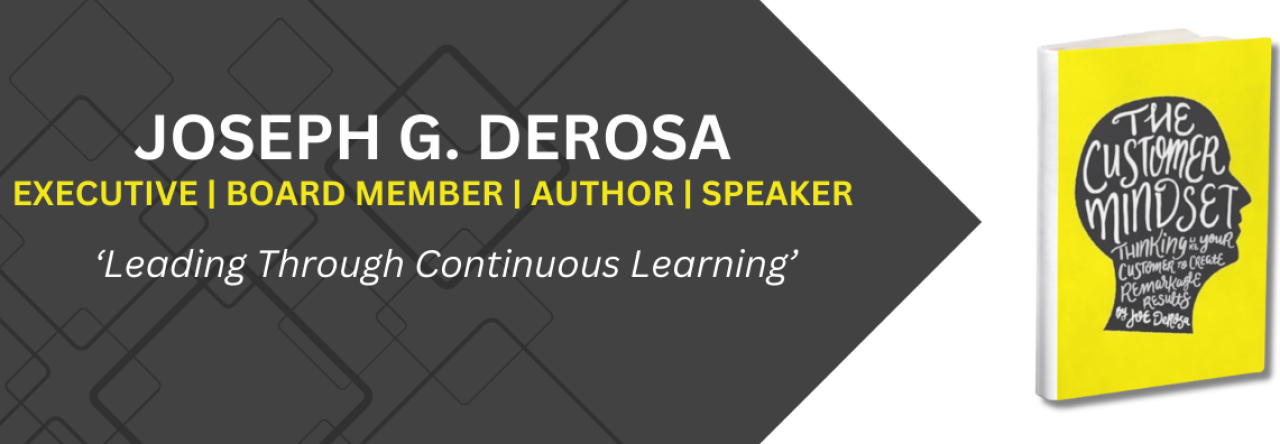
I am proud to announce my new book The Customer Mindset: Thinking Like Your Customer to Create Remarkable Results.  I wrote this book to provide an actionable roadmap for those charged with growing revenues. The book is filled with real-life stories, frameworks, and methods for mapping your buyer’s journey.  By creating a visual map of the journey your buyer takes on their way to the cash register, you will be better able to create a sales and marketing process that assists in this journey.  Remember, the buyer is in control.  Once you recognize and accept that, then you can get started focusing on how to help them through their journey versus spending your time trying to figure out how to sell them.

I want to thank the more than 5,000 readers of my blog who inspired me to go deeper.  To provide more detail.  To be more prescriptive.  Thank you so much.  I also want to thank David Moncur who has been a great friend and inspiration, not to mention the best creative mind I’ve ever worked with.  It is his firm, Moncur, that designed the awesome cover – front and back – of my book.  Thanks David.

I hope my blog, my book, and my stories continue to help you grow your business by providing strong leadership, innovative thinking, and a discipline to focus on doing the right things that maximize your results.

Get Specific -4 Ways to Make Your Business Conversations More Effective

Business People Meeting Growth Success Target Economic Concept


Your eyes are glazed over.  You’re trying to be discreet but you can’t help looking at your watch.  Is it over yet?  As meeting standards go this one is pretty brutal. It’s dull, boring, lacking insights, not informative, it’s basically a disastrous waste of your time.  Have you ever encountered one of these meetings?  Here’s a daring question – have you ever been the one driving one of these meetings?  If your answer is “no way, I’d never run such a terrible meeting”, I’d say you should probably spend a bit of time on self-reflection.  We all have coordinated and run meetings like this.  We’ve all wasted someones time at one point or another.

Here are 4 Ways to Make Your Business Conversations More Effective:

  1. Prepare – Do some homework on the individual you’re meeting with and the company.  It’s not enough to just throw out facts about the company or industry.  With the advent of social selling you’ve got to know your buyer – the human behind the decision.
  2. Ask good questions – Dump the “what keeps you up at night” question. So boring.  So predictable.  Kind of shallow.  A rookie question.  Have a hypothesis of what you believe keeps them up and night and throw it on the table.  Of course that requires having completed Step 1 above.
  3. Know what’s going on in the world – Don’t take a political stance, but know what’s happening in the world, the markets, etc.  Election year impacts, the Brexit issue, the Middle East conflicts, the Puerto Rican debt default. People enjoy spending time with people who have a bit of depth.  You don’t need to be Alan Greenspan, Warren Buffet, or Seth Godin, but you do need to have ideas and opinions beyond your company’s.
  4. Manage your time – Arrive early.  If you’re on time you’re late.  I get tired of hearing how bad traffic was.  Sales people today, especially in bigger cities think they can use traffic in Seattle, LA, NY, Boston, Atlanta, etc., as an excuse and people will just understand.  If you want to be like every other sales person walking in the office than great.  You will be – just like every other.  You want to be different?  Give yourself extra time.

One final extra tip.  Please show up with some energy.  No, you don’t have to drink 17 Red Bulls before you walk in the door.  Likewise you don’t want to be Eeyore either. Find the balance between excitement and control.  Do all of these together and you’ll run an awesome meeting.


The Snooze Test: 10 Things You Could Do With An Extra 9 Minutes Instead of Sleep

alarm clock.jpg

At a recent lunch with colleagues our conversation got around to the subject of sleep.  We’re all running hard, intensely focused and super competitive.  Sleep often times takes a back burner to other more pressing needs like delivering for a client, hitting the number, or providing coaching to a team-mate.

As we traded sleep stories – are you a good sleeper, bad sleeper, restless sleeper – we arrived at the humorous topic of snoozing.  That standard, commonly accepted, always expected “extra” 9 minutes of sleep you can get simply by hitting a button.  The delay button.  Let’s face it, that’s all you’re doing when you hit it.  You’re delaying the inevitable.  Getting up, getting started, getting ready, and getting on with your day.

I’ve never been a “snoozer”.  Most mornings I’m up around 5 am without an alarm – it’s just how I’m wired.  But if I were a snoozer, what might I gain by not snoozing? What could I do with that “extra” 9 minutes rather than sleep?  What could I accomplish?  Here are some ideas, not in any order of priority:

  1. Meditate – spending just 15 minutes each day meditating produces huge benefits.
  2. Read – a book, the paper, scan your social channels, know what’s going on around you
  3. Exercise – most sources indicate the average calorie burn is 9 calories for every minute of moderate exercise.  A 9 minute walk burns 81 calories.
  4. Self Reflection – different from meditation, self-reflection peers into how your actions have produced the outcomes you’re currently experiencing.
  5. Time with loved ones – sure you may say, “hey no one else is up at this time”, but if they are, spending the time with them will provide benefits far greater than what you gain from snoozing a bit longer.
  6. Chores – You’re thinking, “I’m going to give up my sleep to do laundry?” The fact is, household chores that build up lead to greater degrees of stress.  The quicker you can reduce the list of what needs to be done the easier it is to find your Zen.
  7. Love your four-legged friends – play with, and love your animals. Studies have found that playing with your pets increases the stress-reducing hormone oxytocin and decreases the production of the stress hormone cortisol. Imagine what it does for them?
  8. Eat – breakfast is for kings, lunch is for queens, and dinner is for – you get the point.  breakfast is the most important, yet most missed meal of the day.  It’s like leaving the house with an empty gas tank and hoping to drive 300 miles.  Doesn’t work out so well (unless you’re driving a Tesla).
  9. Share a quick thought on social media – your goal for the day, a thought, insight, or perspective.
  10. Spiritual activity – anything you do that makes you feel whole, or connected by way of faith.

Years ago I heard a conversation between two elderly people at the gym one morning.  One man said, “What I wouldn’t have done to get a little more sleep this morning”, to which the other man replied “We’ll have all the time in the world to sleep when we’re dead.”  So true.  Live life.

A word or two on sales coverage models


Isolated Earth -  Elements of this Image Furnished by NASA

In a recent conversation with a CEO of a large service organization I was asked which sales model I believed was most effective in generating improved sales results.  A popular question these days.  Everyone who is responsible for generating revenue has asked this question at least once.  The answer however, lies with your buyer.

In a vacuum there is no one single, silver bullet to drive sales results.  The most popular sales coverage models include:

  1. Generalists – sell everything
  2. Specialists – sell usually one, perhaps two products
  3. Verticals – sell to specific industries; professional services, restaurants, manufacturing, etc
  4. Revenue – sell by revenue size of client; SMB, mid-market, enterprise
  5. Employee size – sell by number of employees; payroll companies often use this coverage model
  6. Account-based – assigned specific accounts/companies to sell or cross-sell

In addition to this mix of options, a head of sales must consider whether a field sales organization or inside sales team is most effective.  Again, the decision here should be informed by the company’s buyer’s journey.  Many products and services once believed could only be sold via an in-person interaction are now sold over the phone.  Taking this a step further, we also know – thanks to Amazon, Apple, Tesla, Intuit, and others – that self-fulfillment is not just possible, but preferred by many consumers.  The ability to do-it-yourself is highly appealing.

Gaining an understanding of how your buyer makes decisions is the first step to determining which model is best for your business.  Listen to your buyers and then align a sales process that helps lead the buyer through his or her journey.  That’s the answer to which model works best.

To Sell or Not to Sell?

USP concept
Hand with marker is drawing USP concept on the transparent white board.

Selling isn’t about winning or losing.  It’s not about money, trips, plaques, or prizes.  Selling is not an easy job, nor should it be a job to kill time until the “real thing” appears.   It’s not a set of activities, calls, presentations, or ratios.

Selling is about helping others.  Helping others solve problems and improving lives in the process.  Simply put, to sell is to make something, or someone better.  If what you’re offering for sale doesn’t provide some improvement over the status quo you have no sale.  The key is to understand your buyer well enough to know exactly how your product or service will improve their life or business.

People know when they’re being sold.  They also know when they feel they’ve been helped.  Seek first to understand before being understood is a good way to approach helping others.  Set out to help others and the sales will follow.

Reverse Prospecting: Your Buyer’s Looking For You


Reverse

Understanding your buyer’s journey is the first step to delivering explosive growth results.  The age of the buyer has arrived and the seller no longer is in control.  Buyers today are prospecting more than sales people.  How?  By scouring the internet and leveraging social channels to learn and make decisions.  In fact, if you’re the seller, you’ve become the passenger on this purchasing trip.  So make yourself comfortable, stay observant, and most of all have fun on the trip.

Your buyers know more about what they need than ever before.  There was a time (and it goes further and further back each day) when the buyer had to rely on a sales person to identify his problem and present a solution…the seller’s solution.  Not any more.  Have a runny nose and sore lower back?  A quick trip to the website WebMD can provide you with information on what may be going on with you.  You need to put in a new garbage disposal?  There are hundreds of how-to videos on YouTube that provide step-by-step instructions that take a job that previously required a plumber and turned it into a DIY project.

We have all become addicted to information.  In fact, more than 80% of 18 – 44 year olds say the first thing they do in the morning, immediately after opening their eyes, is to check their phones.  Information.  We want lots of it, all the time.

Buyers have this access to information and are using it more and more.  They Google, Facebook, YouTube, Tweet, and ask their LinkedIn groups for information, recommendations, and ideas.  If you’re a seller without a social selling strategy you’re already trailing the pack.  And if you think your product or service is too complex to promote via social channels think again.  General Electric has hundreds of videos on YouTube on MRI equipment, jet turbines, and lighting.  Toll Brothers, a national builder of custom homes, provides a website that allows someone to design and build their dream home and see it!  Buyers are not just using the internet to shop for shoes, sweaters, or books.

Having a social presence isn’t enough. You can’t set up a Facebook or LinkedIn page and check off the box and say its done.  You have to be active…engaged.  You have to create content, share content, weigh in on content others have shared.  This is where your buyers are looking for you.  Your paradigm must shift.  Buyers are now conducting a form of reverse prospecting.  They’re looking for you…you just don’t know it.  So if you’re a seller, and you’re not visible in the areas your buyers are looking for you, you simply won’t be found.

So get started.  Take it slow.  Don’t try to boil the ocean in a day.  A retweet here, a LinkedIn post there, a blog here, are all activities to get you on the road to being found by your buyer.

Culture is Much More Than a Free Lunch

Hoagie

Culture is a popular topic.  By itself, Google shows more than 1.6 billion results for the word culture.  Narrow your search to include the word “company” with culture and you’ll find 84M results.  Yes, culture is all the rage.  Read any corporate website, literature, or social posts and you’ll quickly see what I’m talking about.  Every company claims to have the best culture.  A culture of winning.  A culture that rewards performance.  A culture that resembles a family.  A culture that encourages innovation.  Are any of these really culture?

Companies that claim their culture is all about family might actually be telling the truth.  But whose family are they comparing their culture to?  The Brady Bunch?  The Partridge Family?  The Adaams Family?  The Simpsons? The Bundy’s?  You see, it’s important to understand what family the culture is most emulating.  A family culture in a vacuum may in fact not be the family you’re most comfortable with.

What about companies that say they have a culture of innovation?  Few companies operate like Apple where they publicly say they “inspire innovation” and actually deliver it.  Most use innovation as a platitude…sounds goods, makes an impression.  Yet innovation by itself isn’t what makes the culture innovative.  A deep level of curiousity that permeates the company coupled with the passion and desire to learn and fail is the culture.  Innovation is simply an output of a culture that inspires ideas, dreams, and invention.  A culture that is built upon a foundational trust between its employees and management is a company that will grow through reinvention because the trust exists to take risks, learn, fail, adjust and succeed.  There can’t be success without failure.

So why do so many companies promote their culture, and who cares?  Should you?

Forget about free lunches, ping-pong tables, fitness centers, and bring-your-dog-to-work programs.  That’s not culture.  Those items are simply perks, benefits, lures to help attract talent.  Dig deeper to understand the culture.  What’s the turnover rate – voluntary and involuntary?  How much training and development is provided annually to each employee – time and dollars spent?  How visible is the leadership team in the trenches?  Not how many lunches do the leaders provide, or how many town halls they give, but how often are they involved in the day-to-day running of the business and interacting with customers?

Culture is deep.  It’s how a company is wired and ultimately its employees.  Nothing is given for free.  The folks I’ve talked to who work for Google, Apple, or HubSpot love working there, yet when you ask them why you’ll never hear because of the great hoagies or the free teeth whitening.  No.  Instead you’ll hear things like “I love working with really smart people”, or “I thrive in a hyper-competitive organization”. Dig deep when exploring culture.  Don’t settle for what’s sold on the surface…the freebies…because in life there are no free lunches.