Top Risks for a Consumer-Driven Society

consumerism

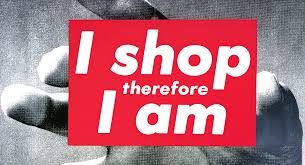
Buy, buy, buy. Get, get, get. We’re all buyers; consumers of stuff. There are things we need and things we want. Separating our wants from our needs has become more difficult with the growing ideology of consumerism. The encouragement of acquiring more and more stuff at an increasing pace continues to change our society. The “one who dies with the most toys” philosophy has propelled the age of consumerism as our appetite to acquire things has skyrocketed. I wonder though if this is healthy for our society?

I’ve watched over the years, as people become less likely, or unwilling to engage with other human beings due to the “great and powerful Oz”, otherwise known as the Internet of Things. We’ve done an excellent job of removing the people from the business of buying. You can buy shoes online, get a college education online, and buy a car online, all without speaking to, or looking another person in the eye. What will the eventual repercussions be 10, 20, 30 years down the road for this shift in how we interact with one another?

What will happen to our negotiations skills, our conflict resolution skills or our ability to nurture, coach, treat, and develop one another? Our interpersonal skills have already been numbed by texting and surfing. Now there are sites like ibreakup.net that will actually tell your current boyfriend or girlfriend you’re breaking up with them. Unbelievable. Are we lazy or just scared as hell of conflict? I’d argue though that those awkward and uncomfortable moments are critical to the development of the human mind. We learn more from mistakes and adversity than we do the happy stuff. Taking away life’s difficulties isn’t making us better, it’s making us less valuable, less effective, less human.

So as we enter the Holiday season – whatever Holiday you celebrate – think about your own gift giving habits. If it’s cheaper online, I get it. That’s simply being fiscally responsible. But if it’s not, I’d challenge you to go to the store, walk the aisles, smile at others and say hello. Let’s not slip so far into our rabbit holes that we forget that the difference between living and being alive is the amount of interaction and experience we have with one another. Would any of us really want to be walking around this planet alone? Would that be alive? Not me. Make the choice to live alive. Connect with someone. Today.


5 Investments You Should Make in Yourself Today

books

Your mind and body are indeed your most valuable assets.  Most people would say their home.  And while on paper that may be true, without your mind and body nothing else matters.  Here are 5 investments you should make to strengthen both:

  1. Read – Your brain is the most important organ in your body, controlling all bodily functions including your muscles and other organs.  Reading, especially fiction, improves your brain connectivity and function according to a recent Emory University study.  In addition to the health contribution reading has on your brain, it also helps in developing your thinking skills, perspective, and decision making skills by filling your brain with more ideas and insights.
  2. Exercise – Study after study, year after year, we know that exercising each day produces huge benefits for the body, mind, and soul.  According to WebMD, the body’s release of endorphins caused by exercise increases self-esteem, reduces the perception of pain, and creates a positive feeling in your body. Knowing this, how could anyone argue against the value of exercise?  If you’re working out now, great job.  Continue.  If you’re not exercising now, start with just 30 minutes, 3 days a week.  A walk, a jog, push-ups, whatever you chose but start.
  3. Pay it Forward –  Time is your most scarce resource.  Some people horde it.  Others squander it.  I’d suggest you invest it in others.  I spend hours each week with people in my network.  I’ve helped countless friends and associates with resumes, interviewing tips, sales strategies, branding practices, and other areas where my expertise can add value to them.  I am most excited, most engaged, most rewarded when I know I’ve helped someone improve and develop themselves.  For me, paying it forward creates a feeling of pride, improves self-confidence and raises self-esteem.
  4. Clothing – Here’s a tricky one. Remember the saying, “dress for the job you want”?  Whether you like it or not we’re a society of first impressions.  That means that what you wear does matter.  You don’t need to break the bank for a good look.  Guys, you don’t need a dozen suits in your closet.  You can alter the look of one suit with ties.  One black, or blue suit, has endless possibilities by changing your tie.  Ladies, same thing for you with the exception of accessories.  Pins, necklaces, blouses can quickly change the look of a single suit.  If you’re working in a more casual environment dress “crisply”.  Pressed shirts, nice jeans or kakis, etc. Remember, work is still work, not a party, not a social gathering.
  5. Accessories – Everything from glasses, watches, briefcases, portfolios, pens, earrings, jewelry (not too much), pocket squares, cuff links, and shoes.  This is another area where investing in just one or two accessories can make a big difference.

Stop Hiding, It’s Time to be Remarkable.

dog

Long hair, short hair.  Clean shaven, beard.  New York accent, southern drawl.  Short, tall.  Heavy, slim.  Most people think of physical attributes when considering how remarkable they are.  Sure, David Beckham or Kate Beckinsale certainly turn heads but what truly makes you remarkable?  The answer?  It’s what you do and how you do it.

All of us have encountered remarkable people in our lives.  These are the people we remember.  The ones that made a difference.  They are the people that cared enough, shared enough, and gave enough to us that we walked away feeling beyond satisfied, feeling completely fulfilled.

The great author, Seth Godin, was one of the first to raise the concept of remarkable in his book Purple Cow.  Everyone can be remarkable. Few do, but all can. It’s a choice.  The fact is you’re already remarkable, you just need to show it.  We were all born with talent.  Your first job is to be self-aware enough to identify what your talent is and then live it.  Your second job is to understand your current circumstances and determine what actions you can take that will result in someone seeing you as remarkable.

Maybe you don’t want to be cold calling all day but that’s your current circumstance.  Your choice to gear up, toughen up and lighten up will come through your interactions as remarkable instead of choosing to be beaten up.  As inspirational writer John Maxwell says, “Your attitude determines your altitude.”  Not only is he right, but your attitude also determines just how remarkable you are, and can become.

Remarkability is not just about being different, or memorable.  If it were we’d have to include people like Hilter, Hussein, and Nero.  Being remembered is not being remarkable.  Being remarkable is having a positive impact in someones day, week, or life.  While others may define remarkable differently I would simply say that it’s about making others smile, happy, or feel fulfilled.  Perhaps that’s why nurses, pharmacists and fireman always top the list of most trusted professions, because in life’s most critical moments those are the remarkable ones we turn to.

Making the choice to be, act, and do remarkable things is all yours.  The world is waiting…needs you…to be just that – to be remarkable.


Salespeople BEWARE: You’re About to be Sensored

ScaredSalesPerson

So you’ve chosen a career in Sales.  You’re excited by the thrill of the hunt, the change of scenery everyday and the opportunity to make as much money as you want. But could Sales be changing in a way that makes all this a distant memory?  You may be at risk of being replaced by a sensor…big data.

In a recent Fortune magazine article on Formula 1 racing authored by Stacey Higginbotham, she writes about how big data has changed the racing sport.  In “less than 300 milliseconds” data can travel from the farthest track in Australia to the UK where it can be analyzed and strategy adjustments can be provided back to the crew at the racetrack.   According to Alan Peasland, head of technical partnerships at Infiniti Red Bull Racing, “Gut-feel decisions just aren’t made.”

Imagine big data eliminating gut-feel decisions in your sales process.  With CRM platforms, marketing automation systems, and a variety of sales enablement tools there is more data than ever providing insight into each sales encounter.  When contact was made, what was discussed, who was present, what the outcome or next step is, or what went wrong.  Crunching all this data and putting it into a useable format might just make the salesperson a thing of the past.

As baby-boomers are overtaken by millennials buying habits are changing quickly.  Millennials rely on mobile devices and testimonials much more than boomers do.  In fact, according to Business Insider, 62% of millennials respond to mobile offers versus 39% of boomers.  Additionally, 82% of millennials favor word-of-mouth from friends and family versus 52% of boomers.  That means marketers must adjust their branding, advertising and sales processes.

Is it possible that in the future the role of the salesperson simply goes away?  What if a company like Amazon was able to aggregate all of your purchases and with great accuracy recommend and predict future consumption…both product type and quantity?  Wait a minute…aren’t they already headed that way?  The Dollar Shave Club is already doing this with great success. Maybe this isn’t as far-fetched as you’d like to think it is.

Sales professionals need to recognize this tectonic shift.  Your ability to survive being replaced by a sensor collecting and analyzing data will only be as good as your capability to adapt and add value.  Reading, researching, and having your own teachable point of view are critical requirements of your survival.  In the absence of any or all of these requirements your sales role today will become a fossil for tomorrow.  Get curious and keep thirsty for new knowledge.

The 3 Deadly Sins of a Marketer

A Marketers primary job is to understand their customer.  What drives their buying behaviors, their decisions, their choices.  It’s the marketer who is responsible for gaining this knowledge and use it to create the companys go-to-market strategy.  Here are 3 things that can crush a marketers effectiveness in creating a successful strategy.

  1. Not challenging the status quo.  For marketers joining a new team be wary of the famous “won’t work”, “tried that before”, or “our product is different”.   Thomas Edison made over 1,000 attempts before the first successful light bulb.  Edison said, “I didn’t fail 1,000 times.  The light bulb was an invention of 1,000 steps.”  Your job as a marketer is to challenge the status quo in order to find the message that best resonates with your buyer.  For those marketers who have been in their current roles for a while change this up to bring a level of freshness back to the office.  Read a book, talk to a collegaue, do something that provides you with an opportunity to propose trying something new.
  2. Lack of curiousity.  Marketers are part sales person, part researcher, part engineer, part visionary, part data analyst.  Given the breadth of your role the most important question you’ll have in your arsenal is “why”.  Ask it often and ask it everywhere.  As tools such as A/B testing become more mainstream asking why can be positioned as a quantitative inquiry and one that is backed by data.  If you’re working in an enviornment where “why” may be a bit too challenging then reposition your intention as a test, a study, a pilot.  No matter what you call it, it stills answers the question “why”.
  3. Failing to learn new things.  Change is fast, faster than ever.  Whether it’s marketing automation, Google’s new Penguin algorithm or dynamic content, your job tomorrow will be different from the job you leave today.  Keeping up with all these changes requires a personal investment of your time and energy.  Reading, webinars, conferences are all ways to keep up to speed on what’s changing and evolving in the world of digital marketing and media.  Twitter is a great source of valuable content if you follow the right people and companies.  Set a specific time every day for your reading.  Building a routine around your personal education is a critical success factor in taking control of your professional development.

Confidence THEN Conviction

Source: Confidence THEN Conviction

Confidence THEN Conviction

perception

Confidence is one of the most studied, sought after, and revered human traits. We all aspire to have confidence. The confidence to ask for a raise, or a date, or the confidence to ask for the business. Nearly everything we do in life requires confidence. But do you know what ingredient is needed to super-charge your confidence? It’s conviction.

 Years ago I found myself sitting in a meeting with the brilliant founder of Intuit, Scott Cook. In that meeting we were discussing why one of our product lines wasn’t acheiving the level of sales success we had anticipated. All of our research suggested it was due to a lack of brand awareness within that product category’s space.

At the end of our presentation Scott sat back and looked around the table. We were all quiet, anxiously awaiting his approval of the depth and quality of our work and findings. Instead he sat up, placed his arms on the table in a folded position and said, “I have a question. Raise your hand if you’ve ever heard of a Yugo.” We looked around the room at one another and quickly hands began to rise. Still looking around the room Scott then said, “Now keep your hand up if you’d buy a Yugo.” One by one hands came down and we now knew we were about to get schooled in the topic of brand awareness.

“Your problem is not with awareness. Your problem is that the market has no conviction in your product”. Scott effectively made the point that strong awareness without conviction equals failure. Our job was to instill conviction in the marketplace. Doing so required us to establish confidence first with our buyer. They needed to first “believe” we were capable of what we said we could do, and only THEN could they demonstrate their conviction to buy from us.

Establishing confidence begins with awareness, followed by increasing the buyers familiarity with your offering. Once familiar, the marketers job is to instill confidence. This can be done through a variety of ways including testimonials, surveys, samples, free trials, or a no-risk guarantee. Regardless of which method you use to instill this confidence it must be real before you can ask for the customers conviction to purchase.

To make this journey successfully you must be willing to truly hear what your customers are saying. You need to assess the marketplace. And perhaps most importantly you need to exude a personal conviction that by doing these things your business will grow with happy, delighted, and profitable customers.

Customer Journey Mapping:  If you ask, be ready to listen and act

I’m attending a Marketing conference this week in Chicago.  Much has been said about the importance of undertanding the customer buying journey.  CMOs, SVPs of Marketing, and in some cases CEOs are talking about how much time and money they are spending to better understand their customers.  Yet nothing is happening.  Why?

Most companies fall into two categories:  those willing to change how they go to market, and those that “say” they’re willing to change buy are simply not capable.  The latter is not because of a lack of intellect or knowledge.  Instead, companies not “capable” of change are typically those that are emboldened to the way they currently do things.  It’s easier.  It’s more comfortable.  It’s familiar.  Changing how you do business, and the interaction you have with your customer is scary.  It’s unknown.  As such only the most brave and courageous make the jump.

For those proposing or leading customer journey work consider the following:

  1. How involved has the current management/executive team been with customers?  Are they speaking directly to customers?  Are they in the field meeting with customers?  Do they attend industry events and speak directly to customers and prospects?  If the answer to any of these questions is “no” it’s likely you’ll struggle implementing the changes required to address your findings.
  2. What major changes have taken place over the past 12 months that affect the customer directly?  Did you launch a net promoter measure?  Is there a customer service center, and if so how is their success measured?  What communication has been sent to your customers over the past year?  Is it all sales related, or educational in nature?  Have you been surveying for customer satisfaction?  What have you learned?
  3. What’s the background of the CEO, COO, and President?  If you work in a small organization those roles may all belong to the same person.  That’s okay but the question still pertains.  Does he or she have any customer experience?
  4. Your sample pool should be diverse yet random.  Meaning, if you sell multiple products through the same sales and service channels you should look for customers with varying tenure with your firm, as well as different volumes of business.
  5. Have a project manager.  You may not have that luxury…it may be you.  How are your excel skills?  How do you manage projects, timelines, deliverables?  What’s your releationship with senior management to whom you’ll have to present your findings and recommendations?

I’ve conducted numerous customer journey mapping over the past decade.  The customer is always changing…evolving.   

 The impact of social media has become a catalyst for this change and will likely expedite it in the future.  If you’re interested in learning more about conducting customer journey mapping send me a reply/comment and I will be happy to provide additional insight and guidance.

4 Ways to Super-Charge Your Leadership

Headshot11.15.15


If you want to super-charge your leadership skills here are 4 things you should pay close attention to:

  1. Behaviors – What you do, when you do them, how you do them. Do your behaviors change depending on circumstances or do they serve as an unshakeable foundation even in times of crisis? Be cognizant that people are watching. Your colleagues, bosses, clients, partners, are all noticing your behaviors.
  2. Routine – In a recent Harvard Business Review, it was reported that great leaders have routines. They do things in certain ways, at certain times. They are disciplined and methodical in their actions. Leaders who are skilled at identifying their surroundings and circumstances are able to develop the routines that add the greatest value resulting in better results.
  3. Adaptability – Great leaders are capable of modifying their behaviors and their routines based on their circumstances. This requires the leader to be both a teacher and student all at the same time. Recognizing the need to adjust, and as importantly how to adjust, sets great leaders apart from those individuals who manage. Managers watch over a process. Leaders evaluate circumstances, determine a better way, garner resources, provide vision, and secure alignment. To do this, a great leader must be able to adapt.
  4. Seek feedback…genuinely and often – Interesting research from a number of trusted sources indicates that leaders who request regular feedback are more effective. Feedback improves your ability to empathize and connect with others. Unfortunately many people interpret a request for feedback as a weakness or perhaps insecurity. Leaders who ask from a number of sources – not just their boss – gain deeper insight into the organization, its issues, challenges, opportunities, and people. Having the ability to see into your circumstances is critical to your success. Don’t let others perceptions of feedback affect yours or worse prevent you from asking.

Great leaders learn, teach others, learn more, and repeat that process. Take these 4 elements and weave them into your daily leadership actions.


3 Ways to a Strong Sales Finish

JoePic

With 75 days left in the calendar year many salespeople find themselves in a crunch.  Either a crunch to hit that next multiplier level for bonus money, or a crunch to simply get as close to plan as possible.  Regardless of where you fall in that spectrum here are 3 things every sales pro should be doing right now:

  1. 70/30 split.  At least 70% of your time should be spent with your current customers.  You should be focused on understanding their business, providing value by educating them on possible solutions for their needs, and listening for trends, concerns, ideas, etc.
  2. Ask for the business.  The closest thing to a silver bullet in Sales is asking for the business.  Sure, you need to have earned the right to ask, but let’s assume you have.  Too often sales people assume that if the customer had more business they would have already given it to them.  WRONG!  WRONG!  WRONG!  It’s not their job to give you anything.  It’s your job to earn it, ask for it, and then deliver it in a way that makes you both memorable and remarkable.
  3. Be disciplined.  There’s no such thing as a 9 – 5 sales job.  If those are the hours you’re working you’re simply not doing enough.  Oh…you’re already at quota working 9 – 5?  Then I’d ask how much more you could have sold if you kicked it up a few notches?  It’s time to push.  Even if you’re at quota now a new sales year is right around the corner.  Plan your days.  Have your call list ready the night before.  Don’t waste precious selling time getting ready.  When you’re standing at the starting line it’s too late to train for the race.

Be sure you’re confronting reality.  If you’ve missed plan this year take an inventory of where things went wrong.  Be honest.  At the end of the day if you’re over plan it’s because of you and if you’re under plan the reason is the same…you.  You may be more expensive, of lesser quality, or longer to fulfill.  Regardless, you own finding a new path.  Once you accept accountability the path becomes much clearer.

Be calm.  Sell on.