
4 Behaviors That Will Improve Your Performance…Before 6 am

Sunrise

In studying many of the world’s greatest leaders, I have found a series of 4 common behaviors that drive each of them on a daily basis.  Whether a political leader, business leader, or a leader in the world of celebrity – Hollywood, or sports – great leaders display and demonstrate these behaviors on a consistent basis…daily.  What makes this all the more interesting is that all 4 of these things  take place between 4 – 6 am!  That’s right.  Great leaders are up and engaged well before the sun rises.  So what do all great leaders from Steve Jobs and George W. Bush, to Lou Gerstner and Bill Clinton have in common?  Here they are:

  1. Early risers.  Great leaders start their day early.  Many at 4 am.  They realize that by the time the rest of the world awakens they need to be ready to engage immediately.  Waking up early is the first step in their high-performance process.
  2. Exercise.  Many great leaders start their day by hitting the gym, getting a run in, a SPIN class, or yoga.  They understand that taking care of their bodies allow them to endure the stress and strain of their daily responsibilities.  The beauty of exercise beyond the obvious benefits is the release of endorphins.  This chemical reaction that takes place when exercising is what causes a “runners high” and overall great feeling of accomplishment when you’re done exercising that lasts well into the day.
  3. News.  A quick scan of the news is a common behavior shared by great leaders.  Not to get bogged down in the details but to have a high level understanding of what’s going on around them and how certain news may impact their business, customers, employees, etc.  There are a variety of apps available today that help gather news and put it in a format that allows the reader to view it quickly and efficiently.   Applications like Zite, Flipboard, and Pulse are known as personalized digital newspapers.  You select the general topics you want to be informed about and the application scours the internet for news on those specific topics, gathers it, and puts it into your digital newspaper.
  4.  Self-reflection.  Perhaps one of the most powerful performance enhancing activities is self-reflection.  Start each day with 15 minutes of self-reflection.  A time when you can take an introspective look at yourself, where you are, what you’ve done, what you’re doing, and where you’re headed.  If the activities you are currently doing are not aligned with where you’re heading, through self-reflection you can identify this disconnect quickly and make a course correction.  Self-reflection allows you to keep to your True North.

Try adding these behaviors to your daily routine for 3 weeks and see what differences you notice.  For something to become a habit you must do it 21 times.  One idea is to get a calendar and cross off each day…a countdown of sorts.  It will help you adjust and acclimate to this new performance enhancing ritual.  Let me know what you think.

“A manager is responsible for the application and performance of knowledge.” – Peter Drucker
Leadership Lessons From 3 Influential Men

lesson

Much has been written on the subject of leadership over the years. There are more than 103,000 books pertaining to “Leadership” at Amazon.com, and a huge multiple of that if you include books about specific leaders. I have read hundreds of these books over the years written by, or about, corporate leaders, world leaders, philosophical leaders, and celebrities representing all areas of fame. Great thoughts, ideas and perspectives can be gained from reading books across a broad swath of leaders. But for me, 3 individuals specifically have taught me some of the most important lessons in leadership. Here they are:

  1. Ronald Reagan. In her book, When Character Was King by Peggy Noonan, she describes Ronald Reagan as a deep thinker. Someone who wrote his own speeches, delivered his own messages and negotiated his own deals. He spent little time worrying about what others thought of him…other than Nancy his wife. Reagan became known as the Great Communicator and for good reason. He said what he meant, didn’t mince words, and had an unshakable conviction when he spoke. Being an effective communicator is important in all areas of life whether personal or professional. From President Reagan I learned the importance of having a clear, strong message of my own, that must be delivered with confidence and conviction.
  2. Bill George. The former CEO of Medtronic, has made the concept of authenticity the focus of two great books: Authentic Leadership: Rediscovering the Secrets to Creating Lasting Value, and True North. He stresses the importance of being authentic, taking action in a way that conveys complete alignment with your values and your beliefs. When people begin to operate outside of their area of “authenticity”, those around them see and feel this disconnect, thus resulting in the creation of distrust. When your actions are not in alignment with your inner values an internal conflict begins to emerge and ultimately leads to failure personally and professionally.
  3. Joseph A. DeRosa – my dad. I understand that you don’t know my father. No books have been written about him, nor has he been profiled in any business publications or newspapers. Yet the lessons he continues to teach me as a man are consistent with those he instilled in me as a boy. From my father I learned the importance of integrity and character – knowing what the right thing is to do and doing it…no matter what. I learned that accountability is something to seek and cherish, not something to hide from. His teaching style is by example. He worked several jobs to raise his family and taught me the importance of working hard and being the best at what you do. Finally, the most important lesson I learned from my dad is to place family first, for at the end of the day, when the work is done or dissolved, your family will always be there to provide comfort, support, and love.

When I look at the leadership lessons I treasure most, I realize just how intertwined they are. Without strong character and self-awareness, it’s impossible to operate in an authentic way. And if you don’t emulate authenticity, no matter what your message is, it will not be believed or trusted. As the late Stephen Covey said, “Seek first to understand before being understood.” To place the needs and concerns of others, in front of your own, will demonstrate your desire to first understand.  Once people can FEEL your authenticity and trust develops, they will follow you even if only to catch a glimpse of where you’re going.

In the  coming weeks I will be posting a blog on Leadership Lessons from 3 Influential Women.  There is so much to be learned from all people, men and women, that I wanted to be sure I shared both sides.  Great leaders have a combination of many different traits, talents, and attributes, all of which have been developed over the years with multiple influences.

A Lesson in EQ – Move To Improve

EQ

Most people evolve into a leadership role.  Sure, we’ve all heard people talk about a specific person as a “natural born leader”, but few are. Often times, someone rises to the position of leader as a result of their accomplishments as an individual contributor.  Think about it.  What was the reason for your first promotion?  Or your second?  Most likely you were promoted because you exceeded a specific sales number, or made an improvement that saved the company a great deal of money.  Early in your career, those are the reasons you achieve recognition and promotions.

Many companies invest heavily in leadership development.  They use tests to identify potential leaders, teach classes in leadership lessons and ideals, and even rank employees in the ever popular “Org & Talent Review”.  And while each of these components serves a very specific purpose in building the leadership ranks within a company, it’s the time and development spent in the areas of EQ that tend to be overlooked.

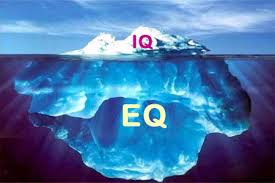
EQ, or emotional quotient, is the measure of a persons ability to deal with others in a sensitive and empathetic way.  People with high EQ have a great sense of self-awareness and know the importance of treating people with respect and dignity regardless of position, title, etc. A report published by Glowan Consulting Group, looked at the correlation between leaders with high EQ versus IQ, or cognitive intelligence.  The report found that those leaders with a high level of EQ generated results ranging from 10 – 24% better than those with low EQ.

John Mackey, CEO of Whole Foods said, “For leadership positions, emotional intelligence is more important than cognitive intelligence.”  Having the ability to respond to one’s own emotions, and those of others, is the key differentiator between those that manage people versus great leaders of people.

Leaders that have a difficult time connecting with others in high stress environments should look to improve their EQ.  As the pace of change rages on, and companies are faced with changing strategies, workforces, and philosophies, it is critical that its leaders understand how to connect with people in order to affect positive change.

Daniel Goleman brought EQ to the forefront in his 1995 book, Emotional Intelligence.  I highly recommend this book for any leader looking to gain a better understanding, as well as, improvement of their own EQ level.  Your ability to connect with those around you in an authentic and genuine way will create the trust and bond required to help you – the leader – provide direction and guidance both in good and bad times.  An improvement in your EQ level will drive increases in your individual performance, as well as, producing better results across the team you lead.  The reason?  People don’t care how much you know until they know how much you care.

Great Mentors. The Difference Maker.

partner

In my previous blog, 5 Important Differences Between a Coach and a Mentor, I provided clear differentiation between these two advisers. Both play a valuable role in your development but go about it in entirely different ways. Understanding your current circumstances and having semi-clear objectives – goals – is critical in knowing which, a coach or mentor, would provide the greatest value.

While most coaches tend to have very specific areas of expertise, mentors are completely opposite. Mentors bring a broad set of skills, perspectives, insights and opinions to your developmental party. If you are fortunate enough to have a real mentor in your life consider yourself blessed…and lucky…for they’re not all that common. Remember, you select a coach, a mentor selects you. Great mentors can come from a variety of areas in your life. A relative, a friend, co-worker, boss, or business associate can all be potential mentors. What are the ingredients that make a great mentor?

  1. Deep life experiences. These experiences do not need to be in the area of your specific profession. The mentor has been in and around many different situations that have provided them with incredible insight and perspective.
  2. Demonstrates a personal interest in you. The mentor takes a proactive role in wanting to help you by providing valuable feedback, and guidance. Often times they proactively reach out to check in with you rather than waiting for your call.
  3. Excited and passionate about your development. The mentor never makes you feel like you’re on the clock. Instead they make you feel like they exist specifically to help you. Their energy and authenticity is tangible and easily recognized.
  4. Honest in a positive and constructive way. The mentor provides hard-hitting, honest feedback and observations, but does so in a way that doesn’t put you on the defense, or belittles you.
  5. Teacher, Coach, Counselor, Motivator all rolled into one. The mentor has a natural ability to weave in and out of these roles effortlessly with a near “cloak of invisibility” as they do so. Their deep understanding of you allows them to take the role most effective for the situation at hand, with the genuine intent to aid in your development, while never lecturing or criticizing.
  6. Trust. The single most important ingredient for any great mentoring relationship is trust. A strong, trusting relationship with a mentor creates the bond that is necessary for free-flowing, honest, personal, and sometimes difficult feedback without the fear of embarrassment or intimidation.

Great mentors do all these things and more. Having the benefit of a mentor gives you the ability to make better decisions, broadens your perspectives, and often times provides the clarity you need to move forward. These unique and wonderful people grace us with their active presence in our lives, teach us in ways others can’t, and provide us with the strength we need during life’s most crucial moments. Great mentors are in fact the difference makers in a life full of success and personal fulfillment.

5 Important Differences Between a Coach and a Mentor

Helping-Mentor

Throughout your career, you will encounter moments that will present great challenges and/or opportunities.  Knowing what to do at those specific times depends on several things including experience, attitude, skills and capabilities, and the strength of your personal support network.    As you grow personally and professionally, the complexity of these circumstances increases and may create anxiety as you determine your next steps.  And while this is perfectly normal from a developmental standpoint, having a coach or a mentor by your side can make a huge difference in the quality of outcomes.  Understanding the difference between the two is the first step to making the right selection.

Many people believe mentors and coaches are the same…interchangeable terms.  But they’re not.  Mentors are quite different from coaches.  The key differences between the two are listed below:

  1. You select a coach, a mentor selects you.  As such, mentor relationships tend to last for years, if not a lifetime.  By the mentor selecting you, he or she is demonstrating their personal commitment and genuine desire to help with your personal development.
  2. Coaches focus on improving specific performance, usually on the job, while a mentor focuses on your overall development with a much greater focus on you, the person.
  3. Coaches interact through a formal structure, usually the same day and time each week – office hours.  The session follows a certain flow or formula for the review and update on the items discussed in your last meeting.  A mentor interacts as needed.  They’re “on-call” and happy to be so.  Less formal in nature, free-flowing, and very personal.
  4. Coaches tend to be “career-point-in-time” resources.  Meaning, few coaches can provide value in all stages of someones career.  A great high school football coach does not automatically equate to a great NFL coach simply because he understands the game of football.  As the stakes grow higher in your career, you will need to find a coach whose skills are equally equipped for the circumstances you are encountering.  The coach you had when you were 35, and in your first senior manager role, most likely will not be as effective for you when you are 45 in an executive role.  In contrast, a mentor is always focused on the “broad YOU”, gathering deep and intimate knowledge of the real you, thereby allowing them to provide valuable insights and guidance in nearly any circumstance.
  5. Finally, and perhaps the biggest difference between a coach and mentor is how they are paid.  Coaches, at least professional coaches, charge a fee for their service.  These fees range anywhere from a few hundred dollars per session into the thousands depending upon the circumstances, and length and frequency of the engagement.  A mentor has no fee.  They’ve taken you under their wing.  They have a personal connection with you and are committed to your development and success.

It’s important to understand that while different, there is a need to have both a coach and mentor in your life.  Both play very different, yet important roles in your personal and professional development.  Having a general understanding of your circumstance, time frame, and objectives will help guide your decision on selecting the right coach or mentor.  I will visit specific benefits of coaches and mentors in upcoming blogs.

The Best 6 Inspiration Books You’ll Ever Read

enlight

The self-improvement or self-help book market is estimated to be an $11 – $12 billion dollar business.  While the notion of self-improvement dates back to Greco-Roman times, self-help did not become a real industry until the last third of the 20th Century, marked as the post-modernism period.  Currently Amazon.com shows nearly 60,000 titles in their self-improvement category.  The question is, with that many titles and that much material being written, how much is really unique?  Of those 60,000 titles how do you know which ones provide the greatest insights that lead to those ever-coveted “ah-ha” moments?  To help you bypass sifting through 60,000 titles I’ve included my 6 favorite  self-improvement books that have inspired me over the years.   I have read each of them several times over as I have encountered different life situations.   I included some key learnings and some valuable excerpts from each below.

  1. Failing Forward, by John C. Maxwell.  Key Learnings:  Failure is the price you pay for progress.  “I’m not a failure, I failed at doing something.”  In 1922, Harry S. Truman was thirty-eight years old, in debt, and out of work.  In 1945, he was the most powerful leader of the free world.  Failure is not forever.  George Bernard Shaw said, “A life spent in making mistakes is not only more honorable but more useful than a life spent doing nothing.”  The problems of people’s pasts impact them in one of two ways:  They experience either a breakdown or a breakthrough.
  2. Authentic Leadership, by Bill George.  Key Learnings:  When leading people recognize that the collective knowledge and wisdom of the team vastly exceeds your own.  Spend time identifying your life’s “crucible moments”, those times during which your circumstances and experiences resulted in life altering perspectives.  Authentic leaders must have:  Purpose (Passion), Values (Behavior), Heart (Compassion), Relationships (Connectedness), Self-Discipline (Consistency).  Cultural change is never an easy task, and far more cultural efforts fail than succeed.
  3. Quite Strength, by Tony Dungy.  Key Learnings:  If you want to win, do the ordinary things better than anyone else does – day in and day out.  Why would you let anything stop you from doing what you have the ability to do?  Focus on the job, not the surroundings, and embrace each situation rather than try to change it.  People look more closely at our actions during rough times, when our emotions are raw and our guard is down.  What’s important is not the accolades and memories of success but the way you respond when opportunities are denied.
  4. Who Says Elephants Can’t Dance? by Louis V. Gerstner. Jr.  Key Learnings:  The marketplace dictates everything you should do.   Manage by principle, not by procedure.  When addressing groups of people whether employees, clients or shareholders, stand up and speak from the heart.  Sooner is better than perfect.  Sales is about fulfilling the demand that marketing generates.  Organizations are nothing more than the collective capacity of its people to create value.  If you don’t know where you are going, any road will get you there.  Stay connected to your top 25 clients…always.
  5. Thanks For The Memories Mr. President by Helen Thomas.  Great presidents (leaders) set great goals for mankind.  Be who you are.  Be consistent.  Focus on what matters most…the truth…and have no agenda.  Treat everyone equally regardless of their (political) affiliations.  This book showcases the importance of humor especially during times of extreme conflict, stress, and pressure.  Plain old funny.
  6. His Excellency by Joseph J. Ellis.  A powerful book that chronicles the unassuming rise of our first President.  Stresses the importance of possessing qualities including perseverance, commitment, determination, honesty, and courage.  Also suggests a role that perhaps fate played in George Washington’s rise to become President.  In the face of constant adversity, the necessity of a powerful and enduring will to keep moving forward appears almost super-human.

While these are just a handful of favorites, I have also found a great deal of inspiration in reading biographies, and autobiographies of historical leaders.  Presidents, world leaders, and even those of celebrities who conquered extreme childhood trauma or disappointments yet rose to become revered and respected are true inspirations.  I believe the greatest opportunities for learning and improving ourselves, can be found in the footsteps of the great ones who have walked before us.  Sometimes being reminded to do the basics well, can produce incredible world-changing results.

Your Leadership Style + Your Company Culture – Is There a Disconnect?

perception

Carrot and stick.  And so goes the age-old debate of how to achieve great business results.  Do you shower your employees with accolades and pats on the back?  Or do you focus on the consequences for under performance?  Is your tone one of optimism and assumed-success?  Or is your temperament such that you lead with a, “if we fail” mentality?

There are as many different leadership styles as there are leaders.  Our styles are born from our life experiences from childhood, up to and including, the role we currently occupy.  How you were raised is as important as how you were managed in the first several years of your career.  Most experts agree that the “formative years” for a child occur in their first 12 years of life.  Likewise, the formative years of someones career is their first 5 years in the workforce.

Human beings are natural-born observers.  We watch.  We absorb.  We learn.  We take what we learn and begin to construct potential outcomes for the scenarios we encounter later in life.  Like, cause-and-effect, we begin to build a mental inventory of outcomes based upon actions and reactions.  We learn how to alter outcomes by changing our actions or behaviors.  Yet we all learn in different ways.  Two people can experience the exact same event and have completely different views or perceptions of that event.  And herein lies the formula for how our leadership styles evolve.

Are you a positive motivator or negative?  How do you know?  Ask yourself the following questions:

  1. Do you work in your office all day with the door closed?
  2. When was the last time you sent a communication to recognize a team member?
  3. How often do you walk around the office making eye contact, saying hello, and simply engaging people?
  4. How many people on your team do you rate as a top performer, and if so, when was the last time you told them how much you appreciated them?
  5. Are you losing more than 20% of your employees each year?
  6. Do you hold regular team meetings or even informal get-togethers?
  7. Do you consistently meet, or miss, your numbers?

How you answered these questions may be an indication of your style of leadership.  On the other hand it may also be a reflection of the culture within your workplace.  Either way it’s worth your time to evaluate.  Why?  Because there are several reasons to have a true understanding of your personal style and that of the culture in which you work.  If you genuinely want to build lasting value – for your company or your client – the first step has to be the development of relationships.  In the absence of trusting relationships a company will not be able to experience sustained growth, and nor will you.

According to an article published earlier this year by Forbes, the number one reason people left their job was for stability reasons.  People leave when they don’t feel secure.  Insecurity is often the result of a bad manager.  In fact a subsequent article in the Huffington Post Small Business, it cites the number one reason employees quit is “Their boss sucks”.  Micromanagers and poor communicators topped the list of horrible bosses.  The negativity that flowed from these bosses infected the workplace so much so that people run for the doors.

According to the American Institute of Stress, the top 2 causes of stress in the workplace are work overload and people.  The AIS estimates that stress causes American businesses more than $300 billion each year in lost productivity with a major contributor being a negative workplace.  So how can you change it?  First change your behaviors.  Try doing these three things each day:

  1. Walk around the office at least twice a day and say hello to folks.
  2. Work with your door open (if you have an office) when you can.
  3. Look for the good things that are happening and recognize them.

These are all within your control.  If you’re working for a company that has a negative-tone culture you may need to reevaluate what’s most important to you.  Remember, jobs come and go, but your reputation stays with you no matter where you are employed.  Don’t let the dynamics of an organization define who you are and how you act.  If your belief system is in direct conflict with the office culture, you may need to make a change.  Great teams are built by great leaders, and to be a great leader you’ve got to recognize and acknowledge that your people are in fact your biggest asset.   Only by growing your workplace relationships, developing trust, and displaying respect will you be able to develop a high performing team.

Responsible Leaders Vs. Accountable Leaders. Which would you prefer to follow?

weaklink

Who’s responsible?  We’ve all heard that before.   Whether at home or at work, someone is always looking for the person in charge…the one responsible for things.  Who is responsible for this failed project?  Who broke mom’s favorite serving dish?  Who didn’t let the dog out?  Who ordered all these office supplies?  And on, and on, and on.

Whether we’re looking for someone to blame, or someone to recognize and promote, the fact is, we should be looking for the person accountable rather than responsible.  But is there a difference?  You bet there is.

Being responsible simply means you’re the person charged with getting something done.  But if you’re accountable you’re the person who ultimately answers for the outcome of the work done.  If the purchase order placed is wrong, the person who placed the order may have been responsible, but their boss is the one accountable for the result produced by the wrong order being placed.  Likewise if your son was responsible for letting the dog out and in the process the dog bites a neighbor, it is you, the parent who is accountable for that action.

Think of the picture above.  The link in this picture, represented by a twist-tie, has the “responsibility” to connect two ends of the chain.  However, this same link will not be held accountable when the chain breaks given that it’s size, strength, and structure are clearly not the same as the other links.  In the end, accountability lies with the person who attempted to take a short-cut and use a weaker link to hold the entire chain together.

Saying you’re responsible simply means you’ll get something done or taken care of.  It does not in any way provide a stated commitment to the quality of your action or work.  However, to say you are accountable means you’re willing to be held liable for any and all outcomes of the work or action you’ve taken.

It’s no wonder that most people are willing to say they are “responsible” individuals, but few are willing to be held accountable.  This is evident in everyday places from families, to companies, to government.  Often times you hear people say, “Well, I’m not the one responsible”.  What they are saying is, they were not the person who was charged with doing the thing that’s being criticized.  Skirting responsibility is actually quite easy and we see these behaviors daily in news reports.  If someone is truly accountable, and they accept total accountability, they in fact are standing up to say “whatever the outcome is you can blame me or congratulate me…I own it either way.”

Strong leaders take accountability for the results of the team they lead…good or bad.  They don’t hide behind someone else’s lapse of responsibility, but instead stand tall and take the high road.  Being accountable energizes and emboldens them to the work at hand.  Those are the leaders people line up to follow.  Those are the difference makers.

Take Charge: 5 Critical Steps

Life

Life is a marathon not a sprint, as so many people have said over time.   Most of us start off without a clear picture of what we want to do, where we want to go, or where we’ll end up.   We look around at what others have accomplished and wonder how they did it?  Were they were destined for greatness/  Did they had a guardian angel watching out for them?  Or even better, was success simply in their genes?  I say nay, nay.

William Shakespeare once said, “It is not in the stars to hold our destiny, but in ourselves.”  While it is easy to blame unforeseen forces for our plight or plunder it takes far more courage to own the direction you have taken and the place in which you arrive.  But how can we make sure we arrive where we want?  How do we know that all our hard work will ultimately generate the pay-off we so desire?   Here are 5 critical things you need to do to take charge of your destiny:

  1. Vision.  Do you really know where you’re headed, and toward what, are you heading?  What is your goal?  Why is it your goal?  A big house, fast car, husband, wife, kids, dogs, cats, world travel, and don’t forget the top job with the big corner office.  Have you done a self-assessment to ask yourself WHY these are your goals?  Learning:  If you don’t know why a goal is important you’ll never reach it.
  2. Preparation.  Assuming you have the correct vision and you know what you’re striving for, the next question is, have you prepared in the best way possible to ensure your arrival or achievement?  Henry David Thoreau said, “Never look back unless you are planning to go that way.”  Planning is the most important part of any journey.  Learning:  Failing to plan is planning to fail.
  3. Stamina.  Do you have what it takes?  Are you mentally and physically prepared for YOUR journey?  People underestimate the importance of being in shape both mentally and physically.  But too often I have seen people falter on one  or both of these critical areas.  Learning:  The most effective form of exercise works both you mind and body.
  4. Discipline.  This is often the biggest area of failure in people’s journey to achieve their vision.  They set a clear course.  They laid out the best plan to get there.  They got into shape to start their journey.  And then something happened they didn’t foresee.  This is the stage of the journey that leads people to give up and fall back on the “it’s just destiny” thinking.  The difference between those that give up at this stage versus those that power through is discipline.  Learning:  You’ll know if the vision you have created is authentic and genuine when the amount of discipline you require to move forward lessens…you just want to do it.
  5. Self-Esteem.  What value do you place on yourself?  What’s your opinion of yourself?  Do you feel worthy?  Self-esteem is a necessary ingredient to taking control of your destiny.  It’s not only important to have a goal or vision but you must believe you are worthy of achievement and the “positivity” that comes with a successful accomplishment.  If you struggle with self-esteem take charge and work on improving it and it can absolutely be improved.  Learning:  low self-esteem is NOT a permanent condition unless YOU allow it to be.

Know that all of your life’s results are a direct reflection of the decisions you have made…not others.   Remember the only person you are destined to become is the person you decide to be.  The power “to be” lives within YOUR mind and body.  Be ready, take charge…live YOUR life.

How to gain balance in an unbalanced world

20130822-091849.jpg

This week I had the pleasure of attending a key note speech by Arianna Huffington of the Huffington Post. This was one of the most impactful speeches I have heard in a long time. Ms. Huffington spoke from the heart, while balancing humor and perspective, keeping the audience engaged and on its toes for an hour.

As a very successful businesswoman, Arianna shared several life lessons that she learned along her journey to success. What made her talk so effective was her ability to cross gender boundaries, and connect how her challenges, in life and business, apply to both men and women.

Here’s what I learned…

Our current pace, attitudes, and outlooks are unsustainable. We are all experiencing a “time famine“. This famine has been created by the pace at which we are living our lives. With the advent of non-stop access to information and communication we are constantly “on”. We rush from appointment to appointment, meeting to meeting, function to function. This famine creates havoc in all aspects of life from business performance to relationships. We constantly feel like we’re behind; running behind.

Our lives have been built upon stress. Recent studies indicate that stress costs American businesses more than $300 billion a year in lost revenue. We sleep with our smartphones on the night stand. We go to bed with our tablets. We eat dinner while monitoring email. Our inability to turn things off has created a culture of burn-out (keep running as hard and fast, for as long as you can, mentality). But a burn-out culture cannot be a culture of creativity. When people feel mentally fatigued creativity levels plummet. When creativity falls, so does production, and ultimately revenue.

So how do we get back on track? How do we reestablish healthier lifestyles? Here are some of Arianna’s suggestions as I heard them:
1. Don’t hold grudges. “Holding grudges is like drinking poison.” This pertains to both work and personal relationships. Let it go. The stress created by a grudge is unsustainable and eventually it will destroy you.
2. Lean back. We often hear people say “lean in”. This is a cool way to say buck up, toughen up, be strong. But, “it’s not just about leaning in, it’s about leaning back.” Take time to recharge. You need to and it helps. Think of how a cats jump. The higher they need to jump the more they lean back before they jump. Think about it.
3. Deal with your inner demons. Be honest with yourself. Take the time to learn how to become more self aware. Check out my earlier blog on self-awareness.
4. Believe that everything is rigged in your favor. Imagine going through life believing that everything that happens to you is a good thing, or for good reason – not bad. Think of the horrible boss you had to deal with only to arrive at the job you love. Or the relationship you broke off only to find your true sole-mate. Remember that you are bigger than what happens to you. “If you contract when something bad happens to you, you have allowed yourself to be made smaller than the event.” There should be nothing that is larger-than-life but you.
5. Sleep. Sleep is a leadership and performance enhancement tool. Your brain needs time to power down and recharge. Do it. Sleep.

And finally, remember, “life doesn’t always make sense as it’s happening, only when you look back.” This is probably the most difficult lesson to adopt, as by nature, we all want to understand our immediate circumstances. So when you find yourself in a situation where things are happening that don’t make sense, stop, breath, and think back to a time when the outcome of an event ended in a positive manner.

Let me know what you think.