Customer Success:  5 Requirements to Creating Value in Every Client Interaction.


Today’s buyers are overwhelmed with data points, reports, metrics, and an avalanche of nonstop news whether its from traditional networks, cable news, or social media.  Points-of-view are as infinite as the number of stars in the universe…or are they?  In a world dominated by countless Customer Success models I continue to observe just how complicated we’ve made some basic human interactions, and just how little value some of these interactions deliver.


Great Customer Success interactions require 5 crucial elements:


  1. It all starts with a clear customer success statement as articulated by the customer.  What does success look like?  When we meet 3 months from now, what would have to be true for you to say this engagement is a success?
  2. A strong understanding of general market conditions (macro), and the ability to connect those dots to your customer’s situation, this is what I call “pulling the thread all the way through”.  It requires solid structured thinking skills.  The ability to define a problem, understand the cause, and create a solution that reduces or eliminates the problem. 
  3. Ability to create insights – combining a fact with an implication or point-of-view,
  4. Strong EQ skills that allow you to connect/relate to your customer/buyer on an emotional level,
  5. Storytelling skills


I’m sure someone, somewhere is saying, “yeah, but what about…”, or “Customer Success is so much more than these 5 things…”, or “you don’t know my industry, it’s so different than any other industry…”


What does this look like in our daily lives?


Think of someone in your network you respect and learn something from every time you speak to him, or her, who would it be?  What characteristics does he/she possess? I’d suggest they made your list because they are proficient at all 5 of these competencies and perhaps expert at some of them.  Certainly, you wouldn’t offer me a name of someone boring who lacks details, confidence, or a clear point of view.  No.  Instead, you’d share a name of an individual that you hold in high regard, or perhaps even aspire to be like.


Once basic human needs – food, clothing, shelter, safety – are satisfied, you transition to next-level needs which include the need to be heard, understood, validated, and the ability to succeed.  These next-level human needs address both self-esteem and self-actualization.  Said differently, we all desire confidence and ultimately the need to be seen by others as being successful – that we’ve reached a position of respect, or sought-after expertise.


Tying it all together…


Customer Success Managers (CSM) are entrusted with managing, and growing client relationships.  The CSM has one of the most challenging roles in an organization as they walk the tight rope between Sales, Service, Marketing, Operations, IT, HR, Finance, and virtually any other functional area that touches the client with the potential of creating an experience be it positive or negative. Understanding macro-economic conditions does not mean going back to school to obtain an Econ degree.  As a result of the diversity of a CSMs interaction with a client it’s imperative for him/her to understand how macro conditions affect the customer’s business.   This doesn’t require an advanced education but rather some basic structured thinking, discipline and commitment.  This is the ability to define a problem, understand what causes the problem, and finally creating a solution(s) that addresses the problem.


Client Success Managers (CSM), need to have a general understanding of the market conditions.  What’s happening in the market?  How are interest rates moving?  What’s happening with employment numbers?  How is inflation trending?  Where is consumer confidence?  With one or two apps on your phone you can stay abreast of every major macro metric in real time…in less than the time it takes to sip a cup of coffee.  It requires the discipline to build that habit into your day.  According to an October 2023 survey by Statista, people on average spend 2.5 hours per day on social media.  Using 3 minutes of that time every day to understand market conditions doesn’t seem like a huge change in behavior…but it can be if you let it…you’ve got to commit.


I often use the phrase, “pulling the thread all the way through.”  This means, having the capability, or skill to understand these conditions and pull the thread all the way through to how these macro conditions affect your customer through storytelling.  Doing this allows you to clearly define the problem your customer is currently facing, or about to face, and be able to communicate this to them in a way that is both articulate and confident.  Storytelling is not fiction, nor is it fear mongering.  Storytelling involves understanding your client’s current situation, the inputs that affect the situation, and what possible outcomes may exist depending on the actions taken.  Effective storytelling can be summed up in the ability to take multiple inputs and synthesize them into a story that captivates, creates intrigue, and ultimately causes action.  Storytelling is not about scaring the client into taking the action you want, but instead is about causing the client to stop, think, ask questions, and genuinely ponder the possibilities the CSM has presented.


Creating insights are something many CSMs struggle to do.  Keep in mind, an insight is combining a fact with an implication, or point-of-view.  A fact could be where current mortgage rates stand, or the current rate of inflation.  An insight would be how a change, up, or down, in that rate could affect your client and what the implication would be in either scenario.  This is a learned skill.  It doesn’t just happen.  Your CSMs need to study macro conditions, practice formulating insights, and role play with sales management in order to improve their effectiveness with their client engagements. 


The days of “objection handling” are done.  These old school sales tactics often rely on one’s ability to out-talk, or through smoke-and-mirrors, overwhelm the buyer.  I always disliked old-school objection handling.  Too much emphasis was placed upon having quick come backs, slick words, and one-liners.  Memorize these 3 responses and you’re golden.  Unfortunately, this approach is why Sales as a whole is often viewed in a negative light.  People are reluctant to meet with a salespeople and many salespeople don’t like to tell others they are salespeople.  How can we change this perception?


Being insightful is how you earn your customer’s time – their most precious resource.  People are only willing to invest their rarest of resources (time) with those that they can learn something from, and who make them feel validated.  So why is this so difficult?  Why do client engagement professionals still rely on old school objection handling?  Well, I’d suggest it’s because being able to provide real insights and value requires a full-out dedication to learning and understanding market conditions versus memorizing 3 great come-backs when a client raises an objection. 


Still today, too many salespeople subscribe to the nonsense of Sales ABC – Always Be Closing.   If this is happening in your company, I’d suggest this is a failure of leadership not leading…not teaching.  If leaders don’t raise the bar and expect a higher degree of business acumen, then their respective teams will fall back upon these ABC rules because they have nothing else.  Leaders need to lead.  This means leaders need to teach.  Further, this means leaders need to get more comfortable with being vulnerable.  Most people dislike role playing as much as they dislike public speaking, leaders included…perhaps more so.  However, role playing is a crucial element to improving your ability to take facts, formulate insights, and tell a story that leads to action, all in real-time.  Role playing for salespeople is the equivalent of a quarterback taking snaps under center at the line of scrimmage.  Defenses unfold in real-time.  We all know that good judgement comes from experience, and experience comes from bad judgement.  This is why professional sports teams practice, practice, practice.  The coach creates and environment that allows for real-time judgement based upon real-time changes to the scenario…all with the goal of making these bad judgements in the safety of a practice versus a real game.  As leaders it’s our job to create these types of learning environments for customer success managers to hone their skills.  It also means the leader must risk a wonky role play in front of the team.  No one has all the answers, but the best leaders, are okay with getting it right versus focusing on being right.


In conclusion, customer success is about having a clear success statement articulated by the customer.  Great CSMs will provide a blend of facts and insights that address their customers problems which result in earned trust and respect.  These CSMs take chances, formulate insights, role play their delivery, and embrace the outcomes as their own.  They are the game changers, the difference makers, in achieving outstanding customer success.



Choosing the right Chief Revenue Officer

Recently, I attended a webinar sponsored by Private Equity CXO.  The topic of the webinar was PE Strategy for Revenue Growth; CROs and Value Creation.  Presenting in the webinar were several Private Equity professionals sharing their insights on the impact that having the right Chief Revenue Officer (CRO) can have on an organization’s success.

Let me first say that the webinar overall reinforced my personal experiences and beliefs throughout my career as both a GTM consultant and a CRO with experience working with companies ranging in size from $50M to >$6B in annual revenue.  However, the webinar got me thinking about the challenges involved in finding the right CRO, the process that most private equity firms use to recruit CROs, and the end result…disappointingly low success rates as supported by comments in the webinar as well as in other datapoints I’ll present shortly.

While I could write pages summarizing the content of this webinar relating to how CROs should, or could create value, I will instead focus on one critical topic discussed by the group…finding the right CRO.

Herb Brooks, the famous coach of the United States 1980’s Men’s Gold Medal Olympic Hockey team, has one of the best all-time quotes and probably my personal favorite.  As he was assembling his team, he was asked why he didn’t choose this player or that player because “they were the best”.  Herb confidently, and with unwavering conviction replied, “I’m not looking for the best players, I’m looking for the right players.”  This philosophy will serve as my anchor for why the right CRO may look quite different from the best CRO. 

I believe Coach Brooks could not have been more spot-on.  While I’m sure this comment will strike a chord with some, I stand by the belief that skill is much easier to teach than attitude, let alone chemistry, as it relates to team dynamics.  A Harvard Business Review study showed that 44% of a company’s market value is attributable to its CEO’s reputation. This study further defines reputation as a combination of 3 key emotional intelligence characteristics including humility, visibility, and persuasiveness.  One may conclude that some portion of a CEO’s reputation is a direct extension of the CEO’s executive and senior executive leadership team if you believe that a company’s culture is the sum of its parts.

Throughout the webinar the conversation often returned to the importance of the CRO’s team building capabilities, and leadership skills required to build a sustainable high performing culture. 

From an operator point of view, I would say that while a new (and even existing) CRO certainly has the responsibility to lead and effect change in an organization, a new CRO especially needs to understand the existing culture that he/she is walking into, the runway in front of this them (timing expectations), and as mentioned in the webinar, a list of the “jobs to be done” – the critical items that must be completed within the next 12 months.  Measure twice, cut once, applies to walking into a new role for both sides of the relationship – CRO and private equity partners.  The greater clarity provided at the onset, the greater the likelihood of success and perhaps fewer missed expectations. 

I strongly believe that the “right” CRO has both a track record of successes and failures.  I’m always leery when I speak to any executive-level candidate who positions themselves as having made perfect decisions.  Perhaps I’ve been blessed to work for leaders like Scott Cook of Intuit, who famously pushed our management team to make more mistakes – fail fast – as a barometer for the speed of innovation.  If you’re not pushing boundaries, you’re not growing, you’re not evolving, you’re simply presiding over something that’s fairly vanilla, and hence replaceable.  Basic, or as I like to call them, cut-and-pasted tactics might work when the waters are smooth, but absolutely go out the window when faced with gale force winds that may include a tight job market, raging inflation, or a pandemic that shifted the norm on how we get things done in business. 

A status quo leader, not battle-tested by building and failing, decreases your probability of success and produces a lesser amount of value creation.  It’s just as important to know what not to do, then knowing what the right thing to do is, as both include countless variables, known and unknown.

Case studies or homework assignments are great, but here’s where I slightly divert from the consensus shared on the webinar.  In my own personal experience, focusing on the difficult questions to ask during an interview, combined with an Up-Down-Sideways reference check is another way to gauge the probability of success.  Some folks have a talent to write, research, and/or problem solve in a controlled environment, but rarely do we operate in controlled environments, and case studies and homework assignments are just that…controlled environments.   

In fact, I’d suggest that many sales leaders would have failed the case study in 2008-2009 during the GFC, or during the COVID pandemic.  The test of a strong leader lies in his/her ability to consume information quickly and being comfortable with operating in ambiguity.  According to Zippia, the average age of a Chief Revenue Officer is 49 years old.  When combined with a datapoint from Salesforce indicating the average tenure of a CRO is right at 2 years, you begin to understand why the concept of battle-testing is so important over a variety of different environmental factors relative to creating and sustaining high performing teams.   One could argue that even as case studies and homework assignments have become the norm for recruiting CROs, the success rates are discouragingly low at less than 2 years.  Why is that?  Here I’d suggest that what’s often missed is the softer, and perhaps more difficult skills to assess that include EQ (some of the items from the HBR study), charisma, and empathy, all of which are critical leadership qualities to establishing and maintaining high performing teams. 

As Stephen Covey famously said, “people don’t care how much you know until they know how much you care.”  A leader showing up as the smartest person in the room likely will result in a team that tries to distance itself rather than embrace.  Hence why EQ is so important when selecting a new CRO.  And, with the average tenure of a CRO being 2 years, one possible conclusion that might be drawn is that too many know-it-alls show up day one on the job versus showing up with a learners mindset. 

Of course, the right mix between EQ and IQ is critical.  And while I referenced the criticality of some of the softer skills above, I also want to be clear that an effective CRO must have the passion and capability to deliver tangible tools to the teams they lead.  I have written countless playbooks, personas, and ICPs for the teams I’ve led throughout my career as a CRO.  I study data, identify trends, create hypos to prove/disprove.  I spend a great deal of time in the field with sales professionals running these plays and adjusting them accordingly, perhaps another carry-over from my experience at Intuit with Noel Tichy’s famous “teach, learn, teach” model underpinned our day-to-day operating rhythm in the business.

Often, I see CROs rely much too heavily on outside consultants (I was one of those), to do this type of work.  Why?  Because they either are not close enough to the business to know, or in the worst cases feel that the level of in-the-weeds work is beneath them.  This, however, is exactly the work that moves the needle by building sales effectiveness, team spirit, and a high performing culture where teams recognize that their Sales leader is sleeves-rolled-up, capable, competent, and credible. 

It was mentioned several times during the webinar private equity’s desire for predictability.  Delivering a “flash-in-a-pan” result is easier than producing consistent results over time.  Again, this is why it’s critical to be clear about what is required within the first 12-month period and what resources are available to accomplish those requirements.  The resource discussion is yet another topic that is deserving of its own thought leadership piece.  For now, here’s a simple way to illustrate the importance of having the right resources…

As someone raised in a musical family, and having played drums for many years, I consider Neil Peart to be arguably the best drummer of all time.  So, was it the 54-piece drum kit that made Neil sound so incredible?  Or was Neil’s raw talent such that he’d sound good no matter how many drums he had at his disposal?  While I’d seen Peart amaze enthusiasts on a regular 4-piece Jazz set, the sounds and complex rhythms he played on 54 pieces simply amped things up a notch.  He had the resources to transcend being great to being the greatest.  Now, drop in Phil Collins behind Peart’s 54 pieces.  Would Collins, another great, sound equally impressive?  Or does it suggest that resourcing wouldn’t matter, and that Collins would just “know” how to play, what to play, and when to play it?  As a reference point, Phil’s typical set is (was) a 10-piece kit.  Regardless, it’s clear that talent, plus resourcing, equals output.  The key to success is understanding what that specific talent requires, relative to resourcing, to produce the expected or desired results.

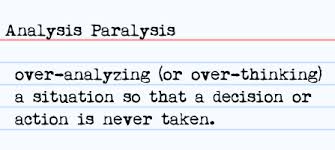
Back to the CRO thing, a CRO must also have the ability to look at data and make inferences…quick assessments of a situation.  Deductions usually come when deeper analysis is done, and oftentimes, the ability to do a deep dive is limited by a company’s systems, platforms, access to the data itself (perhaps it’s never been captured historically), or not having the analysts (talent) available to do such work.  This leaves the CRO in the position of either taking no action as they become paralyzed by fear of making the wrong decision, or the opposite extreme, making knee-jerk decisions as they quickly fire from the hip.  This area of CRO skill must also be contemplated when thinking about culture, timeframes, and expectations.

Finally, the relationship the CRO has with his/her owners/investors cannot be underestimated relative to performance.  Are the company’s owner enthusiastic supporters?  Are they impatient investors who have gone through a series of failed CROs leading them to bring high levels of doubt or skepticism into any new relationship?  Does the CRO have solid chemistry with both the CEO and CFO?  It has always struck me as odd that I’ve personally never interviewed with a CFO while being recruited for the top Sales chair, yet my personal relationship with a CFO, as a CRO, is perhaps equally important if not more important than the relationship between a CEO and CRO.  There’s a ton there to unpack as a topic – the relationship between CRO and CFO – that opens the door for future thought leadership content.

In summary, finding the right CRO begins with an accurate assessment of the future of the asset.  Where are we in the hold period?  What has the last 3-5 years of organic growth looked like for the company?  What’s the tenure of the team?  Is it a complete build, or rebuild?  Is there a VP of Rev Ops in place, and further, how strong is that person relative to all aspects of analysis and GTM tech platforms?  Do any of the CROs previously-built-teams still exist?  Can the CRO demonstrate an example where he/she groomed and promoted their replacement, and where and how is that replacement fairing today?  With the average age of a CRO being 49, what was he/she doing during the dotcom bust, the GFC, the pandemic, and most recently our current period of high inflation and stifling borrowing rates?  Can the CRO candidate comfortably articulate key learnings from each of these periods and demonstrate how those learnings enabled them to better navigate through the subsequent challenges or crises?  What tangible examples can the CRO point to as evidence of something they built new, as a response to their own evolution of thought due to their experiences?    

In choosing the right Chief Revenue Officer, it’s essential to recognize that leadership is not just about past successes, but about the ability to adapt, evolve, and thrive in an ever-changing business landscape. The true measure of a CRO lies in their capacity to turn challenges into opportunities, ensuring that their experiences become the cornerstone for future growth and innovation.

8 Best Practices for Working Remote During the Pandemic Crisis

The world has sure changed in the last several days.  Things are developing by the minute and the fog of war element continues to creep into every discussion in our homes and workplaces.  As we move into a time of remote work, many find themselves operating, or trying to operate, in an unfamiliar environment.  For many, their homes have been their personal space, their sanctuary, away from the hustle and bustle of their professional life.  Now the two have come crashing together.

Here are 8 steps to take to improve your results for working from home:

  1. Start your day with your same routine.  If before your remote work began you woke, ran, ate breakfast, and caught up on your social feeds, then continue to do those same things in the same order.  Don’t allow yourself to put off your run until later in the day because you’ll be home.  Discipline is key.  You must maintain your routine first and foremost.
  2. If you live with friends or family, be sure they know exactly what’s required of you working from home.  While it may be impractical to ask multiple people for absolute silence while you work, you can at a minimum communicate the need for reduced noise.  Impress upon the members of the household the significance of being allowed to work from home and remain employed.  This is a good thing!
  3. Care for your pets…if you have them.  Ask for help from others in the house if you have a dog.  Remember, your animals will probably be wondering what’s going.  This will be a break from their norm.  Dogs may bark more often than usual until they adjust to your constant presence.
  4. Establish a formal work space.  If you have an office, you’re golden.  However, many do not have a formal office to work in.  Find a specific spot that you designate as your work area.  If you don’t have a desk you may find yourself using the kitchen table, or an old fashioned TV tray table to set up.  No matter how you set things up, make sure you focus on the “where” you set up.  Try to find a location that is as separate from your typical living area as possible.
  5. Make sure your electronic devices remained charged.  Set up charging stations.  If you have portable hotspots, tablets, multiple phones, or mobile power devices, remember to keep them charged.
  6. Pay attention to giving yourself time to get up and leave your remote work space.  If you were in an office, you’d likely get up occasionally to use the restroom, get water, coffee, or walk outside to get some air.  Be diligent in doing these things working from home.
  7. Communicate with your co-workers.  Many companies have implemented standard operating procedures for working remote.  Follow them.  If your company has not done this, be sure to remain in contact with your co-workers, even if it’s a quick simple email, chat, Skype, or Teams talk.
  8. Leverage video conferencing if available.  Seeing those you work with will help you stay connected and maintain the need for human connection.  Don’t underestimate the power of video chats.

Finally, if you find yourself with any downtime, have a book, or other form of developmental content handy.  This may include a list of blogs that are pertinent to your industry, or a variety of websites.  Keep you brain engaged rather than turning on the TV.  Productive work from home begins and ends with discipline.

To Merge, or Not to Merge

Recent mergers within the payments industry have many wondering what’s next. In reading several blog posts, news publications, and LinkedIn articles, I see industry professionals scratching their heads and asking “what’s to gain from these mergers?”

Companies acquire or merge for 3 primary reasons – to gain market share, acquire talent, or round out a product gap – this includes technology. I suspect that the recent mergers have been driven by pressure from within the industry to achieve size and greater scale – hence share. The market share play becomes the focus of mergers when the other two reasons are lacking from the equation.

Imagine if two Pharma companies that both produced ibuprofen merged, what would they gain other than greater share? However, if one of those companies produced a ground breaking Alzheimer’s medication you now have a new entity that is potentially more valuable given its broader reach and product offering. So the question to be answered is what specific gaps and gains will be addressed by these recent combinations. And here’s a hint….the answer can’t be “operational efficiencies” which is simply code for saying the plan is based upon squeezing cost out of the business to drive short-term financial results.

Let’s also not forget the #1 reason for combo failures – cultural misalignment. Synergies that look great on paper still must be executed by human beings…those same human beings that have been living with, and in, specific cultural norms for a period of time. People often underestimate what’s required to combine companies – to combine cultures. What if the U.S. and Mexico were suddenly merged together into one country?  Just because it works on paper doesn’t mean it will actually take hold…heck we struggled to figure out NAFTA let alone something grander. Cultural differences are too significant to underestimate.

This will not be the last combination. Corporate decisions tend to revert back to our childhood days of playing musical chairs…no one wants to be left standing without a seat. Unfortunately these mergers are not addressing the key problems the payments industry is facing – a dynamic buyer, global sellers, legacy technology, and infrastructure dilemmas. How these four things can be best brought together is the idea, or solution, the market requires. These transactions clear the path for smaller, more nimble players to answer this question and disrupt what has been an industry slow to change and innovate. In the end, the buyer holds the most powerful vote to determine what is most valued.  My belief is they will continue to vote for more choices for easier and secure ways to make their purchases.  This vote will be given to those agile enough to listen to the need and place the creation of a new customer experience as the #1 priority, versus clinging to the belief that bigger is better.

Business – it’s all personal

Business exists to serve peoples needs. It doesn’t matter if you work for a B2B, or B2C company. Somewhere downstream in the process, is a consumer who is making a decision to buy a product or service you make, or contribute to making.

Business is very personal. Only people can care, a business cannot. A business may be a culmination of caring people but by itself, a business is nothing more than an idea. People bring ideas to life. People bring passion to their work and workplace. People bring thoughtfulness and caring for one another and a community. That all happens with people. A business can only serve as a conduit to deliver what the collection of these people express.

When I hear “it’s not personal, it’s just business”, I would say, it’s all personal. People give their most valuable asset they have to a business…their time. With that time they could invest it elsewhere to generate different returns. With their families, with other businesses, other ideas, other objectives. It is a trade-off. Yet once that trade-off is made, an individual is committing themselves – their person – to the business. This is how business gets done, and it becomes very personal.

Empathy is a key emotion to bridge the gap between business and personal. Why? Because time is the only thing that binds us all together. We all have a set amount of sand in our hourglass. When it’s gone it’s gone. Take some of your sand, and use it with others at work to demonstrate that you hear them, you understand their challenges, and you have ideas to share that can help them. By doing this you add value. And while no one can put more sand into anyone’s hourglass, we can all put a little value into each other’s lives…in, and outside, of business.

The Customer Mindset

MyBook

Developing strategies to grow revenues really excites me.  It’s what gets me jazzed.  Ideating, innovating, and brainstorming, mixed with good old fashion common sense usually always provides the best path forward.  The key is listening.  Listening to the business, the market, the employees, and most importantly listening to your buyer.

I’ve spent the last decade studying, observing, learning, testing, and monitoring results that are achieved with various go-to-market strategies.  Many companies spend too little time developing the strategy and plan to take their product or service to market.  They make or produce something, price it, and give it to Sales to sell.  Make it, and they will come.  Not really.

The Age of the Customer has arrived.  No longer does the sales person control the sale.  If you believe your sales team is in control think again.  The buyer has all the control.  Many well-respected sources indicate up to 70% of the buying process being complete before a buyer meets with a sales person.  Your buyers have looked you up, researched you, watched you, and asked about you before you even knew they existed.  Do you know where they found you?  Do you know who they talked to along the way to ask for advice or opinions?  Do you know what they read to educate themselves on this purchase?  This is all very important work.

I am proud to announce my new book The Customer Mindset: Thinking Like Your Customer to Create Remarkable Results.  I wrote this book to provide an actionable roadmap for those charged with growing revenues. The book is filled with real-life stories, frameworks, and methods for mapping your buyer’s journey.  By creating a visual map of the journey your buyer takes on their way to the cash register, you will be better able to create a sales and marketing process that assists in this journey.  Remember, the buyer is in control.  Once you recognize and accept that, then you can get started focusing on how to help them through their journey versus spending your time trying to figure out how to sell them.

I want to thank the more than 5,000 readers of my blog who inspired me to go deeper.  To provide more detail.  To be more prescriptive.  Thank you so much.  I also want to thank David Moncur who has been a great friend and inspiration, not to mention the best creative mind I’ve ever worked with.  It is his firm, Moncur, that designed the awesome cover – front and back – of my book.  Thanks David.

I hope my blog, my book, and my stories continue to help you grow your business by providing strong leadership, innovative thinking, and a discipline to focus on doing the right things that maximize your results.

Get Specific -4 Ways to Make Your Business Conversations More Effective

Business People Meeting Growth Success Target Economic Concept


Your eyes are glazed over.  You’re trying to be discreet but you can’t help looking at your watch.  Is it over yet?  As meeting standards go this one is pretty brutal. It’s dull, boring, lacking insights, not informative, it’s basically a disastrous waste of your time.  Have you ever encountered one of these meetings?  Here’s a daring question – have you ever been the one driving one of these meetings?  If your answer is “no way, I’d never run such a terrible meeting”, I’d say you should probably spend a bit of time on self-reflection.  We all have coordinated and run meetings like this.  We’ve all wasted someones time at one point or another.

Here are 4 Ways to Make Your Business Conversations More Effective:

  1. Prepare – Do some homework on the individual you’re meeting with and the company.  It’s not enough to just throw out facts about the company or industry.  With the advent of social selling you’ve got to know your buyer – the human behind the decision.
  2. Ask good questions – Dump the “what keeps you up at night” question. So boring.  So predictable.  Kind of shallow.  A rookie question.  Have a hypothesis of what you believe keeps them up and night and throw it on the table.  Of course that requires having completed Step 1 above.
  3. Know what’s going on in the world – Don’t take a political stance, but know what’s happening in the world, the markets, etc.  Election year impacts, the Brexit issue, the Middle East conflicts, the Puerto Rican debt default. People enjoy spending time with people who have a bit of depth.  You don’t need to be Alan Greenspan, Warren Buffet, or Seth Godin, but you do need to have ideas and opinions beyond your company’s.
  4. Manage your time – Arrive early.  If you’re on time you’re late.  I get tired of hearing how bad traffic was.  Sales people today, especially in bigger cities think they can use traffic in Seattle, LA, NY, Boston, Atlanta, etc., as an excuse and people will just understand.  If you want to be like every other sales person walking in the office than great.  You will be – just like every other.  You want to be different?  Give yourself extra time.

One final extra tip.  Please show up with some energy.  No, you don’t have to drink 17 Red Bulls before you walk in the door.  Likewise you don’t want to be Eeyore either. Find the balance between excitement and control.  Do all of these together and you’ll run an awesome meeting.


10 Phrases to Eliminate from Business Conversations

Slide1

As a curious, and active, participant and observer in business, I have developed a list of 10 phrases we should all strike from our business conversations. They add no value, and in many cases subtract from it.  While some of these may seem far fetched, I’d challenge you to zone into your conversations and listen for them.  They are in fact present in many business conversations each and every day.  Here they are, and what the person you’re talking to actually is hearing:

  1. Trust me – If I have to say these words, apparently I haven’t earned it.
  2. Believe me – Whatever I’ve told you must seem a bit far fetched so I’m left with this long shot request.
  3. To be honest – Up to this point I’ve been lying. But this next statement…is the complete and utter truth.
  4. I’ll tell you what – I’m annoyed with you.  You’re not trusting or believing me, so now I’ve just got to tell you how it is.
  5. Look – The ultimate smack-down.  Let me help translate this so a 5 year old can understand.
  6. It is what it is – I can’t tell if you believe me, or anything I’ve said.  I’m close to surrendering.
  7. Dude – I’m failing fast and scrambling to connect any way I can.  By the way, this is only used between guys…at least in my experience.
  8. I can’t say – Why not?  Well, this information is on a need to know basis and you don’t need to know…so I can’t say.
  9. We’ll figure it out – I’m not exactly sure what your concern is and why you’re worried about it.  I’m not about to try to understand it right now but “trust me” we’ll figure it out later.
  10. There’s no way – This one I find intellectually thought provoking as I have heard this used so many times in business. To be so “negatively definitive” about anything I find quite interesting. Imagine if any of the following people heard “there’s no way”…in fact you already know how they’d respond: Steve Jobs, Michael Jordan, Walt Disney, Jack Welch, John Chambers, Marc Benioff, Ronald Reagan, John Adams, George Washington,  JP Morgan, Thomas Edison…shall I keep going?  There’s always a way.  The question is NOT if there is a way, but instead, am I willing to do what’s necessary to find a way?

What are your favorites?  And what phrases get under your skin that I didn’t capture?  Looking forward to hearing!

5 Tips for Running a Better Business Meeting

conference-room-great-neck-ny-11021-deposition-meeting-room
We’re all busy.  The last thing we need is to attend another meeting. The minions gather around the board table and talk, ponder, and pontificate.  Time seems to stand still.  We’ve all been in meetings when we felt an overwhelming desire to be watching paint dry than to hear one more syllable uttered in the dungeon the business world refers to as “The Conference Room”.  In fact, so ineffective are most meetings that we’ve taken to naming our conference rooms with fun names so as to distract those weary attendees into thinking fun is on the other side of the door to Pebble Beach or Gilligan’s Island. So is there any way to spruce up our meetings?  Is there such a thing as an effective meeting?  Yes there is.
The next time you call a meeting follow these simple 5 steps:
  1. Prepare.  Know your material.  Know the salient points you’re trying to communicate.  Anticipate questions and formulate responses.  People hate showing up and feeling like their times been wasted because the leader doesn’t seem to have a clear agenda.
  2. Get revved up.  Have some energy for goodness sake.  Attending a meeting where the leader is monotone, or worse distracted or bored is a fate worse that death.  Show some energy, and respect, to those who have showed up at your request.
  3. Take frequent pauses and solicit responses.  No one likes to be lectured to, especially for 90 minutes – the average length of a business meeting in the U.S. according to the University of Tulsa.  Asking questions like “does that make sense?”, or “what do you think of that?” will keep people engaged and thinking.
  4. Take notes.  At the end of the meeting circle back to those who raised comments, concerns, opportunities, etc.  This lets the attendees know that when they are invited to one of your meetings they are engaged and expected to interact.
  5. Acknowledge great ideas.  The definition of “conference” is; a meeting of people to confer.  If you didn’t want anyones opinion you wouldn’t have asked them to join the meeting.  Even the best ideas, the best laid plans, the best strategies can be improved if you’re willing to listen.

Following these steps will keep your co-workers active and position you as a leader by demonstrating first and foremost your respect for everyone’s time, highlighted by your ability to efficiently navigate the team from topic to end-state.


Innovation Paralysis

analysisparalysis


Many companies talk about innovation. Being innovative or even inventive can sound inspiring to prospective investors and employees. The promise of innovation can often attract new talent or keep impatient customers at bay. Hold tight, our new and improved version is on its way. We’re innovating as we speak.

The fact is the most companies aren’t innovative at all. Most are copycats. Copying another company’s idea is easier to do and carries less risk (assuming you’re not infringing on any copyright or patent laws). After all they’re the ones who have invested in true innovation.

For the most part, companies – even yours, may struggle with innovating. The biggest reasons for this struggle can be attributed to fear. Perceived fear is an emotion so powerful that it stops most of us in our tracks from taking action. It’s a mind game that creates countless scenarios that fill us with thoughts of failure and ridicule. We forget that most of the greatest inventions and innovations in history were the result of countless failures. Think of Ford, Edison, Jobs, and even JP Morgan. The fact is that failure fuels passion and passion produces results.

Strong leadership is required to lead an innovative company. If the CEO, owner, or leader lack the confidence required to discuss failures experienced by trying to innovate then a company simply won’t innovate. Unfortunately companies that take a follow-the-leader approach typically end up becoming irrelevant. The list is long and includes names like Kodak, Zenith, Pontiac, and Circuit City.

How do you know if your company is a company of innovation? Ask these questions?

1. Where are your growth ideas initiated in your company?
2. Was anyone ever fired for trying a new idea? Responsibly?
3. How often does denial come into your team meetings? The general belief is that alls well.
4. Are there regular meetings where idea generation is the only thing discussed?
5. Are off-the-wall, wild ideas solicited or is there more of a play-it-safe mentality that permeates your company?

These questions will provide insight into just how committed to innovation your company is.