Kindness – The Greatest Difference Maker

What makes a friend, a friend? What makes a candidate worthy of extending an offer of employment? What makes a great boss? What makes a life-long partnership work – personally or professionally?

In pondering these questions they have led me to other questions such as who do I like spending my time with? If I was stranded on a desert island for a month, who would I want to be with? What type of person? Who do I turn to when I’m happiest? And who do I turn to when I need help?

There are many ingredients that go into making a great employee, boss, spouse, and friend. Yet when all those ingredients are boiled down, there is one that rises to the top…kindness.

Intellect without kindness is arrogance. Discipline without kindness is abrupt. Motivation without kindness is dominating. Persistence without kindness is simply annoying. Determination without kindness is Machiavellian.

Sure, we all need a level of intellect, discipline, motivation, persistence and determination to succeed. And yes, there are many who succeed with these attributes in the absence of being kind. Why is that? Kindness costs nothing. You don’t have to take a graduate course to learn kindness. Maybe that’s the problem? Have we lost the ability to see the simplicity of success when kindness is added as the final ingredient?

Kindness doesn’t mean losing. Being kind doesn’t mean taking the back seat. Kindness does not operate from a position of weakness, but rather a position of strength. Being kind is a conscious choice. Your buyers feel it, your employees feel it, your spouse feels it, and yes, strangers feel it. That random act of kindness from someone you don’t even know that puts a smile on your face and warms the heart. We can all learn from kindness, and kindness is ours free to give. It’s your choice.


A Thought on Empathy

Life is about perspective. It’s how we experience situations and the lens through which we view things…good, bad, or indifferent. Empathy is a powerful attribute for us all. Being able to relate to each other is what makes human beings…human.

I just watched the movie The Forgiven starring Forest Whitaker and Eric Bana. This movie is based on real events that took place in S. Africa. It is incredibly moving and serves as proof that it is possible – even under the worst circumstances – that we can all find common ground, forgive when needed, and find a positive path forward. Rarely have I seen something so powerful in a film.

#Empathy

#Coaching

#Selfimprovement

#SelfAwareness

Business – it’s all personal

Business exists to serve peoples needs. It doesn’t matter if you work for a B2B, or B2C company. Somewhere downstream in the process, is a consumer who is making a decision to buy a product or service you make, or contribute to making.

Business is very personal. Only people can care, a business cannot. A business may be a culmination of caring people but by itself, a business is nothing more than an idea. People bring ideas to life. People bring passion to their work and workplace. People bring thoughtfulness and caring for one another and a community. That all happens with people. A business can only serve as a conduit to deliver what the collection of these people express.

When I hear “it’s not personal, it’s just business”, I would say, it’s all personal. People give their most valuable asset they have to a business…their time. With that time they could invest it elsewhere to generate different returns. With their families, with other businesses, other ideas, other objectives. It is a trade-off. Yet once that trade-off is made, an individual is committing themselves – their person – to the business. This is how business gets done, and it becomes very personal.

Empathy is a key emotion to bridge the gap between business and personal. Why? Because time is the only thing that binds us all together. We all have a set amount of sand in our hourglass. When it’s gone it’s gone. Take some of your sand, and use it with others at work to demonstrate that you hear them, you understand their challenges, and you have ideas to share that can help them. By doing this you add value. And while no one can put more sand into anyone’s hourglass, we can all put a little value into each other’s lives…in, and outside, of business.

Type A Personalities – 3 ways to confront anxiety

Worker thinks solution of his problems

Hard charging, Type A personalities, often struggle with taming their fear of failure.  Most would agree that fear, when kept in check and under control, is an emotion that can both protect and propel us.  Understanding the cause of the fear you’re experiencing is the first step to developing a plan to calm it, contain it, control it.

Anxiety is the result, or symptom, of fear. If I fear I won’t be able to hit the ball, anxiety causes me to dread my up-at-bat.  If I fear I will fail my statistics class, then anxiety will kick in and cause me to block any learning that will ultimately help me pass the class. If I fear I will miss my monthly sales number, my anxiety will cause me to go into rapid-fire mode doing as many things as I can simply to create the appearance that I’m working hard.

Anxiety perpetuates fear, creates the stress, and force, strong enough to shut you down.  Dealing with anxiety is critical to successfully navigating change, taking risk, and managing failure.  Here are 3 ways to keep your anxiety in check:

  1. Ask the question “why not me?” When we think we will fail it is because we don’t feel competent, smart enough, savvy enough, or insightful enough to win.  Why not? Rather than thinking about the failure, replace that thought with the question why not me.  I’m smart, why not me?  I’m intelligent, why not me?  I’ve accomplished a number of great things, why not me?
  2. Turn anxiety into excitement. Replace, what if I fail, with what will I learn? Replace what if this doesn’t last, with how much better will I be no matter how long this lasts?  What will I have experienced that will make me more valuable, more fulfilled?
  3. Breath. The power of 10 minutes of just breathing is quite powerful.  Call it meditation, self-reflection, self-empowerment, or self-love, whatever you call it the purpose of this 10 minutes is to rebalance your inner self.  To bring calm to any internal bubbling that’s taking place.  There are thousands of books on this subject, apps for your smartphone, and calming music for your ears.  Get one, or some, but act now to calm the storm from building.

12 Things Great Leaders Do Daily

McChrystal

By definition a leader is a person who leads or commands a group – at least that’s what Professor Google says.  My definition is a bit different.  Who wants to be commanded?  Sure there are times, situations, and circumstances when being in command is required.  Directing, ordering, and controlling are verbs that often come to mind when we think of leaders.

Just about anyone can be taught to do these things.  Just about anyone can dish orders, direct others, and attempt to control.  Many “leaders” regardless of training can do this for some period of time before being discovered as ineffective.  Great leaders however, take a different approach.  These leaders must do all the directing, ordering, and controlling as previously mentioned but it’s how they accomplish these things that set them apart.

Great leaders are great because they:

  1. Understand how to empathize
  2. Effectively communicate their vision
  3. Ask great questions, deep questions that provide insight
  4. Act in their own authentic way, not trying to be someone else
  5. Adopt a beginners attitude
  6. Surround themselves with people smarter than they are
  7. Spend time on self-reflection, how they operate and the result produced
  8. Network and connect with others to learn
  9. Ask for, and accept help when needed
  10. Lean on mentor(s) for coaching and perspective
  11. Roll up their sleeves, never asking others to do something they haven’t or wouldn’t do themselves
  12. Inspire others through their words, actions, and behaviors

So start today with some self-reflection.  What are you doing?  What do you spend most of your time on?  How do you interact with those around you?  What’s the reaction of others when you walk in a room, speak during a meeting, engage with others in a break-room?  Consider this list and strive to embrace each one in a genuine way and you’ll find your results improve in a timely manner.

The Snooze Test: 10 Things You Could Do With An Extra 9 Minutes Instead of Sleep

alarm clock.jpg

At a recent lunch with colleagues our conversation got around to the subject of sleep.  We’re all running hard, intensely focused and super competitive.  Sleep often times takes a back burner to other more pressing needs like delivering for a client, hitting the number, or providing coaching to a team-mate.

As we traded sleep stories – are you a good sleeper, bad sleeper, restless sleeper – we arrived at the humorous topic of snoozing.  That standard, commonly accepted, always expected “extra” 9 minutes of sleep you can get simply by hitting a button.  The delay button.  Let’s face it, that’s all you’re doing when you hit it.  You’re delaying the inevitable.  Getting up, getting started, getting ready, and getting on with your day.

I’ve never been a “snoozer”.  Most mornings I’m up around 5 am without an alarm – it’s just how I’m wired.  But if I were a snoozer, what might I gain by not snoozing? What could I do with that “extra” 9 minutes rather than sleep?  What could I accomplish?  Here are some ideas, not in any order of priority:

  1. Meditate – spending just 15 minutes each day meditating produces huge benefits.
  2. Read – a book, the paper, scan your social channels, know what’s going on around you
  3. Exercise – most sources indicate the average calorie burn is 9 calories for every minute of moderate exercise.  A 9 minute walk burns 81 calories.
  4. Self Reflection – different from meditation, self-reflection peers into how your actions have produced the outcomes you’re currently experiencing.
  5. Time with loved ones – sure you may say, “hey no one else is up at this time”, but if they are, spending the time with them will provide benefits far greater than what you gain from snoozing a bit longer.
  6. Chores – You’re thinking, “I’m going to give up my sleep to do laundry?” The fact is, household chores that build up lead to greater degrees of stress.  The quicker you can reduce the list of what needs to be done the easier it is to find your Zen.
  7. Love your four-legged friends – play with, and love your animals. Studies have found that playing with your pets increases the stress-reducing hormone oxytocin and decreases the production of the stress hormone cortisol. Imagine what it does for them?
  8. Eat – breakfast is for kings, lunch is for queens, and dinner is for – you get the point.  breakfast is the most important, yet most missed meal of the day.  It’s like leaving the house with an empty gas tank and hoping to drive 300 miles.  Doesn’t work out so well (unless you’re driving a Tesla).
  9. Share a quick thought on social media – your goal for the day, a thought, insight, or perspective.
  10. Spiritual activity – anything you do that makes you feel whole, or connected by way of faith.

Years ago I heard a conversation between two elderly people at the gym one morning.  One man said, “What I wouldn’t have done to get a little more sleep this morning”, to which the other man replied “We’ll have all the time in the world to sleep when we’re dead.”  So true.  Live life.

Strive For Mastery, Not Perfection

obi-wan-kenobi

Recently I was having a conversation with a long-time mentor, coach, and friend.  I was sharing my thoughts on a new endeavor and happened to mention that I was “trying to perfect” the thing I was working on, before attempting to market it.  My mentor stopped me in my tracks and said, “Not perfect.  Don’t focus on perfect, you’ll never get there.  Focus on mastery.  You want to be a master.  No one is perfect, nor will anyone ever become perfect.  But you can become a master.”

While certainly a profound statement, it wasn’t the first time I had heard this.  In fact, I recently went back and re-read one of my favorite books by Seth Godin, Linchpin. For Seth fans, you’ll know that he strongly believes in creating remarkable experiences.  In Linchpin he talks about being an artist.  Making your work, art…and art by definition isn’t perfect.  Some of the most valued art in the world is not “perfect”, instead it was created by a master, and even loved for its flaws.

Mastery is an ongoing journey while perfection suggests you’ve arrived, you’ve made it, you’re done.  What lies after perfection?  What’s left to learn?  What’s left to develop? What’s left to explore?  What’s left to invent?  The world is a timeless collection of things and events that simply prove perfection isn’t possible.  Instead, the world is changing, evolving, reinventing every day, minute, and second.

So with that, I will begin reframe my perspective to focus on mastery rather than perfection.  By accepting mastery as my goal versus perfection, it empowers me to accept life’s fact that there’s always something new to learn and invent.  Will you join me on the journey to mastery?

3 Quick Ways to Know if Your Team is Sales Enabled

Detective

You’ve got a great product, competitive pricing, and best-in-class service. Your revenue numbers should be exploding and new recruits should be beating your door down for the chance to work with you. But none of that is happening. Revenue is flat, turnover is higher than average, and your sales team can’t seem to provide accurate forecasting that you can depend on. So what’s wrong?

For the moment we’re going to focus on your sales efforts and put Marketing to the side. You seem to have many positives in your direction but progress is alluding you and your team. Start by probing into these 3 areas of your Sales team:

  1. Education. Knowledge is only powerful if the owner knows how to apply it. What’s your philosophy on learning? Do you run your team through sales training and consider it a box checked off? How much self-educating and self-development is taking place? Are you encouraging your team to expand their horizons beyond what you’re providing them? What actions are you taking to facilitate or develop a learning culture? Without continuous education and learning your team is at a disadvantage.
  2. Resources. How well equipped are your sales people? The best warriors need weapons. A sharpshooter can’t perform without bullets, nor can a drummer play without sticks. Your sales people need tools. They need resources. Resources could include a killer website, an eBook, a webinar, or podcast. No matter what the product or service is that you’re providing, your team needs tools. It’s been reported that the average B2B buyer consumes 6 pieces of content before making their purchase. The days of a handshake and charismatic smile winning the deal are over. In the “age of the buyer” the demands are much greater for tangible value.
  3. Application. Simply having the knowledge along with great tools still isn’t enough. Direction on how to apply that knowledge and those tools is critical. This is where the true “enablement” piece of Sales Enablement happens. Navy Seals aren’t great just because they are educated on warfare tactics and have great weapons. Seals are awesome warriors because they are taught how to use their knowledge and resources available to win the fight. The same is true in Sales. Great content and an impressive presentation are meaningless if the sales person doesn’t know how to present them. Are you providing application training?

To create a winning Sales team requires great talent, an executable strategy, clear tactics, knowledge, tools, and application training. Pulling all these pieces together is called Sales Enablement. If you’re struggling to hit your number step back and ask yourself, “What am I doing to enable my team to win?” If you don’t have a clear answer to all 3 areas above start there and begin developing them.

Why Generosity?

generosity

Lately I’ve been paying more attention to the actions, words, and behaviors of the business world.  Observing acts of kindness and generosity. Watching folks give their time, talent, ideas and coaching to others.  Providing insights and perspectives that make a positive impact in someone’s life.

The world of business can be difficult at times.  It may even be difficult most times.  We live in a hyper competitive environment where the rule of thumb has always been to outshine those around you.  If I can just outperform, over deliver, sell the most, build the coolest this-or-that, I’ll be vaulted to the top. That was then…

Today, the there’s another way to shine, be seen, rise to the top, and excel.  It’s a paradigm shift, and perhaps a shift some either don’t believe in or feel is too soft.  That shift revolves around being generous.

Generosity isn’t a weakness.  It’s not about being soft.  Being generous demonstrates the ultimate control.  You’re in control of your choices, actions and decisions.  You choose where to spend your time and where not to spend it.  Generosity is about both quality and quantity…the two MUST be tied together to be a generous act.  Giving someone a mountain of feedback without any guidance or coaching as to how they might use that feedback isn’t being generous.  It’s also not showing great leadership either but that’s for a different day.  Generosity comes from being “genuinely” concerned for another.

Think of those who have helped you in life and your career.  Can you think of someone who helped you for no reason at all?  Perhaps someone who took an interest in you and at the time you couldn’t understand why?  It appeared then that they would have had nothing to gain by helping you but they did anyway…willingly giving their time and attention to you.

Can you think of a person like that?  I can.  Several.  And without exception, every one of them is super successful with reputations as strong leaders, mentors, confidants, and friends. They’ve filled their buckets by helping those around them and by doing so their successes multiplied.  We all know that one person at work who everyone loves.  They never have a bad word to say about anyone.  They are trusted by everyone and intimidated by no one. Without seeking power, they’ve acquired it through their generosity.  They use that power to help others, foster relationships, calm storms, and generate new ideas.

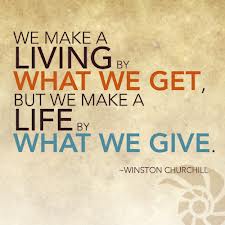
Think about how generous you are.  It’s not about money…it’s far more than that.  It’s about giving something much more valuable than money. It’s about giving some of yourself to others. Gandhi said, “Be the change you want the world to see.” Start small and see the difference it makes.

Your Ability To Change Determines Success or Failure


hqdefault

Our ability to change determines our probability to succeed. Of course success has many definitions. Success may look like a college degree, a new car, losing weight, obtaining financial freedom, paying down debt, finding a new job, rescuing an animal, raising money for a nonprofit, starting a business, or growing a business.

No matter what you’re doing in life, your ability to manage change, embrace change, affect change, and ultimately lead change will determine the outcomes you produce. When people fail to change they don’t grow. They don’t expand their knowledge, or insights, or perspectives. They remain static within a dynamic world. When businesses fail to change the results can be stressful and sometimes catastrophic.  Downsizing, layoffs, reorganizations, increased leverage, bankruptcy, and in worst case scenarios complete shut downs happen due to a failure in the ability to change.

How can you prepare for change?

  • Read more, and if you’re not reading at all, get started. Create a mix of categories including business, leadership, inspiration, fiction, and history. There is so much to learn from others who have come before us, as those who are currently on their own journey.
  • Conduct a personal self-assessment. What are your strengths? Stop worrying about your weaknesses. Play to your strengths. In baseball, pitchers are known for having a perfect pitch. Could be their fastball, curve, slider, etc. Perfect your strengths so much so that your weaknesses are irrelevant.
  • Find a mentor. Someone who will be brutally honest with you about you. A great mentor will help you become more self-aware. They can identify blind spots. Blind spots may or may not be weaknesses. The key is to understand what they are, where they are, and when they show up. A blind spot may be how your temper flares when things don’t go your way. Once you’ve identified the blind spot you can work on techniques that can help change your behaviors.
  • Accept who you are. Sometimes the changes required to go from Point A to Point B do not align with your “who”. Don’t settle. When you attempt to do things that don’t align with who you are authentically, you will create stress in your life, and in the lives of others. Be happy with who you are. Don’t try to be someone you’re not. Once you’ve accepted who you are you can chose those situations or activities that excite you from a change perspective. If you love turnarounds but hate mature businesses, don’t force a change to work at a mature business. You love the excitement of turning something around. Chose to do that and whatever changes you’ll face in a turnaround situation you’ll embrace and thrive upon.
  • Reflection time. Build time into each day to reflect. Just 15 minutes each day will help you sort through what happened, how you acted, and the outcomes. More than likely you’ll arrive at the realization that a different action would have created a different reaction. It’s cause and effect. Take the time to think about your day, those you encountered, and what took place.
  • Ask for help. Change is tough. Even if you’re changing an area that excites you, inspires you, and motivates you, chances are it also scares you. Going through change alone is even scarier. Having a strong support network is critical. Family, friends, mentors, leaders and teammates can help you with change. I also personally believe that having a strong spiritual belief and faith provides a sense of calm during the storms of change.