
3 Ways To Be Remarkable And Win In Sales

Remarkable

So you want to make the sale.  You want the plaque, the commission check, the trip, the recognition…you want it all.  Great sales people know that winning a sale doesn’t happen by shear force of will.  Sure you need to be persistent, tenacious, focused and disciplined.  No doubt.  But there are 3 things that will make your sales presentations stand out and create a remarkable experience for your buyer.  These things that make you remarkable are the exact things that put you in a position to win. While you may think these are basic, I can assure you that I continue to be amazed at just how often these 3 things get overlooked, drowning out any chance of the sales person appearing remarkable.

  1. Be early.  Urban sprawl has created a great excuse for showing up late to a sales appointment.  I’ve worked in every major city in the United States over the past 20 years.  Whether its Atlanta, Philly, NYC, Boston, LA, Seattle, Phoenix or Dallas, traffic is the perfect excuse for being late.  But it shouldn’t be.  Plan your day to anticipate traffic. If you’re on time, you’re late.  I’ve been on ride-alongs with sales people where we’ve been late to an appointment because of traffic and it throws off the entire cadence of the call right out of the gate.  Get there early and it will give you time to focus on the buyer rather than focusing on finding a parking space because you’re already 20 minutes late.
  2. Be prepared.  This is a big one.  This speaks to everything from knowing some details about who you are meeting with all the way to having any materials you will be handing out ready, organized and crisp.  Do you know if you’re connected to the buyer?  Did you check them out on LinkedIn?  If what you’re selling requires an online demo?  Have you tested it? Will it work over cellular or will you need a WiFi connection?  If the latter does the buyer know you’ll need this when you arrive or is the plan to surprise them when you ask for the office password to log in?  Do you have an agenda for what you plan to cover?  Have you shared it with the buyer in advance? The better prepared you are, the smoother the conversation will go. And, in the event you are late due to some cataclysmic event, you’ll be better able to flex and adjust seamlessly with the buyer.
  3. Use the buyers name. I can’t tell you how many times I’ve been on sales calls where the sales person never uses the buyers name after shaking their hand.  It could be a 30 minute call or 3 hour call.  How can something so basic continue to be such a common miss amongst sales people?  Isn’t that one of the first things we’re all taught?  Smile, have a firm handshake and use the buyers name.  Here’s a quick test. Next time you’re with your family or friends pay attention to the conversation.  Listen for how often names are used.  It’s actually quite often.  Using someones name throughout a conversation builds a bond. It’s a sign of respect as much as it is a sign of caring.

Focus on doing these 3 things on every sales appointment and observe the change in your buyers behavior.
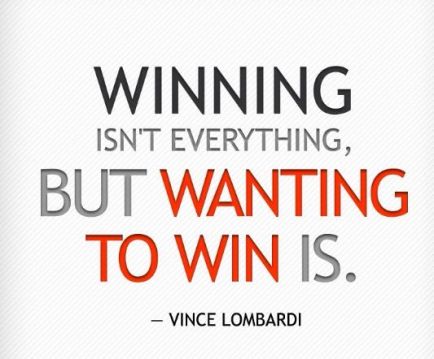

Winning the Sale Requires Marketing

winning

To win a sale requires a number of factors all aligning properly at the right moment.  The buyer’s need, a good story, the right product, and of course, an easy fulfillment (sales) process.

I’ve led marketing and sales teams for more than 20 years.  Neither could win without the other, yet each feel confident they reign supreme when it comes to closing the business.  However, there is an increasing body of work that suggests the role of the sales person, relative to closing the business, is decreasing.  Buyers are self-educating themselves all the way through fulfilling their own purchase.  Think Amazon.  You sign in, check out the product your interested in, perhaps read some reviews, and into your cart it goes straight through to check out.  If you’re Amazon Prime, 3 days later it’s in your hands and ready for use.  As the buyers journey continues to change, it’s up to the sales leader to adjust and learn new strategies that will increase their effectiveness; adding the right ingredients, at the right time, to achieve the desired outcome – a sale.

Nothing gets sold without a product, price, place or promotion.  I’ll add process in there as well as the 5th “P” of Marketing.  Combining these 5 P’s into a single offer that results in a sale is where the true beauty, art, and science all come together with marketing and sales.

Marketing is the lead function in any organization that is charged with providing an end-to-end view of the buying process.  Beginning with product development and ending with the sale, Marketing’s role is one focused entirely on creating a remarkable experience for the buyer on his journey to the cash register.  Much like a cardiologist confers with an anesthesiologist prior to surgery, a sales person should consult with Marketing.  No matter how great a heart surgeon is, she would never go into the operating room without the help of a strong and competent anesthesiologist.  If she did it would be disastrous.  If a sales person meets with a prospect without understanding the marketing behind the product the outcome can be quite disappointing.  And while I’m certain egos exist in the OR, I’m equally aware of the egos that exist within Marketing and Sales.

So here’s my challenge to Sales leaders interested in improving their team’s results…

Partner with Marketing to truly understand the offer.  I’m sure some heads are shaking right now and perhaps worse tempers are flaring.  Sales leaders by nature are confident with Texas-sized egos.  But the great sales leaders know it’s all about being a continuous learner.  Without learning you can’t be strategic, and without strong strategy skills

you’ll never improve your results.  You’ll simply go about doing things as you’ve always done, getting what you’ve always got.

Instead, I’d suggest sales leaders meet with their marketing peers.  Ask them questions surrounding the 5 P’s.

  1. What are the 3 most important features of this product and why?
  2. How did we arrive at those features?
  3. Tell me what went into our pricing for this product?
  4. What’s the impact to our brand if we discount the product?
  5. Are there any unintended needs that our product addresses? (think Post-It notes)
  6. Where in the process would my help and involvement, from a sales standpoint, yield the greatest end result?
  7. Where in the buying process do you feel there is room for improvement and can I help?

Questions like these will accomplish several things including: establishing trust between these two functions, educating each other by expanding insights and perspectives, fostering collaboration, and most importantly, if done right, this interaction will keep the conversation, efforts, and resources focused on the customer.

So to all the sales leaders out there, open your minds, focus on the customer, and be excited about the possibility of learning something new and connect with Marketing today.

Curiosity: The Key to Great Sales Talent


1b5805f16464a44669a42520558dc6ca

Is it really possible to hire great sales talent?  What makes one sales person succeed and another fail?  How does one sales person out-produce another, or an entire team?  Is there a secret trait, or characteristic, you should know about?  Average turnover in Sales ranges from 35 – 60% annually.  I’m aware of some companies where turnover is even higher, hovering in excess of 70%.  Imagine a sales force where 7 in 10 will be gone within the first 12 months.  Not a pretty picture.

If you’re building a sales team there are two traits that I have found to serve as a good barometer of future sales success; curiosity and the desire to learn.

Sales people must be curious. They should enjoy tinkering with things.  Changing things up.  Trying new things.  Asking tons of questions.  They should show a spark when presented with a problem, not shy away and become quiet.  Being curious allows a successful sales person to better understand their customers needs, the marketplace, trends, and possibilities.

The second trait that is a reliable predictor of sales success is the desire to learn.  Notice I didn’t say ability to learn.  We all have abilities…some natural, some taught.  However, what we really need is desire.  Desire speaks to what an individual will do regardless of what’s required.  If the desire is strong enough she will move mountains to accomplish what’s in her sites.

So how can you probe for curiosity and desire?  Here are some questions to ask during the interview process that will provide you insight on whether your candidate has these traits:

  1.  What would you do if you knew you wouldn’t fail at it?
  2. What was the last book you read? What did you learn?
  3. What LinkedIn groups do you belong to, and tell me about a discussion within that group that you found to be interesting and why?
  4. What types of books do you like to read and why?
  5. Who is your favorite author? Why?
  6. If you could start your own business what would it be and why?
  7. Who would you pick as your favorite leader and why?
  8. What is your preferred method of learning?
  9. What 3 adjectives would a client, or former colleague use to describe you?
  10. Tell me your 3 favorite questions to ask prospects
  11. What would you do if you won the lottery?

Selling requires strong critical thinking skills.  Critical thinking skills are developed  by expanding your insights and perspectives which happen primarily through learning.  The more curious someone is, the greater their propensity will be to be a continuous learner.

Let me know what you think.  Happy recruiting!

3 Ways to a Strong Sales Finish

JoePic

With 75 days left in the calendar year many salespeople find themselves in a crunch.  Either a crunch to hit that next multiplier level for bonus money, or a crunch to simply get as close to plan as possible.  Regardless of where you fall in that spectrum here are 3 things every sales pro should be doing right now:

  1. 70/30 split.  At least 70% of your time should be spent with your current customers.  You should be focused on understanding their business, providing value by educating them on possible solutions for their needs, and listening for trends, concerns, ideas, etc.
  2. Ask for the business.  The closest thing to a silver bullet in Sales is asking for the business.  Sure, you need to have earned the right to ask, but let’s assume you have.  Too often sales people assume that if the customer had more business they would have already given it to them.  WRONG!  WRONG!  WRONG!  It’s not their job to give you anything.  It’s your job to earn it, ask for it, and then deliver it in a way that makes you both memorable and remarkable.
  3. Be disciplined.  There’s no such thing as a 9 – 5 sales job.  If those are the hours you’re working you’re simply not doing enough.  Oh…you’re already at quota working 9 – 5?  Then I’d ask how much more you could have sold if you kicked it up a few notches?  It’s time to push.  Even if you’re at quota now a new sales year is right around the corner.  Plan your days.  Have your call list ready the night before.  Don’t waste precious selling time getting ready.  When you’re standing at the starting line it’s too late to train for the race.

Be sure you’re confronting reality.  If you’ve missed plan this year take an inventory of where things went wrong.  Be honest.  At the end of the day if you’re over plan it’s because of you and if you’re under plan the reason is the same…you.  You may be more expensive, of lesser quality, or longer to fulfill.  Regardless, you own finding a new path.  Once you accept accountability the path becomes much clearer.

Be calm.  Sell on.

4 Keys To a Better S.A.L.E.

Improve

No matter if you’re new to sales or a seasoned sales executive, brushing up on your selling skills is as important as changing the oil in your car regularly.  Leave the oil too long without changing it and your engine gunks up, gas mileage deteriorates, and in time your engine will fail.  Knowledge is to the sales person what oil is to an engine.  When you stop feeding your mind new knowledge your performance deteriorates and failure is around the corner.  But with so many things to think about, so many calls to make, numbers to hit, you don’t know what to focus on first.  So here’s a tip that will keep it simple…just remember SALE.

The “S” in Sale stands for structure.  Every sales person needs structure.  Some people are naturally disciplined and have strong internal structure while others require help to remain focused and disciplined.  Only you can be honest enough with yourself to know where you fall on the structure spectrum.  Structure includes when you make your calls, how your desk is set up, and whether your car is cleaned.  Structure speaks to your ability to organize.  Stronger organization equals higher efficiency which yields better results.

The “A” in Sale stands for attitude.  John Maxwell, the famous inspirational author, wrote “your attitude determines your altitude.”  Having a positive attitude is essential to success in life and critical to your success in Sales.  Have you ever met a sales person who seemed like they were on their last leg?  No more gas in their tank?  How did that make you feel?  Excited to buy?  Confident in purchasing their product…from them?  No.  No one wants to work with someone with a poor attitude.  No one buys from someone who lacks confidence in themselves, their product, or their company.  If you’re honest enough to recognize you have a confidence gap – read.  Thousands of books and books-on-tape are out their that can help.  Take action.  Don’t let another day go by with a bad attitude.

The “L” in Sale stands for learning.  If you’re not a continuous learning become one…and fast.  Albert Einstein said, “You have to learn the rules of the game.  And then you have to play better than everyone else.”  The rules of the game are always changing in Sales.  Your customer is evolving.  The internet and its ability to provide mountains of information will continue to change the game for years to come.  Better educated customers and prospects force a sales person to constantly up their game.  If you think the sales skills that won you awards 10 years ago, 5 years ago, or even last year will work in 2016 you’re wrong.  News flash!  If your buyer hasn’t already changed, they are in the process of changing.  Read.  As much as you can from as many sources as you can.  Commit to bringing one or two points from what you read that day into your sales conversations, then watch how your customer engagements change before your eyes.

The “E” in Sale stands for energy.  And lots of it.  Sales is physically and mentally demanding.  Some days are more draining that others.  Break up your day.  No matter how good you are you simply can’t sit and make 50 sales calls in a row without stopping.  While that may be physically possible, your energy levels will diminish and your customer will sense it.  Stay hydrated.  Drink 4 – 5 glasses of water throughout the day, or bottles if more convenient.  Stop for lunch.  If you don’t have the time for lunch keep an energy and protein bar handy.  You don’t want low energy levels to come across as poor attitude.  And make sure you get a work-out in daily.  Whether you start, or end, your day running, spinning, swimming or CrossFit, simply make sure to get some exercise in.  It will help keep your mind fresh, your energy up, and your endurance strong.

Happy Selling!

The Coercive Contactor Versus the Caring Connector

Sales people have been taught the importance of the numbers. The number of dials made each day, contacts made, and presentations scheduled, are all metrics sales professionals have had baked into their thinking. You want more sales, make more dials. You want more presentations, make more contacts. We grind it out every day focused on persuading, manipulating and influencing the prospect just enough to get them to see things our way and then…BAM…a sale is made. I refer to sales people that fit this description as coercive contactors…make the contact and then through sheer force of will, or fear-selling, make the sale.

But times are changing. The buyer today is far more educated than in the past thanks in large part to the internet. Most agree that a majority of the buying process is completed before a buyer ever meets with a sales person. How did this happen and what does it mean to you as a sales person?

Google has changed our world. In a couple clicks of a mouse we can find information on virtually any topic or question that we could dream of asking. Volumes upon volumes of data and content reside on the web, there for the taking. In the comfort of our homes and offices, cars or restaurants, we have 24/7 access to all the information we could possibly need to make informed decisions.

For the typical sales person this poses a huge threat. Most of us were trained in the art of persuasion, manipulation and influence, in order to bring the pain the buyer is feeling front and center. And while shining a light on the buyers pain isn’t wrong or inappropriate, it is a less effective selling tool if the sales person doesn’t know what to do with the buyers pain once they’ve identified it. You see, buyers have a much better sense today whether your solution will actually help them. They’re no longer completely reliant upon the sales persons power of persuasion and instead draw from their own research and education as to what may improve their circumstance.

Whether it’s an outsourcing solution to improve business performance or a new medication to improve your health, just about any information you’re looking for is available via the web. As such the dependency on the sales person has evolved from a pitch person to a “caring connector”. A caring connector is how an authentic sales professional presents themselves in what they say, how they say it, what they do, and how they act. Forget about the super slick, fast talking sales dude. Today the successful sales pros are ones who take the time to listen, ask thoughtful questions, and perhaps most of all, be honest enough to tell the prospect just how helpful their solution will be. They demonstrate genuine care in how they connect with the buyer. This is a huge mind shift in sales. In fact, many recent studies conducted by Harvard Business Review, as well as, in many books authored on sales including Jeff Thull’s recent Exceptional Selling, show proof that being willing to walk away from a sale because there’s simply not enough value there, actually enables you to sell more. The premise is that once someone trusts that you have their best interest at heart, and in mind, they’ll come back to you again and again. Additionally, once you’ve determined that there is little value to the prospect to move forward with your solution you stop forcing a sale and move onto the next opportunity, again freeing your time to engage with a buyer whose needs and circumstances better align with the value you provide.

So try it. Try shifting from that coercive contactor to the caring connector and watch your sales grow.

Your Doctor May Be Your Best Sales Coach

doctor

In my previous blog post I talked about a selling strategy that helps to eliminate lost sales.  Lost due to a disconnect between the prospect and the sales person.  A communication miss fire on either end is responsible for every sale not made.  If the sales person is communicating and observing the prospects response, or reaction, there should be no last-minute surprises of lost business.  In fact, if you were really honest about it, most of the time you knew deep down that sale was going nowhere.  But the sales gods have been clear for decades that you never give up, never walk away, always be closing, and never take no for an answer.  If you’re into self-deprecation that might be exactly the approach you’re looking for.  But for those of us who are interested in transcending the age-old image of a product pusher to one of a true sales professional, looking for the “no” is how you should approach each sales opportunity.

For years I have taught and coached sales teams across a variety of different industries to approach a prospect as a doctor approaches a patient.  Curious, thoughtful, prescriptive and honest.  Here’s how:

  1. Curious.  The first thing a doctor does when he/she enters an exam room is begins asking questions.  What’s going on?  When did it start?  Is it like this, or like that?  Do the symptoms increase in intensity during certain times or are they constant and unchanging?  The doctor is beginning to diagnose your problem.  Asking questions, no matter how uncomfortable they may be, is the first step to a proper diagnosis.
  2. Thoughtful.  In my experience (and to be completely honest I believe I have the world’s greatest doctor) great doctors never provide knee jerk responses.  They go through their diagnosis phase and take a moment to process the information they’ve just gathered.  Sure this process step may take seconds, but in most cases pay attention the next time you go to the doctor and watch for that “medical processing pause”.  This refers to the time it takes for the doctor to thoughtfully provide their assessment and prescribe next steps.
  3. Prescriptive.  Depending on the assessment of what’s wrong with the patient the doctor may have one to many different prescriptions to offer the patient.  The prescription may not be solely medicine related.  A doctor may prescribe physical therapy, or eliminating a specific food from your diet.  He/she may also prescribe a mobility aid such as crutches or a walker, or even a sling or splint depending on the injury.  The point is that in many cases there are a variety of paths forward and the doctor presents these options in the form of prescriptions.
  4. Honesty.  This element of the doctor-patient relationship is the most important.  No matter how good the doctor is, if there is no trust that exists between him/her and the patient the above 3 ingredients are useless.  By the time the doctor gets to the prescription phase of the patient examine, he/she is presenting options along with their personal choice.  How many times have you heard a doctor say, “if you were my son”, or “when my mom went through this we decided to do…” The trust and honesty that exists between a doctor and patient – their ability to communicate transparently with one another – is the ingredient that results in the patient’s ability to improve their condition.

The relationship between a doctor and patient exists for one of two reasons:  to fix something currently broken, or to avoid something breaking in the future.  Isn’t that the relationship between you and your prospect?  The prospect has either agreed to meet with you because something in their business is currently broken or because something may be changing that may cause something to break that they’re trying to avoid happening.  Regardless of whether it is a current problem or future, follow the 4 steps above and you’ll find a more engaging, trusting, and action-oriented relationship develop between you and your prospect, soon-to-be customer.

5 Things Every Salesperson Should Focus On

focus

Sales people are an interesting breed.  They’re high-strung, often funny, and witty, sensitive and many times high maintenance.  I know this because I am one.  I’ve sold, managed, led, and built sales teams for the better part of the past 2o years.  I’ve had months when I hit my numbers and months when I’ve missed.  I’ve had sales teams that have blown the number out of the water and those who have drowned while trying to hit the number.  Yet over the years I have heard one question that continues to be asked over and over again…”what is the secret to success in sales?”.  Here’s the answer…there is no secret.

The difference between successful sales people and those who fail in this profession is simple.  Over the years I have identified 5 traits that separate those who succeed from those who fail.

  1. Clarity of goals – knowing exactly what you want to achieve and when.
  2. Discipline – being committed to perfecting your skills.  Starting your day before others and ending it after they’ve long given up.  Putting in that extra time when others are out having fun.
  3. Curiosity/Inquisitiveness – an insatiable thirst for knowledge.  Betterment.  Desire to outsmart, or out-understand others.  Constantly absorbing, learning, refining.
  4. Time Management – successful people know that time is their biggest asset.  They don’t waste it.  In Sales this means selling when people are available to be sold to.  Don’t do paperwork at 10 am.  That’s a waste of time.  Sell at 10 am and do your paperwork at 10 pm.
  5. Self-Reflect – 15 minutes a day to reflect on what you did, what results you generated, what you learned, what you’ll do different tomorrow.

Make these 5 things part of your life and success will find its way to your doorstep, not because it simply wandered over but because you attracted it through these strong and powerful habits.