Why Empathy is Important for Sales Leaders

Empathy

Sales is tough.  Rewarding but tough.  Not every one is cut out for a career in Sales.  It’s the ultimate “what have you done for me lately” profession.  This year’s top performer is next year’s runner-up.  Being a salesperson requires high energy, discipline, tenacity and focus.  Great sales people possess the ability to visualize their success.  They can see themselves on the stage receiving The President’s Award, or cashing that big bonus check.  They’re high achievers, hard workers, and by and large, emotionally charged people.  Great sales leader have many similarities. But the really great leaders have more empathy than your average sales leaders.

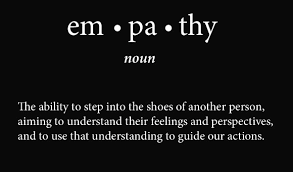
Empathy allows you to connect.  It makes you human.  Empathy allows you to feel, or perhaps more pointedly, allows you to understand how the someone else feels.  Having empathy is different from having sympathy.  Many people feel they are the same.  They’re not.  They’re wildly different.  Sympathy is about compassion, “feeling sorry for”, whereas empathy is being able to relate to another person.

Great sales leaders can relate, or empathize, with how challenging it is to find good prospects.  They can empathize with how exhausting making 100 dials a day can be.  If it were sympathy, I’d be saying “I’m sorry you have to make those 100 calls today…I sympathize for you.”  But that’s not the case.  The goal of a great sales leader is to have their team know, that they know, what it’s like to walk in their shoes.  The team wants to know the leader has “been there, done that.”  Great sales leaders are able to demonstrate empathy without effort because they can simply relate.  They’ve carried the bag, they’ve suffered the rejections, they’ve ended their day emotionally and physically exhausted without a sale in hand.  They’ve lived it.

Great leaders are not scared or intimidated to show empathy.  They don’t see it as a weakness to say “I went an entire week once not selling a thing”.  They’re not excusing low or poor performance by providing sympathy.  In fact, instead, what they are saying is I’ve had some moments like that myself and here’s how I pulled myself up and turned the corner.

We’re emotional beings.  Period.  We want to know we connect.  We’re pack animals.  Knowing we’re understood is critical.  Top performers, no matter what the profession, just want to be understood.  They don’t want sympathy and they don’t want anyone to “cut them slack”.  They want encouragement.  Not cheerleading.  There’s a difference.  Encouragement provides direction, a path.  Cheerleading provides nothing but a temporary high.

If you want to supercharge your leadership focus on developing your own personal level of empathy.  How do you relate to others?  What do you say to people who are struggling?  If you can improve your empathy skills you can improve your results, and the results of those around you.  Now you’ve created two wins.  Now you have momentum that will carry you and your team forward, and that’s what it’s all about.


Stop Hiding, It’s Time to be Remarkable.

dog

Long hair, short hair.  Clean shaven, beard.  New York accent, southern drawl.  Short, tall.  Heavy, slim.  Most people think of physical attributes when considering how remarkable they are.  Sure, David Beckham or Kate Beckinsale certainly turn heads but what truly makes you remarkable?  The answer?  It’s what you do and how you do it.

All of us have encountered remarkable people in our lives.  These are the people we remember.  The ones that made a difference.  They are the people that cared enough, shared enough, and gave enough to us that we walked away feeling beyond satisfied, feeling completely fulfilled.

The great author, Seth Godin, was one of the first to raise the concept of remarkable in his book Purple Cow.  Everyone can be remarkable. Few do, but all can. It’s a choice.  The fact is you’re already remarkable, you just need to show it.  We were all born with talent.  Your first job is to be self-aware enough to identify what your talent is and then live it.  Your second job is to understand your current circumstances and determine what actions you can take that will result in someone seeing you as remarkable.

Maybe you don’t want to be cold calling all day but that’s your current circumstance.  Your choice to gear up, toughen up and lighten up will come through your interactions as remarkable instead of choosing to be beaten up.  As inspirational writer John Maxwell says, “Your attitude determines your altitude.”  Not only is he right, but your attitude also determines just how remarkable you are, and can become.

Remarkability is not just about being different, or memorable.  If it were we’d have to include people like Hilter, Hussein, and Nero.  Being remembered is not being remarkable.  Being remarkable is having a positive impact in someones day, week, or life.  While others may define remarkable differently I would simply say that it’s about making others smile, happy, or feel fulfilled.  Perhaps that’s why nurses, pharmacists and fireman always top the list of most trusted professions, because in life’s most critical moments those are the remarkable ones we turn to.

Making the choice to be, act, and do remarkable things is all yours.  The world is waiting…needs you…to be just that – to be remarkable.


4 Ways to Super-Charge Your Leadership

Headshot11.15.15


If you want to super-charge your leadership skills here are 4 things you should pay close attention to:

  1. Behaviors – What you do, when you do them, how you do them. Do your behaviors change depending on circumstances or do they serve as an unshakeable foundation even in times of crisis? Be cognizant that people are watching. Your colleagues, bosses, clients, partners, are all noticing your behaviors.
  2. Routine – In a recent Harvard Business Review, it was reported that great leaders have routines. They do things in certain ways, at certain times. They are disciplined and methodical in their actions. Leaders who are skilled at identifying their surroundings and circumstances are able to develop the routines that add the greatest value resulting in better results.
  3. Adaptability – Great leaders are capable of modifying their behaviors and their routines based on their circumstances. This requires the leader to be both a teacher and student all at the same time. Recognizing the need to adjust, and as importantly how to adjust, sets great leaders apart from those individuals who manage. Managers watch over a process. Leaders evaluate circumstances, determine a better way, garner resources, provide vision, and secure alignment. To do this, a great leader must be able to adapt.
  4. Seek feedback…genuinely and often – Interesting research from a number of trusted sources indicates that leaders who request regular feedback are more effective. Feedback improves your ability to empathize and connect with others. Unfortunately many people interpret a request for feedback as a weakness or perhaps insecurity. Leaders who ask from a number of sources – not just their boss – gain deeper insight into the organization, its issues, challenges, opportunities, and people. Having the ability to see into your circumstances is critical to your success. Don’t let others perceptions of feedback affect yours or worse prevent you from asking.

Great leaders learn, teach others, learn more, and repeat that process. Take these 4 elements and weave them into your daily leadership actions.


Can Really Anyone Succeed?

Doubt

It all begins with setting clear goals.  Knowing what you want along with a rough idea of the time frame in which you want to accomplish those wants is where success begins.  No one stumbles into success.  Without clearly defined goals even winning the lottery will lead to failure as the bankruptcy rates for lottery winners seem to indicate.  We’ve managed to create a society in the United States where success is demonized and those who acquire it are viewed as the bad guys.  Lines continue to form for hand-outs and entitlement programs.  We’ve more than doubled the ranks on government assistance in the past 8 years, and the news is littered with stories on just how little the rich and successful do for those less fortunate.

Those who don’t succeed often whine about the who, the how, and the what.  Who prevented them from succeeding how they were derailed from success, and what’s missing from the system that if there would enable them to succeed.  These folks just don’t seem to get it.  They must have slept through history class…not just ours but civilizations across the globe.  Remember the caveman wasn’t born with fire or a wheel.  It took thought, vision, hard work and persistence.  Our country was founded on the basic principle that anyone willing to work hard while applying their God-given talents could succeed.  We never guaranteed success…only a chance at it.

People who complain about success will never attain it.  I’d propose that the biggest reason they will not achieve success is that they haven’t taken the time to identify what success is.  They simply look at the material things that they associate with success.  They have no idea what is required to obtain those things, they see only the after-results.  Whether it’s a heart surgeon, a mutual fund manager, a business owner, or a school teacher, those who are successful have a clear idea of what success means to them and for most it’s never about the money or stuff.  It is however always about the personal accomplishment, achievement and having the ability to say “I did it.”  That alone defines success.  You know, Frank Sinatra got it right in his song My Way, more people should listen to it.

So if you’re feeling low and not sure where you’re headed remember it’s up to you.  You have to think about what you want.  You have to answer the question how hard you’re willing to work to get it..  You have to be willing to put the time in.  You have to take complete responsibility and accountability for your successes and failures.  Once you do that success will find its way into your life.