Customer Success:  5 Requirements to Creating Value in Every Client Interaction.


Today’s buyers are overwhelmed with data points, reports, metrics, and an avalanche of nonstop news whether its from traditional networks, cable news, or social media.  Points-of-view are as infinite as the number of stars in the universe…or are they?  In a world dominated by countless Customer Success models I continue to observe just how complicated we’ve made some basic human interactions, and just how little value some of these interactions deliver.


Great Customer Success interactions require 5 crucial elements:


  1. It all starts with a clear customer success statement as articulated by the customer.  What does success look like?  When we meet 3 months from now, what would have to be true for you to say this engagement is a success?
  2. A strong understanding of general market conditions (macro), and the ability to connect those dots to your customer’s situation, this is what I call “pulling the thread all the way through”.  It requires solid structured thinking skills.  The ability to define a problem, understand the cause, and create a solution that reduces or eliminates the problem. 
  3. Ability to create insights – combining a fact with an implication or point-of-view,
  4. Strong EQ skills that allow you to connect/relate to your customer/buyer on an emotional level,
  5. Storytelling skills


I’m sure someone, somewhere is saying, “yeah, but what about…”, or “Customer Success is so much more than these 5 things…”, or “you don’t know my industry, it’s so different than any other industry…”


What does this look like in our daily lives?


Think of someone in your network you respect and learn something from every time you speak to him, or her, who would it be?  What characteristics does he/she possess? I’d suggest they made your list because they are proficient at all 5 of these competencies and perhaps expert at some of them.  Certainly, you wouldn’t offer me a name of someone boring who lacks details, confidence, or a clear point of view.  No.  Instead, you’d share a name of an individual that you hold in high regard, or perhaps even aspire to be like.


Once basic human needs – food, clothing, shelter, safety – are satisfied, you transition to next-level needs which include the need to be heard, understood, validated, and the ability to succeed.  These next-level human needs address both self-esteem and self-actualization.  Said differently, we all desire confidence and ultimately the need to be seen by others as being successful – that we’ve reached a position of respect, or sought-after expertise.


Tying it all together…


Customer Success Managers (CSM) are entrusted with managing, and growing client relationships.  The CSM has one of the most challenging roles in an organization as they walk the tight rope between Sales, Service, Marketing, Operations, IT, HR, Finance, and virtually any other functional area that touches the client with the potential of creating an experience be it positive or negative. Understanding macro-economic conditions does not mean going back to school to obtain an Econ degree.  As a result of the diversity of a CSMs interaction with a client it’s imperative for him/her to understand how macro conditions affect the customer’s business.   This doesn’t require an advanced education but rather some basic structured thinking, discipline and commitment.  This is the ability to define a problem, understand what causes the problem, and finally creating a solution(s) that addresses the problem.


Client Success Managers (CSM), need to have a general understanding of the market conditions.  What’s happening in the market?  How are interest rates moving?  What’s happening with employment numbers?  How is inflation trending?  Where is consumer confidence?  With one or two apps on your phone you can stay abreast of every major macro metric in real time…in less than the time it takes to sip a cup of coffee.  It requires the discipline to build that habit into your day.  According to an October 2023 survey by Statista, people on average spend 2.5 hours per day on social media.  Using 3 minutes of that time every day to understand market conditions doesn’t seem like a huge change in behavior…but it can be if you let it…you’ve got to commit.


I often use the phrase, “pulling the thread all the way through.”  This means, having the capability, or skill to understand these conditions and pull the thread all the way through to how these macro conditions affect your customer through storytelling.  Doing this allows you to clearly define the problem your customer is currently facing, or about to face, and be able to communicate this to them in a way that is both articulate and confident.  Storytelling is not fiction, nor is it fear mongering.  Storytelling involves understanding your client’s current situation, the inputs that affect the situation, and what possible outcomes may exist depending on the actions taken.  Effective storytelling can be summed up in the ability to take multiple inputs and synthesize them into a story that captivates, creates intrigue, and ultimately causes action.  Storytelling is not about scaring the client into taking the action you want, but instead is about causing the client to stop, think, ask questions, and genuinely ponder the possibilities the CSM has presented.


Creating insights are something many CSMs struggle to do.  Keep in mind, an insight is combining a fact with an implication, or point-of-view.  A fact could be where current mortgage rates stand, or the current rate of inflation.  An insight would be how a change, up, or down, in that rate could affect your client and what the implication would be in either scenario.  This is a learned skill.  It doesn’t just happen.  Your CSMs need to study macro conditions, practice formulating insights, and role play with sales management in order to improve their effectiveness with their client engagements. 


The days of “objection handling” are done.  These old school sales tactics often rely on one’s ability to out-talk, or through smoke-and-mirrors, overwhelm the buyer.  I always disliked old-school objection handling.  Too much emphasis was placed upon having quick come backs, slick words, and one-liners.  Memorize these 3 responses and you’re golden.  Unfortunately, this approach is why Sales as a whole is often viewed in a negative light.  People are reluctant to meet with a salespeople and many salespeople don’t like to tell others they are salespeople.  How can we change this perception?


Being insightful is how you earn your customer’s time – their most precious resource.  People are only willing to invest their rarest of resources (time) with those that they can learn something from, and who make them feel validated.  So why is this so difficult?  Why do client engagement professionals still rely on old school objection handling?  Well, I’d suggest it’s because being able to provide real insights and value requires a full-out dedication to learning and understanding market conditions versus memorizing 3 great come-backs when a client raises an objection. 


Still today, too many salespeople subscribe to the nonsense of Sales ABC – Always Be Closing.   If this is happening in your company, I’d suggest this is a failure of leadership not leading…not teaching.  If leaders don’t raise the bar and expect a higher degree of business acumen, then their respective teams will fall back upon these ABC rules because they have nothing else.  Leaders need to lead.  This means leaders need to teach.  Further, this means leaders need to get more comfortable with being vulnerable.  Most people dislike role playing as much as they dislike public speaking, leaders included…perhaps more so.  However, role playing is a crucial element to improving your ability to take facts, formulate insights, and tell a story that leads to action, all in real-time.  Role playing for salespeople is the equivalent of a quarterback taking snaps under center at the line of scrimmage.  Defenses unfold in real-time.  We all know that good judgement comes from experience, and experience comes from bad judgement.  This is why professional sports teams practice, practice, practice.  The coach creates and environment that allows for real-time judgement based upon real-time changes to the scenario…all with the goal of making these bad judgements in the safety of a practice versus a real game.  As leaders it’s our job to create these types of learning environments for customer success managers to hone their skills.  It also means the leader must risk a wonky role play in front of the team.  No one has all the answers, but the best leaders, are okay with getting it right versus focusing on being right.


In conclusion, customer success is about having a clear success statement articulated by the customer.  Great CSMs will provide a blend of facts and insights that address their customers problems which result in earned trust and respect.  These CSMs take chances, formulate insights, role play their delivery, and embrace the outcomes as their own.  They are the game changers, the difference makers, in achieving outstanding customer success.



Do You Need Customer Success? 7 questions to help make your decision.

Knowing where not to spend your time is as important as knowing where you should spend it.  Today’s buyers are more savvy, and demanding than they were just yesterday.  They are also more comfortable doing business with multiple providers versus selecting one preferred provider.  Left unattended, or worse ignored, buyers will seek to fulfill their needs as quickly and easily as possible.  The question for your business is simple:  do my customers know everything I can offer them?  If you’re like most businesses, the answer is simply “no”, our customers don’t know the depth of our capabilities, and this gap creates a significant risk to future revenue.

Customer Success focuses on three primary areas:  increasing customer retention rates, capturing a deeper share of wallet via cross-sell initiatives, and improving Net Promoter Scores.  Happy, more satisfied customers, tend to feel better about committing more of their spendable dollars with a business.  This translates into buying more products, additional services, or extending current terms of their services.  Effective Customer Success models can be measured by evaluating CLTV, or Customer Lifetime Value.  An increase in CLTV may be attributable to the effectiveness of your Customer Success program.

So how do you determine whether or not create and launch a Customer Success program?  Answer these 7 questions:

  1. What is the current retention rate on your existing customers over the past 12 months, and further 3 years?  If retention rates are low, or declining over a period of time, this is an indicator – although lagging – that a focus on Customer Success may be needed.
  2. What is your current Net Promoter Score and how often are you measuring it?  Low NPS scores can be an indicator of your customers willingness to move, or leave your company.  Dissatisfaction, lack of trust, unrealized value, are just a few sentiments that can be traced to low NPS scores.  Bottom line, the lower the score the more at risk your revenue is.
  3. What is the ratio of products per customer?  The retail banking industry has long tracked this ratio yet it hasn’t moved much.  The average bank has 2.3 products per customer.  Wells Fargo for years has been the king of this ratio touting an impressive 3.2 products per customer.  Of course this ratio must be evaluated against the total number of products you can offer to your customers.  The more products, the higher you want your ratio to be.
  4. What is your current account management strategy for engagement and interaction?  How often are you engaging your current customers?  What methods are you using to touch your customers?  Email, phone calls, visits, quarterly business reviews?  Does your customer have an assigned account manager?  Is that account manager’s compensation dependent upon a rise in NPS scores, and/or increase in customer revenue?
  5. How many referenceable customers do you have?  How many customers have agreed to be a reference for your company?  How many are willing to provide a testimonial either video or written?  How many of your customers are willing to engage in issuing a press release publicly demonstrating their chosen alliance with your company?
  6. How much of your current revenue is generated from existing customers versus new logo sales?  The more reliant a business is on existing customer revenue to make its number, the more exposure that business has to any volatility in customer attrition.  Furthermore, if your existing revenue is overweighted with a handful of customers, your revenue risk exposure is even greater.  It’s likely time to look at a Customer Success model.
  7. What is your 3 year history of renewal rates?  Have they increased, decreased, or remained the same?  If renewal rates are flat, or decreasing you likely have a need for Customer Success.

If your company is experiences decreasing retention rates, low NPS scores, and fading revenue from its existing book of customers, it may be time to focus on developing and implementing a Customer Success model.  Remember, your cost of acquisition is already sunk, yet your customer lifetime value can still be influenced.  Focusing on building meaningful relationships with your customers translates into increased revenue, improved brand value, and drives new logo sales by providing a stable of referenceable customers who become brand ambassadors.

If you would like to further explore whether a customer success model is right for your business contact me at josephgderosa@gmail.com.

The Customer Mindset

MyBook

Developing strategies to grow revenues really excites me.  It’s what gets me jazzed.  Ideating, innovating, and brainstorming, mixed with good old fashion common sense usually always provides the best path forward.  The key is listening.  Listening to the business, the market, the employees, and most importantly listening to your buyer.

I’ve spent the last decade studying, observing, learning, testing, and monitoring results that are achieved with various go-to-market strategies.  Many companies spend too little time developing the strategy and plan to take their product or service to market.  They make or produce something, price it, and give it to Sales to sell.  Make it, and they will come.  Not really.

The Age of the Customer has arrived.  No longer does the sales person control the sale.  If you believe your sales team is in control think again.  The buyer has all the control.  Many well-respected sources indicate up to 70% of the buying process being complete before a buyer meets with a sales person.  Your buyers have looked you up, researched you, watched you, and asked about you before you even knew they existed.  Do you know where they found you?  Do you know who they talked to along the way to ask for advice or opinions?  Do you know what they read to educate themselves on this purchase?  This is all very important work.

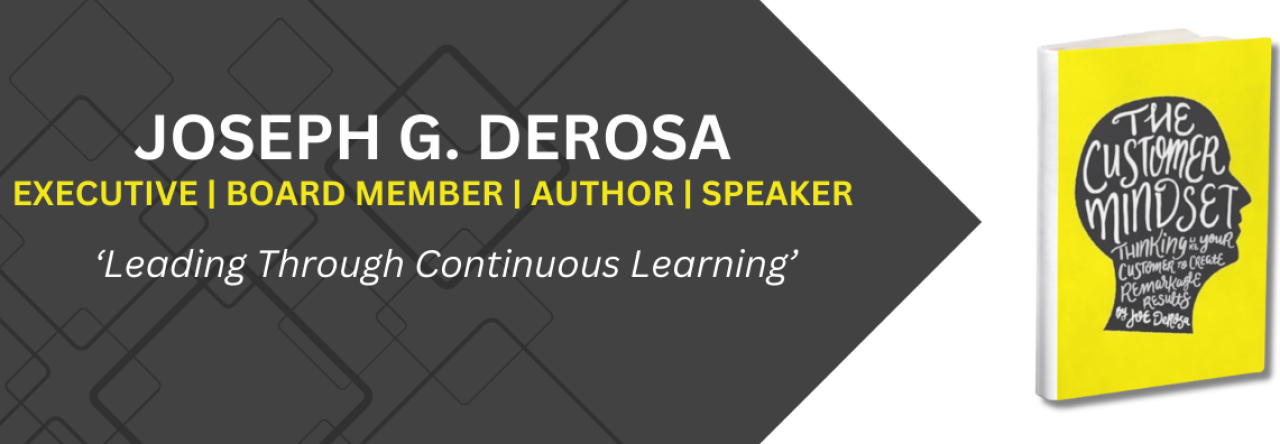
I am proud to announce my new book The Customer Mindset: Thinking Like Your Customer to Create Remarkable Results.  I wrote this book to provide an actionable roadmap for those charged with growing revenues. The book is filled with real-life stories, frameworks, and methods for mapping your buyer’s journey.  By creating a visual map of the journey your buyer takes on their way to the cash register, you will be better able to create a sales and marketing process that assists in this journey.  Remember, the buyer is in control.  Once you recognize and accept that, then you can get started focusing on how to help them through their journey versus spending your time trying to figure out how to sell them.

I want to thank the more than 5,000 readers of my blog who inspired me to go deeper.  To provide more detail.  To be more prescriptive.  Thank you so much.  I also want to thank David Moncur who has been a great friend and inspiration, not to mention the best creative mind I’ve ever worked with.  It is his firm, Moncur, that designed the awesome cover – front and back – of my book.  Thanks David.

I hope my blog, my book, and my stories continue to help you grow your business by providing strong leadership, innovative thinking, and a discipline to focus on doing the right things that maximize your results.

Reverse Prospecting: Your Buyer’s Looking For You


Reverse

Understanding your buyer’s journey is the first step to delivering explosive growth results.  The age of the buyer has arrived and the seller no longer is in control.  Buyers today are prospecting more than sales people.  How?  By scouring the internet and leveraging social channels to learn and make decisions.  In fact, if you’re the seller, you’ve become the passenger on this purchasing trip.  So make yourself comfortable, stay observant, and most of all have fun on the trip.

Your buyers know more about what they need than ever before.  There was a time (and it goes further and further back each day) when the buyer had to rely on a sales person to identify his problem and present a solution…the seller’s solution.  Not any more.  Have a runny nose and sore lower back?  A quick trip to the website WebMD can provide you with information on what may be going on with you.  You need to put in a new garbage disposal?  There are hundreds of how-to videos on YouTube that provide step-by-step instructions that take a job that previously required a plumber and turned it into a DIY project.

We have all become addicted to information.  In fact, more than 80% of 18 – 44 year olds say the first thing they do in the morning, immediately after opening their eyes, is to check their phones.  Information.  We want lots of it, all the time.

Buyers have this access to information and are using it more and more.  They Google, Facebook, YouTube, Tweet, and ask their LinkedIn groups for information, recommendations, and ideas.  If you’re a seller without a social selling strategy you’re already trailing the pack.  And if you think your product or service is too complex to promote via social channels think again.  General Electric has hundreds of videos on YouTube on MRI equipment, jet turbines, and lighting.  Toll Brothers, a national builder of custom homes, provides a website that allows someone to design and build their dream home and see it!  Buyers are not just using the internet to shop for shoes, sweaters, or books.

Having a social presence isn’t enough. You can’t set up a Facebook or LinkedIn page and check off the box and say its done.  You have to be active…engaged.  You have to create content, share content, weigh in on content others have shared.  This is where your buyers are looking for you.  Your paradigm must shift.  Buyers are now conducting a form of reverse prospecting.  They’re looking for you…you just don’t know it.  So if you’re a seller, and you’re not visible in the areas your buyers are looking for you, you simply won’t be found.

So get started.  Take it slow.  Don’t try to boil the ocean in a day.  A retweet here, a LinkedIn post there, a blog here, are all activities to get you on the road to being found by your buyer.

Applying Stephen Covey’s 7 Habits to Your Buyer’s Journey

Proactive-not-Reactive

In his book, 7 Habits of Highly Effective People, Stephen Covey presents seven habits (and one bonus habit) that he observed made some people more effective than others.  Since his passing in 2012 I have revisited my copy of this book on a number of occasions.  I have found overwhelming similarities between how these 7 Habits, if practiced consistently, not only produce more effective people but also more effective companies.  Over the next week I will highlight each habit and how it can translate into helping you understand your buyer’s journey.

Habit 1 is about being proactive and taking responsibility.  In business, the leader’s job is to provide the vision for where the company is headed, and is the owner and nurturer of the company’s culture.  Many companies delegate cultural ownership to the head of HR or some other executive.  But culture is much deeper than simply finding a champion or cheerleader.  Culture is about setting a tone, establishing expectations, accepted behaviors, and perhaps the most difficult ingredient of the culture, which is the creation of confidence.  The ultimate leader of the company sets the culture even if he or she doesn’t want to “own” it.  It just happens.  Employees look to THE leader as both watchers and witnesses to behaviors. How THE leader acts and behaves is how the entire organization will act and behave.  If the leader is proactive, the company will be proactive.  If the leader hides behind walls, doors, and desks, the entire company will hide from its customers’ behind walls, doors, and desks.

To be proactive requires a great degree of curiosity.  It’s the ability to wonder what if, what could be, or how could we?  The ultimate one word that demonstrates just how proactive someone is – “why”.  When you ask “why”, you’re being proactive. Think about it.  If Thomas Edison never asked why, would we have lights? If Steve Jobs hadn’t asked why, would we have many of the modern-day conveniences and access to information that we have today?  There are thousands of examples of how asking why delivered major inventions or innovations to our society.  If no one took the time to ask why, we’d simply all be sitting around, idle, stagnant, and unchanged.

As you look at your buyer’s journey ask why?  Be proactive.  Don’t wait for a major disruption or crisis to force your evolution.  Get out in front of it. Take every opportunity to talk to your customers and ask questions, get their ideas, opinions, emotions.  Don’t rely on paper, or automated survey’s.  Engage them live, in real time.  Be bold, brave, and most of all be proactive in understanding what’s important to your buyer.