Caution! Employee Morale Not As Good As You Think.

employees.JPG

Employee morale seems to be quite high.  Management teams everywhere breath a sigh of relief after seeing their satisfaction surveys results.  They’ve got it under control.  People are happy and satisfied.  Executives look at this data and believe all’s well.  But it’s not.  Not really.

Many employee satisfaction surveys test for how happy, or satisfied, the employee is with the work they do each day.  But this measure can be misleading.  While I may love building spreadsheets, I might not like the environment in which I have to perform this work.  I may really enjoy creative writing, but don’t like the team I’m on, or the boss I work for.  Measuring how happy an employee is with the work they do, just might provide a false positive reading on satisfaction.

In a recent SHRM study, they surveyed 600 employees on 43 different criteria related to job satisfaction.  The overall employee satisfaction score came in at 86%.  However, in diving deeper into the analysis there is cause for concern.

The survey found the most important criteria to employees is being treated with respect.  Across all 43 criteria, 74% of employees rated this category as #1 in determining their satisfaction.  However, only 33% of employees gave this criteria a satisfactory rating.  The second most important category at 64% was trust between employees and management. Yet again there was another major disconnect with only 24% of employees scoring this criteria as satisfactory.

The lesson here is simple.  Reading the cumulative satisfaction score is comparable to evaluating someone’s health based entirely upon their ability to read an eye chart.  What about blood pressure?  Or cholesterol levels?  Or their weight?  I could have 20/20 vision, but be 100 pounds overweight with high cholesterol…am I really healthy.  There is so much involved in truly understanding employee morale and obtaining a true measure of their satisfaction.

In 20 years of building teams, managing teams, and leading them, I have found the only true measure of employee satisfaction is by having a genuine connection to your team.  Sending out a survey to trumpet a score, or a title on the greatest places to work list, can be quite dangerous if you place 100% confidence on just the score.  Dig deeper. Ask the tough questions. Be courageous. Be brave.  And most of all be willing to recognize that no company is perfect.  Think about that for a minute.  If there was a perfect company that would mean they have perfect employees.  If they had perfect employees that would mean you’d have no need for a performance review system as all of your employees would be exceeding (perfect) your expectations.  No.  Companies can only be as perfect as the people whom they employ.  So be ready to confront reality.  Be ready to take action to address all employment related criteria and not just those that are convenient.

Be An Inspiration

Inspire

What inspires you?  Perhaps a better question is who inspires you?  Who do you look to for a pick-me-up?  Someone you can always count on for a kind word, a gentle smile, and a reassuring affirmation.  They are the first person you turn to when things go sideways.  So what is it about that person that inspires you?  What traits do they possess and can you yourself be an inspiration to others?

When I think of the people who inspire me, they all possess similar traits.  They are all good listeners, strong observers, and offer great insights.  They’re able to assess a situation without bias and provide a recommendation for how to adjust or modify my thinking in order to accomplish my goals.

Being an inspiration to others requires the ultimate in authenticity.  Have you ever met someone who said they wanted to help you but instead caused your antenna to go up?  Their words seemed empty, their time felt rushed, and most likely they were not very empathetic.  Empathy is a necessary ingredient for inspiration. It’s not about sympathy.  Inspiring others doesn’t mean you allow that person to wallow in their sorrow.  No.  Inspiring others begins with empathy.  Being able to identify with someone’s struggles or challenges allows you to connect with people, build rapport, gain trust, and finally inspire them.

I’ve coached hundreds of people throughout my career, as well as others closer to home.  I enjoy helping people sort through their challenges by listening and providing perspective.  I make sure that when I’m coaching someone they know they are my #1 priority at that moment.  I turn my phone off, close my laptop, and focus on that person entirely.

We live in an age of sound bites.  There is an infinite number of inspirational sayings that are posted to Facebook everyday.  Yet nothing takes the place of speaking to another human being  about your challenges.  That real time interaction with someone who genuinely cares about you and your future is what inspiring others is all about.

There’s no class…no school to attend…no workshops that teach someone how to inspire others.  It takes time. It takes courage. It takes commitment to inspire others. Making a positive difference in someone else’s life is what inspires me to work hard to be an inspiration to others.  What inspires you?


Dunkin…One Hot Brand

Dunkin

Some time when I was around 5 or 6 years old my grandmother let me try my first sip of coffee.  She brewed it in a small tin percolator on the stove and I remember how the aroma of the coffee filled the house.  She put a touch of cream in a small cup, slid it across the table, and wa-la…a coffee enthusiast was born!

Dunkin has been my go-to brand for as long as I can remember.  It’s where I go to think, sometimes to work, sometimes to write, and other times to hang out.  It’s a special place I go to with my dad when we’re together, to chat and spend time with one another.  Dunkin has become a comfortable part of my life.  How did they do it?

The Marketing team at Dunkin works overtime to stay connected with their customer.  From determining new menu items, to the appropriate temperature at which they serve their coffee, Dunkin stays close to their customers thoughts.

By delivering on their brand promise every day, Dunkin has created a trusted brand that represents consistency, dependability, and commitment.  “YOUR COFFEE JUST RIGHT, EVERY TIME.” That’s a commitment.

The Dunkin I frequent in Jamison, PA is staffed by an incredibly friendly team of service professionals.  While some would argue that qwik-serve establishments are far from employing service professionals I’d argue against that position every day of the week when it comes to Dunkin.  Traveling more than 100,000 domestic miles every year since 1997, I can confidently say I’ve been in hundreds of Dunkin locations across the country.  My coffee, and the experience by which it was delivered, keeps me coming back.

Typical elements that are included in measuring a customers experience with a brand seem to have been mastered by Dunkin.  Clean stores, hot coffee, comfortable gathering spaces, WiFi, quick and friendly service, a killer app that rewards you for your business, well lit stores at any hour of the day, and great presentation of their baked goods are all things that have helped create a dominant Dunkin brand.

When you look at your brand, do you know what your customers judge you on?  What are the elements surrounding their experience with your company that you need to pay attention to?  Do you know?  If not, it is probably time you engage in some deep buyer journey work to better understand what your buyer goes through in order to arrive at their buying decision.  Rest assured Dunkin has.

Operating nearly half the number of stores as Starbucks, its largest competitor, Dunkin still controls 24% of the coffee market compared to Starbucks 36%. Dunkin reports selling nearly 2 billion cups of coffee each year.  Starbucks has elected to not disclose their number.

Dunkin’s growth will no doubt continue providing they keep their eye on their brand promise.  Assuming they do, I can guarantee them I’ll be returning every day for my medium hot coffee with cream.  Keep on runnin Dunkin!

DunkinJoe

Leader or Executive – Which Are You?

Washington

The dictionary defines an executive as someone who has administrative, or supervisory authority within an organization.  A leader is defined as simply one who leads.

I’ve been blessed throughout my career to have encountered some of the best leaders in the business world. Many of these leaders took a personal interest in me and my development. The coached me. Guided me. Taught me.  They invested in me. These same leaders who I once worked for have become mentors later in my career.  They are the same people I turn to for coaching and advice today who taught me years ago. They stood by my side then and they’re still with me today.

From them I learned the importance of kindness, and the power of paying it forward in the business world. And just how do you pay it forward in the business world?  By leading. Just as I had someone take an interest in developing me, I too have taken people under my wing to teach them.  Leadership is about giving not taking. Taking is easy.  Giving is tough.

Leaders inspire. They provide vision. They create excitement. Leaders instill trust. They stand firm in the face of adversity. They provide strength and confidence. Leaders create an environment where learning takes center stage.  They have a beginners attitude.  I’ve worked for plenty of executives who believe they know everything, yet I’ve never worked for a leader who behaved that way.  Leaders know that to continue leading they must continue to learn. When the learning stops, so does the leading.

The good news is that it’s a choice.  It’s a conscious choice to lead.  It takes time, courage, discipline, a sense of humor, and perhaps most importantly leadership takes commitment.  Commitment to keep learning, to keep teaching, to keep giving.  I’ll take a leader any day of the week over an executive.

Is it time to change?

The-Rol-of-Good-Communication-Skills-While-Introducing-Change

With nearly 200,000 books on “change” for sale at Amazon.com you can bet people are trying to understand change in their lives.  Whether it’s a new job, new boss, your first child, a different diet or a ruptured disc, chances are someone somewhere is trying to understand how it will affect their life.

Some companies spend years and countless resources to avoid change.  They operate under the “if it’s not broke, don’t fix it” model.  This mindset stifles innovation and simultaneously sends a message to employees to not try new things.  Sure we can all agree that New Coke’s introduction in 1985 was a miss.  It resulted in a drop in market share and ultimately ended in 2002 as Coke brought back the “classic”.  New Coke however represented a change.  It represented innovation regardless of the outcome.  Think about it.  Steve Jobs introduced the first PDA, Newton, in 1993 and just 5 short years later it was discontinued.

So when should you change?  Is change mandated by a timeframe?  Does your competition drive when you change?  Does your boss require you to change, or a merger that results in a new management teams arrival force a change?  Is it a measure of market share?

There’s no one way to advise someone, or a company, when the right time is to change.  My belief is that it’s better to change before change is forced upon you.  However, if you have a change mindset chances are you view change as a learning experience.  A way to grow.  A chance to expand your horizons.

In the movie, The 100 Foot Journey, Helen Mirren’s character, the owner of a one-star French restaurant who is in relentless pursuit of her second star, asks Manish Dayal’s character, a chef, why he changed a 200 year old recipe.  His response? “Maybe 200 years was long enough.”

Don’t change for the sake of change.  That’s silly.  Change because the thing you are altering, modifying, or adjusting will become better as a result of the change.  Perhaps the true result indicates the change wasn’t worth it.  I’d suggest to reevaluate a few weeks, months, or even years later.  When Steve Jobs was asked why Newton flopped yet the iPod took off, Jobs said the world simply wasn’t ready for Newton.  The infrastructure, specifically referring to the iTunes store, wasn’t ready.  Sometimes a change made today doesn’t make sense today, tomorrow, or next month.  But with time, an open mind, and a beginners attitude we can learn from all of our changes.  They instruct us, inspire us, and lead us to better outcomes.  Without change we become stagnant, static, irrelevant.  And who wants that?

Best Practices…Who Says?

Best Practice

Life is full of best practices.  These are the things we should all be doing because they worked for someone else.  We get caught up in copying the P90X workout, or the Zappos marketing campaign, or the Salesforce.com sales presentation, or even parenting based upon the sage advice of best practice preachers. For those with children, do you remember the book What to Expect When You’re Expecting?; it’s a best practice book! But what are best practices?

The most common definition I could find on the Internet says best practices are commercial or professional procedures that are accepted or prescribed as being correct or most effective.  But by whom?  Who says they work? Where did they work?  When?  What kind of business did they work in?

I have nothing against best practices in general.  However, when organizations take an approach that proudly states they will deploy best practices to accomplish their objectives, I must admit…it does make me a bit curious.

My experience has taught me that an organization’s culture trumps even the best of best practices.  I’ve spent 13 years of my career in the payroll and human resource outsourcing space.  Several times I’ve attempted to deploy what was considered a best practice at one firm into another only to see it fail due to a cultural difference.  Like hiring one of your competitors top sales people only to find they were unable to be as successful selling in your company, implementing best practices from one place to another doesn’t always work either.  Top sales people many times excel in environments where they are provided with autonomy and the latitude to get a deal done.  Placing that same sales person in a company that requires their managers sign-off on everything they do is a certain recipe for failure both for the sales person, the company, and of course the customer.

Before thinking about copying a best practice be honest with yourself and your team.  There’s a difference between being capable of doing something versus being able.  Having the ability to change is quite different from having the capability of changing.  Most of us are capable of a lot more than we’re doing today.  The reason we’re not doing more is because we’re unable to…unable to cross the chasm…unable to make the change…unable to get comfortable with being uncomfortable.

We should always be interested in, and on the lookout for best practices.  Just be sure to consider how far you’re willing to go to implement those changes.  How much change can you endure in order to make the needed change?  The truth is, for best practices to work, it’s entirely up to you.  It’s not about the practice itself but about how you and your organization can execute that practice that makes it work…that makes it a best practice.

Presentation Matters!

Jewelry

Recently I was killing time in one of the country’s largest department stores as my wife did some shopping.  As a passionate, yet at times geeky marketer, I enjoy going to the mall to look at how merchandise is marketed and how consumers interact with that merchandise as they consider their purchase.

I’m often baffled by how some stores seem to be quite comfortable with messy racks and shelves.  You know the ones where all the sweaters are thrown all over the place, sizes mixed together, shirts are on the floor, and forget about the socks section.

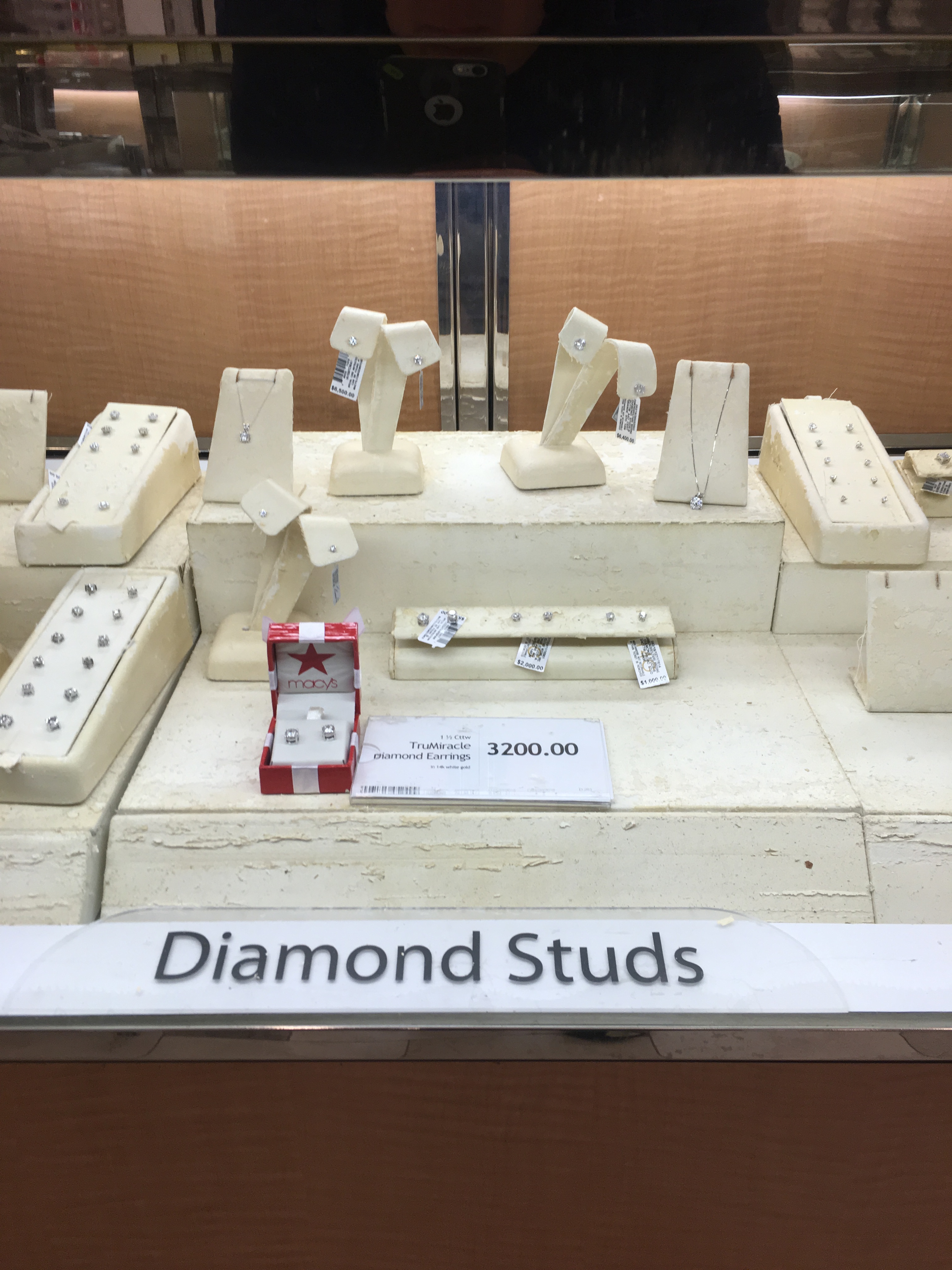
As I wandered through this major, national, department store I stumbled into the jewelry section.  In fact, I quite literally stumbled as I noticed the sign for a pair of diamond earrings for $3,200.  It wasn’t the price that caught me off guard.  It was the horrible presentation.  The jewelry case looked like a disaster.  I actually snapped the photo above as my brain tried to reconcile the price of $3,200 with a case that looked like it had been through the war and back.

How could a retailer that is one of the most iconic in the country allow one of their stores to present merchandise like this?  Could their executive team even be aware that they are trying to sell jewelry for thousands of dollars in this manner?  I could never imagine a mall jewelers case to looking like this.  You’d never see a presentation like this in Nordstrom or Bloomingdales.  So my question is simple…

If this is the only way you’re able to present merchandise should you do it?  Is it worth jeopardizing your brand’s image? Is it worth the risk of destroying its value?  Further is this the image you expect of your brand? Crusty, cracked, faded, and dirty? Would any of this company’s executives spend that kind of money anywhere else where the merchandise was presented this way?  I’d bet not.

This got me thinking.  I wondered just how expensive jewelry displays actually cost.  Maybe, just maybe they were really expensive. So I went to http://www.nilecorp.com which sells jewelry displays.  I inventoried the displays in the case and priced out replacements.  NEWSFLASH: To replace the faux suede displays in this picture would cost a WHOPPING $50.00! Seriously?  Kind of makes you wonder just how far out this capital expenditure has to be budgeted for. Sense the sarcasm?

The morale of this story (blog) is that a multi-million dollar brand can be tarnished for under $50.00.  And whether your company is a local small business, a national retailer, or a luxury automobile manufacturer your brand is open for business 24/7. So if you’re not paying attention to these kinds of details guess who is?  Your lost customers.

And remember this…while diamonds may last forever, their display cases don’t.  Pay attention to the details.

How Pressure Affects Performance

Pressure

I work better under pressure.  Courage is grace under pressure.  When you work under pressure you trade perfection.  Pressure is something you feel when you don’t know what the hell you’re doing.

Perhaps somewhere along the way you’ve heard someone say one of these things, or maybe you’ve been the one saying it.  Regardless, pressure takes many forms, and delivers an equally different number of outcomes.  But harnessed properly, pressure can create a winning edge in business.  I had a former boss that said, “it’s my job to back the bus up as close to the edge of the cliff as possible without going over”.  That’s pressure.

Pressure develops our ability to adapt.  Under pressure we may be tempted to look for the path of least resistance yet it’s most likely that the situation created by this pressure has already eliminated all the paths without resistance.  All that’s left are the paths that present resistance ,including conflict, confusion, and discomfort.  The better equipped we are to effectively deal with the confluence of these challenges the better we are able to succeed.

While human nature leads us to avoid pressure I would submit that seeking pressure improves performance.  Diamonds are made under enormous pressure; without it they are just rocks; carbon deposits.  But with pressure they turn into beautiful gems of great, and often times, enormous value.  Top performing athletes are molded under pressure moments.  Peyton Manning holds the record for the most 4th quarter comeback wins with 44.  By definition, comeback, means pressure.  You’re behind.  You’re losing.  That’s pressure!

Look for opportunities to experience pressure.  Volunteer for a project at work.  Offer to bat clean-up on your baseball team.  Commit to losing a certain amount of weight in a specific period of time.  Tell others that you plan to get a certification or license of some sort by the end of the year.  All of these create moments of pressure. Only in times of pressure will you be able to see what you’re truly made of.  Remember how diamonds are made, and even further how that process creates the hardest, natural-made material known to man.

Consistency: The not-so-secret ingredient to building a strong brand

consistency-is-key

If I were to ask you to name your favorite brand what would you say?  What metric or definitions would you use to acknowledge those companies whose brands rise to the top?

Brand building is big work.  Heavy work.  Time consuming work.  It takes patience, curiosity, interest, a willingness to listen, a willingness to act, a conscious effort to deliver what you promise day in and day out.  Yes, a brand is simply that…a promise.

Chances are your favorite brands may do many things well, but there’s one thing I bet they do better than all the others.  I’ll bet your favorite brands deliver what they promise consistently.  Not 70% of the time, or 80% of the time, but 10 out of 10 times you get exactly the experience you’ve come to expect.  It’s exactly the reason you keep going back.  It’s THE reason it’s your favorite brand .

Consistency is the little, but not so secret, ingredient of successful brandsDunkin Donuts, Starbucks, and Wawa deliver great coffee all the time.  Apple delivers quality products for home, work, or on the go, that are easy to use and deliver what’s promised.  The gym I go to is always so clean you could eat off the floors which says a lot for a gym!  I drive 23 miles to take my car to a Cadillac dealership when there is a Caddy dealer 4 miles from my home.  Why?  They always recognize me by name, their waiting area is ultra-comfortable with TV, work stations and high-speed internet, not to mention their  “Nordstrom-like” restrooms.  Speaking of Nordstrom, their service is remarkable each and every time.  Whether you’re buying a brand name shirt, or one that carries John Nordstrom’s name, you can rest assured you’ve purchased something of quality.

We all have examples of our favorite brands.  What’s funny is how many companies I’ve experienced where paying attention to those little things is viewed as more of a luxury than a requirement.  Dunkin didn’t get the reputation for great coffee by accident.  They didn’t say “it doesn’t matter where we get our beans from or what type of equipment we use to brew it”.  They are all about those coffee details.  Nordstrom’s didn’t develop its reputation as service workhorse by giving customers a hard time when an item didn’t fit, work, or hold up as expected.  And for those of you privileged enough to live in a city where Wegmans operates you know how consistent their delivery of remarkable service is.  Wegmans has been known to take back, refund, and provide other goodwill gestures for food purchased that the customer didn’t like.  Consistently consistent.

If you’re selling fast and easy, it better be fast and easy all the time.  Not just most of the time. If you’re selling fresh, it needs to be fresh at 6 am or 6 pm.  If you’re selling durable, it better last under the harshest uses or conditions.

Regardless of what you sell, think about how consistent your brand delivers on its promise.  If it’s anything shy of 100%, or Six Sigma, I suggest you reevaluate and understand not just why, but what you’ll do to correct it.  Nobody wants to buy “sometimes”.  In fact most people buy with their emotions, and as human beings our emotions are wired for a “forever” experience.  People don’t like change and if your brand is inconsistent you’re indirectly creating a situation that will bring a change to your customer.  Not a good thing.  Consistently consistent.  That’s the key.


Pay Attention. You’re Missing So Much.

untitled

Pay attention.  Did you see that?  Did you notice her roll her eyes?  Did you see how he looked at his watch?  Did you hear the receptionist’s tone when she told you to hold?  Are you watching?  Are you paying attention?

Life’s all about nuances.  The little things that make all the difference.  The quick but genuine smile.  The empathetic reply you receive when you ask if Mr. Smith is in.  The notes your customer takes as you’re talking.  Or even something as simple as your 9 am appointment coming to get you promptly at 9 am.  Not 9:05 am.  Not 9:15 am.  But 9 am sharp.

In some ways we’ve become numb to life’s little nuances.  Maybe it’s our phones, social media, the internet, or maybe its Darwinism as our ability to compete, survive and reproduce evolves.  Regardless, we’re slowly losing our ability to spot things.  To recognize signs.  To pick up on the “subtle clues” a prospect gave, or in some cases the very visible and obvious clues a dissatisfied customer gives.

The next time you’re in the grocery store, department store, car dealership, or just about anyplace where there are things for sale take a moment and observe.  Look around you.  Did anyone acknowledge you?  If they did, what did they say?  Did you feel comfortable?  Did you feel confident they were asking because they had your best interest at heart?  Or did they say hello and roll right into a sales pitch?

Whether you’re a professional sales person or a marketer, your job more than any other in the company is to be in tune with these signs.  Your job is to notice things and to challenge or acknowledge them.  Only through observation can you effectively sell.  Only through observation can you begin to create a compelling story that people find interest in.  Only through observation can you begin to align your business with your customers interests.  Until then you’ll continue to slam the round peg in the square hole not because you want to, but because you don’t know any other way.  You haven’t been watching.  You haven’t been observing.

Pay attention.  Look around you.  Watch… really watch… your customer.  How they react to you and others in the office.  What did they say?  How did they say it?  What was they’re body language?  How are they observing you?

Engagement comes in all shapes and sizes.  But when we’re truly engaged, others know it.  While engagement for me may have a different physical appearance than your engagement, the fact is that true engagement creates a visible and tangible level of energy.  It can be seen and felt.  Pay attention.  Watch for it.  Recognize what it looks like.

“Nothing has the power to broaden the mind as the ability to investigate systematically and truly all that comes under they observation in life” ~ Marcus Aurelius