How Sharing Can Accelerate Results

In today’s rapidly advancing digital age, information has never been easier to access. We shop for clothes, cars, computers, and countless other consumables and services through the internet. We research our customers, competitors, future employers and employees, and bosses. We share our experiences and opinions about banks, hairdressers, mechanics, and restaurants on sites like Yelp, Facebook and Google. In fact, by the time you finish reading this blog, more than 1 million posts will have been made on Facebook (assuming you can finish this in 2 minutes or less).

With so much information, so quickly accessible, why do businesses still operate in silos? Why do management teams, and executives, feel compelled to withhold information from their teams? Are there still people that believe in Jack Nicholson’s position in A Few Good Men? Perhaps some might not be able to handle the truth but most are far more capable than you may think. In fact, if you consider real-life General Stanley McChrystal, in his book Team of Teams, he talks about transforming the U.S. Military from a command-and-control operation to a “shared consciousness” where there is an organization-wide “understanding of the whole.”

So why do executives hold back? Why do they covet information at all? The answer is FUD – Fear, Uncertainty and Doubt. Fear of embarrassment, uncertainty of reaction, doubt in the character and tenacity of the people on their teams. Harold MacMillian said, “A man who trusts nobody is apt to be the kind of man nobody trusts.” This couldn’t be more true.

Sharing for the sake of sharing is a waste of time and effort, however, sharing for the sake of establishing trust is an accelerator of positive results. How do can you tell if sharing is real? If the information the leader is sharing is sensitive, in that it makes him vulnerable, he’s sharing. If the information is sensitive, in that it may make the company vulnerable, she’s sharing. If there is any level of personal, professional, or company risk, this qualifies for real sharing. When real sharing is being demonstrated, a culture of trust can begin to develop and teams begin to form. A leader who shares real stuff is confident, comfortable being vulnerable, and willing (and interested) in learning. Those are the leaders people seek to follow.

Still think sharing is a crock? If you need further evidence that sharing can accelerate growth, look no further than Berkshire Hathaway which currently holds the title as the highest priced stock on the NYSE at more than $320,000 for a BRK-A share as of this blog post. If you, like me, believe that sharing is a critical ingredient to building trust, consider the words of Berkshire’s Charlie Munger, “By the standards of the rest of the world, we over trust. So far it has worked very well for us.” It certainly has.

How much courage do you have to start sharing?
Thoughts on Leadership

“He who cannot be a good follower, cannot be a good leader” ~ Aristotle.

Great leaders possess empathy and emotional intelligence. Caring enough to ask, and then listening, is the beginning for all great leaders. Charting a course that depends upon the contributions of others requires courage, fortitude and judgement. Leaders understand they are nothing without followers. Great leaders know that their success depends on the relationships they have with those followers. Trust, respect, and caring are ingredients that strengthen the bond between a leader and his, or her followers.

People want to know how much you care before caring about how much you know. Asking versus telling, guiding versus directing, teaching versus demanding, coaching versus demeaning…these are just some ways to demonstrate great leadership.

Leading others requires the leader to be vulnerable. It requires experience and judgement. Good judgment comes from experience, and experience comes from bad judgment. There’s no shortcutting experience. You make the best decisions you can given the information at hand. Hindsight will always be 20/20, but we must live in the present which means the possibility of making a bad decision exists for each of us every day.

Embrace the learning. Be curious. Engage others and listen…truly listen. Open your mind to new perspectives. Create a list of leaders you admire and the attributes they possess that you strive to emulate. Getting comfortable being uncomfortable is the path to growth. Try many things. Fail fast. Don’t worry about being wrong. Nothing of greatness has ever been created on the first attempt. Diamonds take billions of years to create. The first mobile phone was a brick. The first car came in only black and had no windshield wipers. Progress takes time. The key is to keep moving, observing, doing, learning, adjusting. Trying to live life without failure is a wasted life. Life without failure is a blank canvas.

“We all want progress, but if you’re on the wrong road, progress means doing an about-turn and walking back to the right road; in that case, the man who turns back soonest is the most progressive.” ~ C. S. Lewis

Kindness – The Greatest Difference Maker

What makes a friend, a friend? What makes a candidate worthy of extending an offer of employment? What makes a great boss? What makes a life-long partnership work – personally or professionally?

In pondering these questions they have led me to other questions such as who do I like spending my time with? If I was stranded on a desert island for a month, who would I want to be with? What type of person? Who do I turn to when I’m happiest? And who do I turn to when I need help?

There are many ingredients that go into making a great employee, boss, spouse, and friend. Yet when all those ingredients are boiled down, there is one that rises to the top…kindness.

Intellect without kindness is arrogance. Discipline without kindness is abrupt. Motivation without kindness is dominating. Persistence without kindness is simply annoying. Determination without kindness is Machiavellian.

Sure, we all need a level of intellect, discipline, motivation, persistence and determination to succeed. And yes, there are many who succeed with these attributes in the absence of being kind. Why is that? Kindness costs nothing. You don’t have to take a graduate course to learn kindness. Maybe that’s the problem? Have we lost the ability to see the simplicity of success when kindness is added as the final ingredient?

Kindness doesn’t mean losing. Being kind doesn’t mean taking the back seat. Kindness does not operate from a position of weakness, but rather a position of strength. Being kind is a conscious choice. Your buyers feel it, your employees feel it, your spouse feels it, and yes, strangers feel it. That random act of kindness from someone you don’t even know that puts a smile on your face and warms the heart. We can all learn from kindness, and kindness is ours free to give. It’s your choice.

To Merge, or Not to Merge

Recent mergers within the payments industry have many wondering what’s next. In reading several blog posts, news publications, and LinkedIn articles, I see industry professionals scratching their heads and asking “what’s to gain from these mergers?”

Companies acquire or merge for 3 primary reasons – to gain market share, acquire talent, or round out a product gap – this includes technology. I suspect that the recent mergers have been driven by pressure from within the industry to achieve size and greater scale – hence share. The market share play becomes the focus of mergers when the other two reasons are lacking from the equation.

Imagine if two Pharma companies that both produced ibuprofen merged, what would they gain other than greater share? However, if one of those companies produced a ground breaking Alzheimer’s medication you now have a new entity that is potentially more valuable given its broader reach and product offering. So the question to be answered is what specific gaps and gains will be addressed by these recent combinations. And here’s a hint….the answer can’t be “operational efficiencies” which is simply code for saying the plan is based upon squeezing cost out of the business to drive short-term financial results.

Let’s also not forget the #1 reason for combo failures – cultural misalignment. Synergies that look great on paper still must be executed by human beings…those same human beings that have been living with, and in, specific cultural norms for a period of time. People often underestimate what’s required to combine companies – to combine cultures. What if the U.S. and Mexico were suddenly merged together into one country?  Just because it works on paper doesn’t mean it will actually take hold…heck we struggled to figure out NAFTA let alone something grander. Cultural differences are too significant to underestimate.

This will not be the last combination. Corporate decisions tend to revert back to our childhood days of playing musical chairs…no one wants to be left standing without a seat. Unfortunately these mergers are not addressing the key problems the payments industry is facing – a dynamic buyer, global sellers, legacy technology, and infrastructure dilemmas. How these four things can be best brought together is the idea, or solution, the market requires. These transactions clear the path for smaller, more nimble players to answer this question and disrupt what has been an industry slow to change and innovate. In the end, the buyer holds the most powerful vote to determine what is most valued.  My belief is they will continue to vote for more choices for easier and secure ways to make their purchases.  This vote will be given to those agile enough to listen to the need and place the creation of a new customer experience as the #1 priority, versus clinging to the belief that bigger is better.

A Thought on Empathy

Life is about perspective. It’s how we experience situations and the lens through which we view things…good, bad, or indifferent. Empathy is a powerful attribute for us all. Being able to relate to each other is what makes human beings…human.

I just watched the movie The Forgiven starring Forest Whitaker and Eric Bana. This movie is based on real events that took place in S. Africa. It is incredibly moving and serves as proof that it is possible – even under the worst circumstances – that we can all find common ground, forgive when needed, and find a positive path forward. Rarely have I seen something so powerful in a film.

#Empathy

#Coaching

#Selfimprovement

#SelfAwareness

Is different enough?

Without a doubt there is a conversation happening with marketing teams around the globe as I write this post trying to nail down differentiators. The more aggressive marketers might even be searching for “core differentiators” as if being different isn’t enough. Now we have to be different right down to our core.

Different is not good or bad. It’s not valuable or invaluable. Different is just, well, different. Who places a value on whether different is worth something extra, or worth something less?

Identifying your differences – or core differentiators – is a complete waste of time, money, and effort without first truly understanding your potential buyer. After all, who are you trying to appeal to with your differences?

Instead companies tend to begin on the inside rather than outside. Meaning, we tend to take the path of least resistance. Sitting in a conference room pontificating on why we’re different, and how much better we are than others does not get the job done. No. In fact, putting yourself in the market to truly listen to your buyers, and becoming vulnerable is what leads to innovation and disruption. Companies that do this well have no interest in being right….just in getting it right.

Does your buyer want different? What if all they want is better? Perhaps no one wants to relearn something entirely new. Perhaps all the buyer wants is for the “thing” they are currently using, to work better, or perform better. How do you know? Have you asked them? Have you asked enough of them to have a dependable sample size? Have you truly listened or did you embark on that research with a predisposition or set of biases? Were you tempted to skew the results to fit what you have in place?

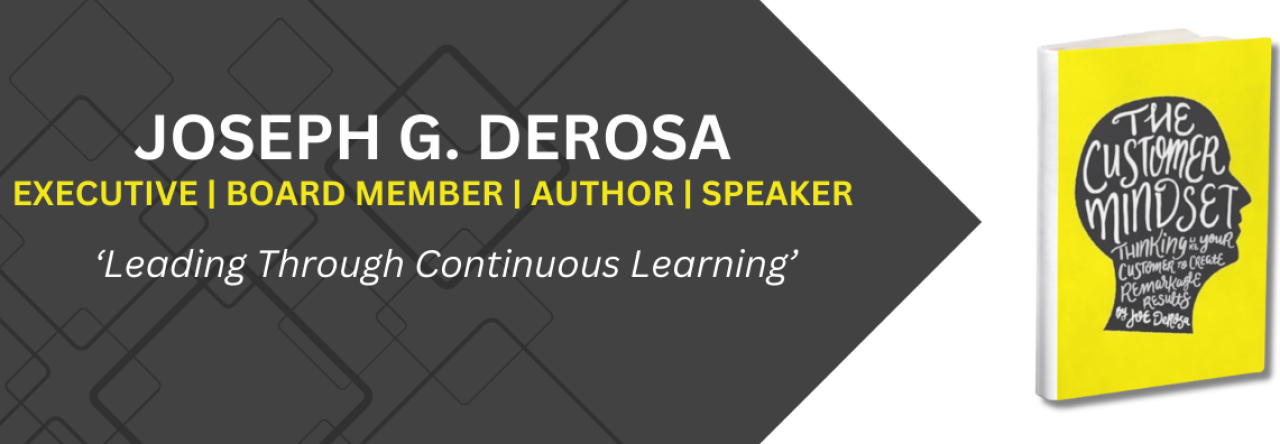
In my book The Customer Mindset; Thinking Like Your Customer to Create Remarkable Results, I share an easy to implement process to map your buyers journey, starting with engaging your buyers and ultimately solving for the “so what?”. Yes, different can be better. The question is how much better, and does your prospective buyer care enough to pay for it?

When you look at your core differentiators, don’t forget to ask yourself (and your team), “so what?”

Business – it’s all personal

Business exists to serve peoples needs. It doesn’t matter if you work for a B2B, or B2C company. Somewhere downstream in the process, is a consumer who is making a decision to buy a product or service you make, or contribute to making.

Business is very personal. Only people can care, a business cannot. A business may be a culmination of caring people but by itself, a business is nothing more than an idea. People bring ideas to life. People bring passion to their work and workplace. People bring thoughtfulness and caring for one another and a community. That all happens with people. A business can only serve as a conduit to deliver what the collection of these people express.

When I hear “it’s not personal, it’s just business”, I would say, it’s all personal. People give their most valuable asset they have to a business…their time. With that time they could invest it elsewhere to generate different returns. With their families, with other businesses, other ideas, other objectives. It is a trade-off. Yet once that trade-off is made, an individual is committing themselves – their person – to the business. This is how business gets done, and it becomes very personal.

Empathy is a key emotion to bridge the gap between business and personal. Why? Because time is the only thing that binds us all together. We all have a set amount of sand in our hourglass. When it’s gone it’s gone. Take some of your sand, and use it with others at work to demonstrate that you hear them, you understand their challenges, and you have ideas to share that can help them. By doing this you add value. And while no one can put more sand into anyone’s hourglass, we can all put a little value into each other’s lives…in, and outside, of business.

Talent and Innovation

Everyone says they want to innovate. Every company talks innovation. We’re now seeing innovation as a core value for many companies. But are they really innovating?

Innovation is about talent. In the absence of talent there can’t be innovation. The first step to innovation is recognizing the two types of talent required to be innovative.

The first type of talent required to innovate is visionary talent. This is the talent, skill, or competency to see things others cannot see, or are unwilling to accept. Visionary talent is often related to first-movers. Many of the products and services we use on a daily basis started first with a vision. A mobile phone, a smart watch, wireless headphones (or ear buds), technology in the cloud versus a mainframe. These inventions, or innovations, required visionary talent. How do you spot visionary talent? Individuals that possess an insatiable appetite for learning, dreaming, and pondering not what is, but what could be.

The second type of talent required for true innovation is technical talent. This is the talent that is required to bring the vision to life. Think of Steve Wozniak to Steve Jobs. Technical talent tied to visionary talent. Or Charlie Munger to Warren Buffett. Technical talent is what enables our ability to bring dreams into our daily reality.

In 1899, Charles Duell, then Commissioner of the U.S. Patent Office, said, “Everything that can be invented, has already been invented.” While I personally don’t believe this to be true, let’s for a moment assume it is. If this were to be true, then arguably technical talent would be far more valuable than visionary talent. Why? Because the focus would be on incremental improvements of things that already exist. However, this raises a thought provoking question. What’s invention versus innovation.

In 1849, Italian inventor Antonio Meucci, invented the telephone. It wasn’t until 1876 that Alexander Graham Bell won the first U.S. patent for the device. Fast forward to 1973 when the first phone call was made on a Motorola mobile phone. Was the mobile phone an invention or simply an improvement on something already invented? Remember, it was 50 years after the phone was invented that Duell said everything that could be invented already had been invented.

Regardless, visionary talent and technical talent combined are required to innovate. Combining the creator of dreams with the builder of those dreams allows us to improve our lives in meaningful ways.

What’s your talent pool like? Who are your visionaries and who are your techies? How often do you review your organization for these two types of talent? Your answers to these questions will be the proof point for whether you are building and living an innovation culture.

Selling with Silence

I enjoy a good conversation as much as the next guy or gal.  A highly engaging and thoughtful conversation where both sides are equally sharing their ideas, and feelings is something to value.  Likewise, I also enjoy the comfort of being with people I care about and not feeling like I have to say a word.  I’m comfortable with silence.

Being comfortable with silence is a skill.  It doesn’t matter whether you’re an introvert or extrovert, like any skill, silence needs to be practiced in order to be effective.  It requires trust, honesty, and perhaps most importantly confidence.

Sales people by nature are talkers.  In fact, sales people often have a reputation of being slick talkers.  Talk fast enough that you over-power, or blow past the buyer’s objections, tough questions, or key concerns.  However, a fast talking sales person is actually communicating the wrong message.  Buyers get turned off by fast talkers.  They become suspicious.  They become guarded in their responses, and many times they tune out, and walk away.

Great sales professionals understand the power of silence.  The power that comes with feeling confident in your message, your answers, your position, your knowledge.  Knowing when to be silent, versus when to speak, is a critical skill all sales people should develop, assuming they want to improve their win rates.

The buyer asks a question, the sales person responds, and then silence.  You’re almost begging the buyer to challenge you.  Your silence is a display of your confidence and conviction.  It also shows the buyer a level of patience and empathy by giving them time to absorb your response and determine their next step.  You’re putting the control in the buyer’s hands.  And while some may argue that the sales person should maintain control, I’d argue that by granting the buyer some control, the sales person is actually increasing his/her control of the sales and buying process.

Silence can be the ultimate neutralizer.  High stakes negotiators recognize the strategic benefit of using silence.  Yet keep in mind, that using silence as a tactic requires a great deal of preparation.  You need to understand your company, your product, your position, and your buyer.  Drop the ball on any one of those and the value of silence is diminished.

Next time you engage in a sales conversation, force yourself to be silent.  Can you do it?  Can you sell with silence?


Building High Performing Teams

Over the years I have built several high performing teams. How do I define a high performing team? In the simplest terms, a high performing team is one that accomplishes its goals while remaining true to the cultural aspects I have put in place. To succeed and reach the goal, but done so at the cost of destroying the culture is not success, nor is it high performing in my book. Thus, establishing a high performing team includes both a personal view of the leader of that team, combined with core competencies that typically appear in most teams that consistently meet or exceed their objectives.

I have 10 focus points when recruiting new candidates to build my team, or deepen my bench strength:

  1. Chemistry. Do they fit? What’s the first vibe I get when interacting with this person? Are they engaging? Stimulating? Are they able to operate and respond to circumstances, or scenarios, when under fire? How do they react? What are the observed behaviors noted when they are interacting with others?
  2. Curiosity. Do they possess a healthy curiosity about things? Forget whether they’re asking questions and instead focus on the question itself. Is it thoughtful? Are they asking questions that demonstrate an ability to assimilate new information and inquire beyond that point? Or did they show up with the standard pre-packaged set of questions?
  3. Ability to see the negative space. Can the candidate spot things that haven’t been discussed? Do they possess a level of intuition that identifies areas to probe? Can they engage me on what I haven’t said, as much as what I have said?
  4. Challenging. Does the candidate seem to go along for the ride? Do they fully agree with everything I’m saying? Often times I will ask a question that goes completely against what I believe, just to see how he/she reacts. This exercise gives me insight into their intellect and ability to pivot quickly.
  5. Active listening. How well does the person listen? I give high marks to note-takers. Taking notes is a sign of an active listener. Notes are a good indicator of detail. Using those notes to ask follow-up questions demonstrates the ability to grasp complex concepts and expand on a topic or conversation.
  6. Think in 3’s. How well does the individual tell the story? How quickly do they get to the point? Do they talk in circles when asked a question with lots of words really saying nothing? Or do they demonstrate structured thinking by responding in 3’s? “I believe there are 3 reasons for…”
  7. Problem solving skills. How well can he/she frame the problem? To solve a problem you must first understand exactly what you’re solving for. I will provide a scenario and gauge the candidates response to gain insight into their thinking and how they go about solving problems. Do they simply react to the obvious, surface-level, problem? Or do they take their time and begin to peel it back one layer at a time by asking more and more questions?
  8. Continuous learning. I’ve asked this question for the better part of the last 20 years of team building – “Tell me the name of the last book you read, and what was it about?” It still amazes me how many people don’t read. Or, you get the typical response, “I read the WSJ”. I am looking for responses that offer a mix of reading material beyond business. My ears get happy when I hear Dean Koontz, Patricia Cornwell, Stuart Woods, Jeffrey Deaver, James Patterson, Dan Brown, Michael Connelly, or Michael Crichton. I also look for autobiographies of past leaders or influential members of society. Reading, followed by doing, is the most powerful accelerator of progress.
  9. Crucible moment. A crucible moment is a turning point in someone’s life. Ask, what was your crucible moment, or at least provide one? I myself have had several throughout my life. Look for substance. Not the standard, “When I met my wife”, or “When we had our son”. Only if those moments are backed up with something completely out of the ordinary, it’s not a crucible moment in by book. I’m looking for adversity, failures, fear. How willing is this person to open up and be vulnerable?
  10. Finally, last but not least, I look for empathy. How does this person relate to others? When faced with specific stressful scenario, how do they react? How do they treat others? What happens to their voice, and tone, when they are talking and responding? Empathy is likely the single biggest competency that defines success. The ability to relate to others is critical when working with others on a team. It feeds directly into chemistry as its most powerful ingredient.

Whether you’re building a new team from scratch, adding a few new players, or re-tooling the existing team, having a clear culture – rules to live by – is critical. As the leader it’s imperative that you state clearly what you expect of others. Establishing the right expectations and further executing upon them most certainly increases the probability of your success and that of your team.