Stop Managing Change, Start Inspiring It

Leadership

Today’s leaders believe they must be skilled at driving change, leading change, and managing change.  It’s their job.  It’s what they are supposed to do.  But is it?

Many leaders wear their “change” credentials like a badge of honor.  They know how to drive change. What they might be saying is that they know how to force change.  Driving, or forcing change may in fact work initially, but if your “followers” aren’t aligned, in sync, or haven’t embraced the change because they can’t quite see or understand it, the change itself won’t last.  When you hear leaders describe their company as “always changing”, beware.  If something has to constantly change it may just mean that it hasn’t yet found its calling – it’s grasping at straws.

Also think about what image “driving” evokes. If you’re driving something that means you’re behind it.  You’re in the back pushing. How can you lead from behind?  Leaders should always be in front. Being in front may be symbolic, it may be ceremonial, but no matter it’s leadership.

If I force a change to take place, it’s likely that I’ll have to force another change shortly.  However, if I inspire change, if I rally those around me, if I can paint a clear picture on what that change will produce or deliver, then I have a much better chance of getting folks to rally not just around me, or the change, but around both.

If you’re a leader in any size organization consider this…

People don’t want to be led. Human beings simply don’t like being told what to do.  No.  Going back to the beginning of time our ancestors learned the importance of working together toward a common goal.  Whether that goal was to produce fire, transportation, or medicine, people need to understand the goal first, and believe that if they achieve that goal they will benefit and prosper.  Imagine if fire produced no heat, and no light.  What would the benefit have been to “invent” fire making?  There has to be a clear goal with benefits, to serve as the first ingredient to an effective change recipe.

It’s your job as the leader to provide this vision.  If you can inspire those around you to see the value in the change you’re suggesting you’re well on your way to building an effective, sustainable, and adaptable workplace.  Your team will trust you when they know why you’re asking them to do certain things and to make certain changes.  This does not mean you need everyone to vote in your favor.  No.  This is not about singing Kumbaya and holding hands.  Inspiring change is about leadership.  It’s about having the courage and conviction in the value of the change you’re asking to be made and those you’re asking to make it with you.
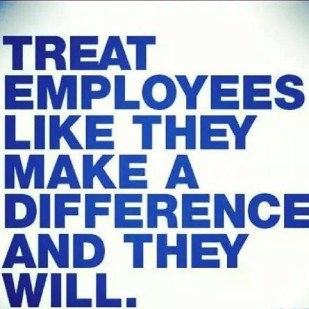


Caution! Employee Morale Not As Good As You Think.

employees.JPG

Employee morale seems to be quite high.  Management teams everywhere breath a sigh of relief after seeing their satisfaction surveys results.  They’ve got it under control.  People are happy and satisfied.  Executives look at this data and believe all’s well.  But it’s not.  Not really.

Many employee satisfaction surveys test for how happy, or satisfied, the employee is with the work they do each day.  But this measure can be misleading.  While I may love building spreadsheets, I might not like the environment in which I have to perform this work.  I may really enjoy creative writing, but don’t like the team I’m on, or the boss I work for.  Measuring how happy an employee is with the work they do, just might provide a false positive reading on satisfaction.

In a recent SHRM study, they surveyed 600 employees on 43 different criteria related to job satisfaction.  The overall employee satisfaction score came in at 86%.  However, in diving deeper into the analysis there is cause for concern.

The survey found the most important criteria to employees is being treated with respect.  Across all 43 criteria, 74% of employees rated this category as #1 in determining their satisfaction.  However, only 33% of employees gave this criteria a satisfactory rating.  The second most important category at 64% was trust between employees and management. Yet again there was another major disconnect with only 24% of employees scoring this criteria as satisfactory.

The lesson here is simple.  Reading the cumulative satisfaction score is comparable to evaluating someone’s health based entirely upon their ability to read an eye chart.  What about blood pressure?  Or cholesterol levels?  Or their weight?  I could have 20/20 vision, but be 100 pounds overweight with high cholesterol…am I really healthy.  There is so much involved in truly understanding employee morale and obtaining a true measure of their satisfaction.

In 20 years of building teams, managing teams, and leading them, I have found the only true measure of employee satisfaction is by having a genuine connection to your team.  Sending out a survey to trumpet a score, or a title on the greatest places to work list, can be quite dangerous if you place 100% confidence on just the score.  Dig deeper. Ask the tough questions. Be courageous. Be brave.  And most of all be willing to recognize that no company is perfect.  Think about that for a minute.  If there was a perfect company that would mean they have perfect employees.  If they had perfect employees that would mean you’d have no need for a performance review system as all of your employees would be exceeding (perfect) your expectations.  No.  Companies can only be as perfect as the people whom they employ.  So be ready to confront reality.  Be ready to take action to address all employment related criteria and not just those that are convenient.

Be An Inspiration

Inspire

What inspires you?  Perhaps a better question is who inspires you?  Who do you look to for a pick-me-up?  Someone you can always count on for a kind word, a gentle smile, and a reassuring affirmation.  They are the first person you turn to when things go sideways.  So what is it about that person that inspires you?  What traits do they possess and can you yourself be an inspiration to others?

When I think of the people who inspire me, they all possess similar traits.  They are all good listeners, strong observers, and offer great insights.  They’re able to assess a situation without bias and provide a recommendation for how to adjust or modify my thinking in order to accomplish my goals.

Being an inspiration to others requires the ultimate in authenticity.  Have you ever met someone who said they wanted to help you but instead caused your antenna to go up?  Their words seemed empty, their time felt rushed, and most likely they were not very empathetic.  Empathy is a necessary ingredient for inspiration. It’s not about sympathy.  Inspiring others doesn’t mean you allow that person to wallow in their sorrow.  No.  Inspiring others begins with empathy.  Being able to identify with someone’s struggles or challenges allows you to connect with people, build rapport, gain trust, and finally inspire them.

I’ve coached hundreds of people throughout my career, as well as others closer to home.  I enjoy helping people sort through their challenges by listening and providing perspective.  I make sure that when I’m coaching someone they know they are my #1 priority at that moment.  I turn my phone off, close my laptop, and focus on that person entirely.

We live in an age of sound bites.  There is an infinite number of inspirational sayings that are posted to Facebook everyday.  Yet nothing takes the place of speaking to another human being  about your challenges.  That real time interaction with someone who genuinely cares about you and your future is what inspiring others is all about.

There’s no class…no school to attend…no workshops that teach someone how to inspire others.  It takes time. It takes courage. It takes commitment to inspire others. Making a positive difference in someone else’s life is what inspires me to work hard to be an inspiration to others.  What inspires you?